Ownership & Leverage
What Is Leverage in DFS? A Beginner’s Guide to Beating Chalk
Last updated October 7, 2026 by Tyler Tamboline · 3 min read
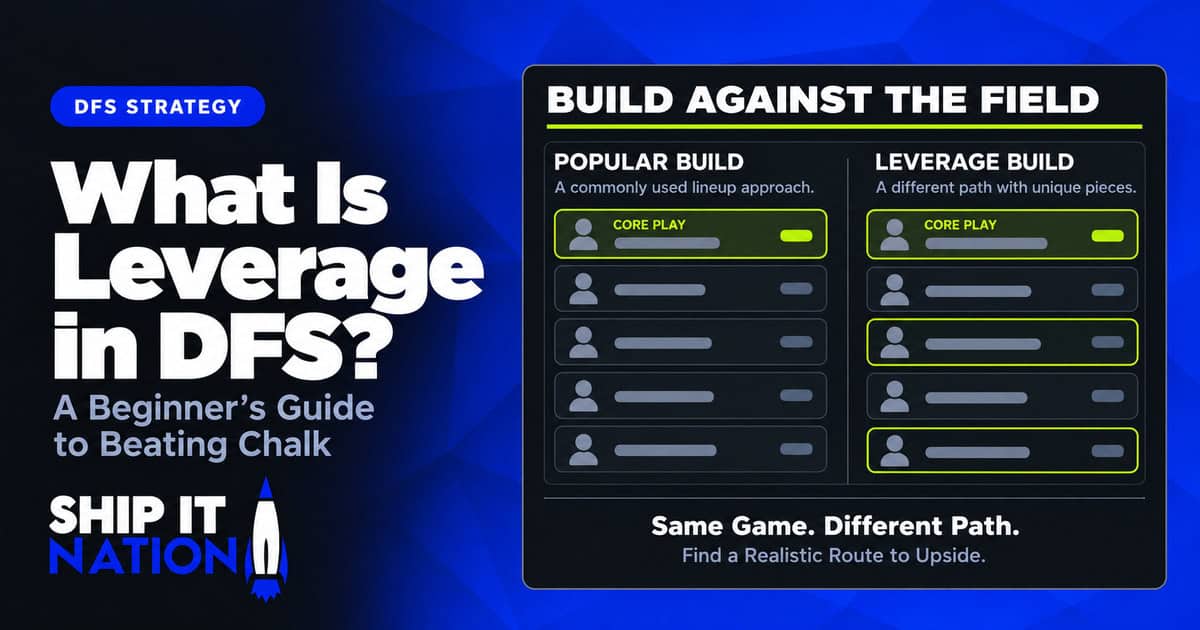
If you’ve spent any time around DFS content, you’ve heard the word leverageLeverageLeverage is the edge you gain by rostering a play the field is underweight on, compared with how often it ends up in winning lineups. When that play outscores the popular option most lineups chose instead, you gain ground on those lineups, though the rest of your roster still decides where you finish.Look for leverage on players connected to the chalk, like the other side of a popular game or a teammate who can steal the popular player's touches.Full explanation ↗ thrown around constantly. It gets used so often that it can start to feel like a buzzword rather than an actual strategy. But leverage is one of the simplest and most important concepts in the entire game once you understand what it’s really describing.
- Leverage depends on how your lineup benefits relative to the field when a realistic outcome happens.
- Low ownership alone does not make a player a good leverage play.
- You can use popular players while differentiating through less crowded combinations.
Leverage Is About the Field, Not Just the Player
At its core, leverage means positioning yourself to benefit relative to the rest of the fieldThe FieldThe field is everyone else entered in a contest, the group of lineups you are competing against.Before you build, picture the typical lineup in your contest. Then decide on purpose where you'll match it and where you'll step away from it.Full explanation ↗, based on how other players are likely to build their lineups. It’s not really about whether a specific player is good or bad. It’s about what happens to your lineup relative to everyone else’s if a certain outcome happens.
A player can be a perfectly reasonable play and still be a bad source of leverage if half the field is also going to roster them. On the flip side, a player with a modest projection can be an excellent leverage play if almost nobody else in the field is using them and they still have a path to a strong outcome.
Why Ownership Alone Doesn’t Tell the Whole Story
A common mistake newer players make is treating high ownershipOwnershipOwnership is the percentage of lineups in a contest that include a given player. Projected ownership is an estimate made before lock; actual ownership is posted once the contest locks.Ownership isn't something to avoid; it's something to build around. The goal is understanding how the field is likely to build, then finding your edge relative to that.Full explanation ↗ as automatically bad and low ownership as automatically good. That’s an oversimplification. High ownership on a player who’s genuinely the best play on the slate isn’t something to avoid just for the sake of being different. The real skill is figuring out how to still gain an edge even when you’re using a popular player, not just avoiding popular players entirely.
A Simple Way to Think About It
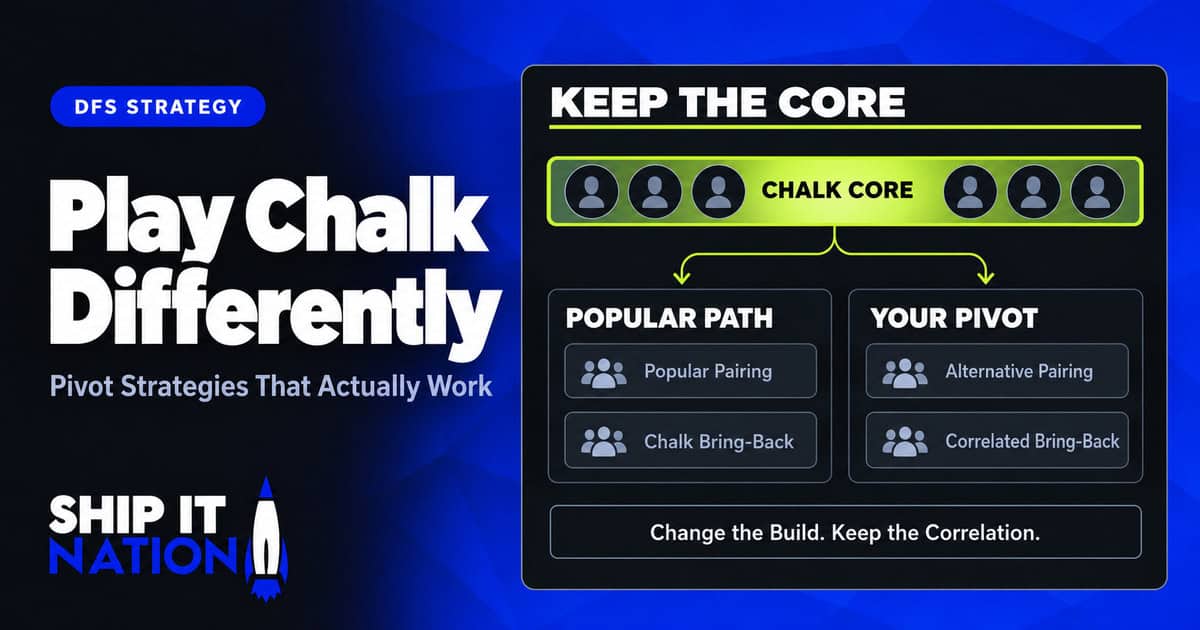
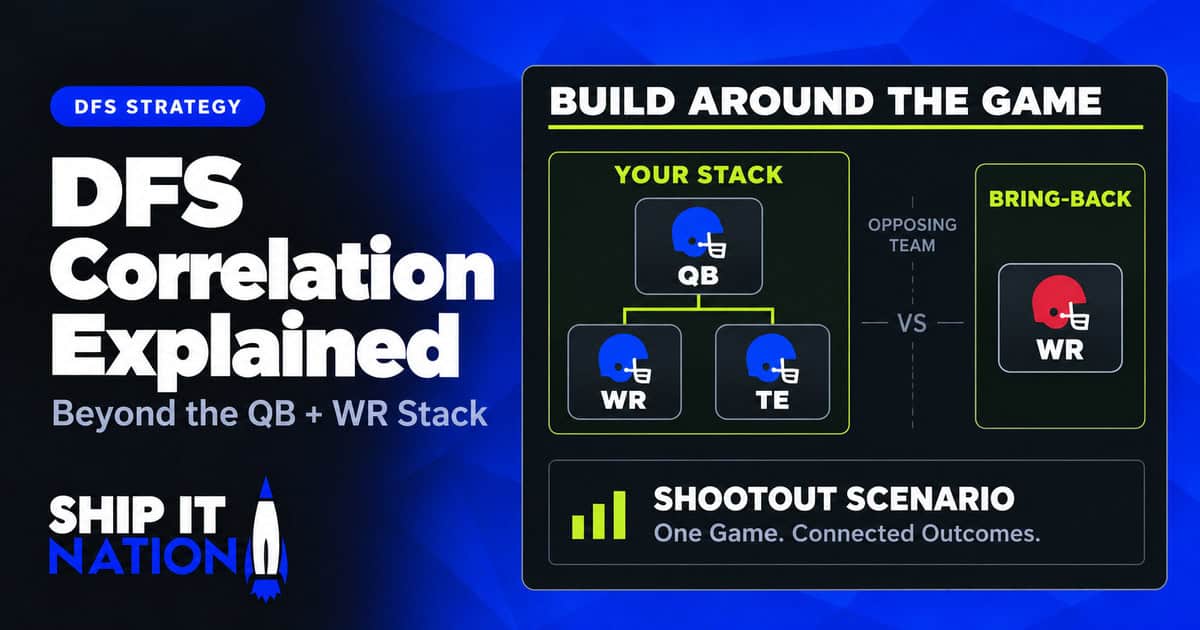
Imagine a running back who’s going to be highly owned because he projects well and the matchup looks great. Most of the field is going to pair him with the obvious, most popular quarterback on his team. A sharper approach might be asking what happens if the offense scores through a different combination of players instead, and building a lineup around that less obvious correlationCorrelationCorrelation describes how two players' fantasy scores move together. Positively correlated players tend to have big games at the same time, usually because one player's success directly adds points for the other.When you build a tournament lineup, ask which of your players need the same thing to happen. The more of them that do, the higher your lineup's ceiling.Full explanation ↗ while still getting exposureExposureExposure is the percentage of your lineups in a contest, or across a slate, that include a particular player, team or stack.Set exposure caps before you build, not after. Decide the most you're willing to have on any one player, then let your lineups fill in around those limits.Full explanation ↗ to the same favorable game environment.
You’re not avoiding the popular running back. You’re finding a less crowded way to build around the same underlying thesis that made him popular in the first place.
Leverage Isn’t the Same as Going Rogue
It’s worth being clear about what leverage isn’t. It isn’t randomly picking obscure players just because nobody else is using them. A leverage play still needs a real path to a good outcome. The goal is finding spots where the field is underweighting a realistic possibility, not finding the least popular player on the slate regardless of whether they can actually produce.
Where to Start Looking for Leverage
The easiest starting point is comparing projections against ownership across multiple sources. When you see a big gap, where a player’s expected performance looks strong but the projected ownership is surprisingly low, or where ownership looks unusually high relative to the actual talent level and matchup, that gap is often where leverage opportunities live.
Contest sims can help formalize this process further, since they model out how your lineups perform against a simulated field rather than relying purely on gut instinct. But even without advanced tools, simply asking what the field is likely to do, and then asking how you can still benefit if that popular outcome doesn’t fully play out, is the foundation leverage is built on.
Making Leverage Part of Your Weekly Process
Before locking in your lineups each week, take a few minutes to identify where the field is likely concentrated and ask yourself honestly whether your build has any real differentiation built in, or whether you’re just building the same lineup everyone else is going to submit. That habit alone will start sharpening your process more than almost any other single adjustment you can make.
Full video courses on bankroll management, contest selection, roster construction and more, free for members.
Common Questions
What is leverage in DFS?
Leverage means positioning your lineup to benefit relative to the field based on how others are likely to build. It considers what happens to your lineup compared with everyone else's when a particular outcome occurs.
Does low ownership make a player a good DFS leverage play?
No. A player still needs a realistic path to a strong outcome, and high ownership does not automatically make the best play worth avoiding.
How do you find leverage in DFS?
Compare projections and ownership across multiple sources to identify gaps between expected performance and popularity. Consider less crowded player combinations, and use contest simulations to assess lineups against a simulated field.
Keep reading