Lineup Building
How to Build a DFS Player Pool: Wants vs. Needs Framework
Last updated October 7, 2026 by Tyler Tamboline · 4 min read
Ask ten DFS players how big their player pool should be for a given slate and you’ll get ten different answers, most of them made up on the spot. The truth is there’s no magic number. What matters is understanding the difference between what you want to play and what you actually need to build a viable lineup, and using that distinction to size your pool correctly.
- Start with players and game environments you believe in before opening an optimizer.
- Test your top choices in complete lineups to see whether they fit your roster construction.
- Match your pool size to your conviction, lineup count, contest format, and bankroll allocation.
Everything Feeds Into Your Pool
By the time you’re ready to build a player pool for a slate, you should already know your contest type, your bankrollBankroll ManagementBankroll management is how you size your DFS spending relative to the money you have set aside to play, called your bankroll, so normal losing streaks do not wipe you out.Write down your per-slate limit before the season starts. Spending rules are much easier to keep when you set them before a losing streak, not during one.Full explanation ↗ allocation for the week, and roughly how the field is going toThe FieldThe field is everyone else entered in a contest, the group of lineups you are competing against.Before you build, picture the typical lineup in your contest. Then decide on purpose where you'll match it and where you'll step away from it.Full explanation ↗ attack the slate based on projections and ownershipOwnershipOwnership is the percentage of lineups in a contest that include a given player. Projected ownership is an estimate made before lock; actual ownership is posted once the contest locks.Ownership isn't something to avoid; it's something to build around. The goal is understanding how the field is likely to build, then finding your edge relative to that.Full explanation ↗. All of that upstream work shapes how wide or narrow your pool should be.
A conviction week, where you’ve got a clear core group of plays you believe in, should produce a tighter pool. A spread week, where a lot of options look viable and nothing stands out clearly, might call for a wider net, especially if you’re playing a format like MME that can absorb more exposureExposureExposure is the percentage of your lineups in a contest, or across a slate, that include a particular player, team or stack.Set exposure caps before you build, not after. Decide the most you're willing to have on any one player, then let your lineups fill in around those limits.Full explanation ↗.
Wants Come First, Not the Optimizer
This is the part most players get backwards. They open their optimizer, dump in every player with a decent projection, and let the software decide who belongs in their pool. That’s building around a tool instead of building around a read on the slate.
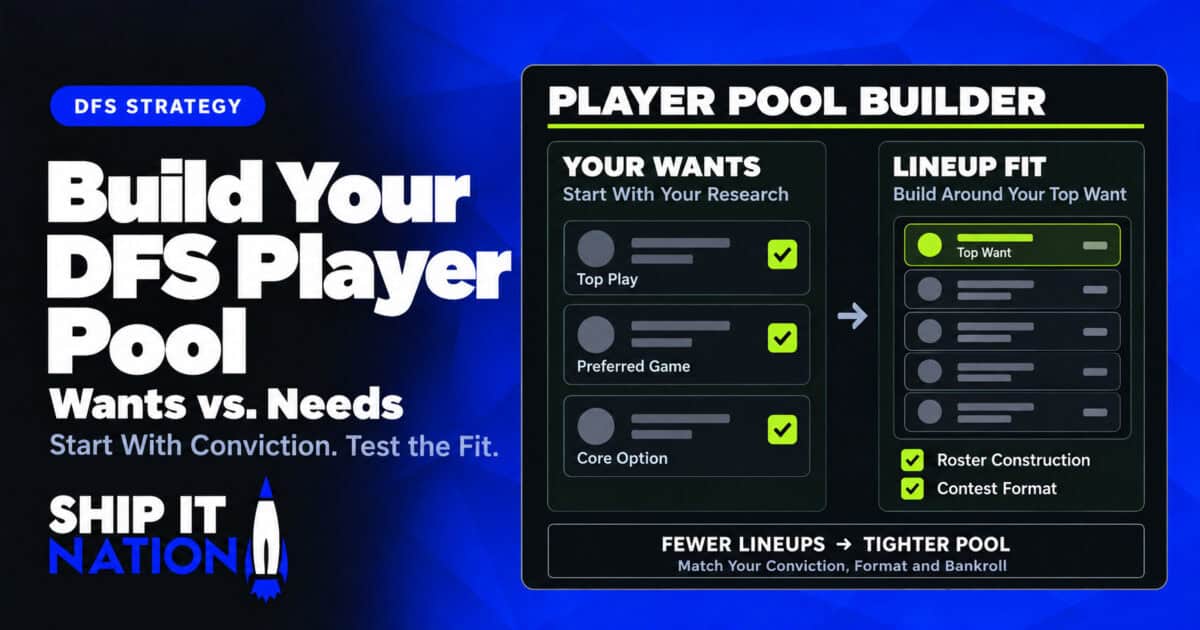
Start instead with your wants. These are the players and game environments you actually believe in based on your own research, not just whoever has the highest number next to their name. Write them down before you touch a build tool.
If you’re hand building, take that want list and start narrowing it based on your actual contest size. Make a simple pros and cons list if you need to. If you’re using an optimizer, let your want list define the rules and lock-ins you feed into it, rather than starting from a blank slate and letting the software’s default output become your pool by accident.
The Test That Actually Matters
Here’s a practical check. If you’re only building a handful of lineups, don’t just list off six viable quarterbacks or forty viable golfers and call that your pool. Try building a full lineup around your top want. If it doesn’t work with the rest of your roster constructionRoster ConstructionRoster construction is how you organize a DFS lineup within its salary cap and roster rules. It includes where you spend or save, which positions you prioritize, and how your players fit together.Build two versions around your biggest spending decision, then compare every player who changes. Revisit the comparison when injury news changes the available value.Full explanation ↗, that player might not actually belong in your pool for this format, no matter how much you like the matchup on paper.
Play Lighter, Play Tighter, and the Reverse
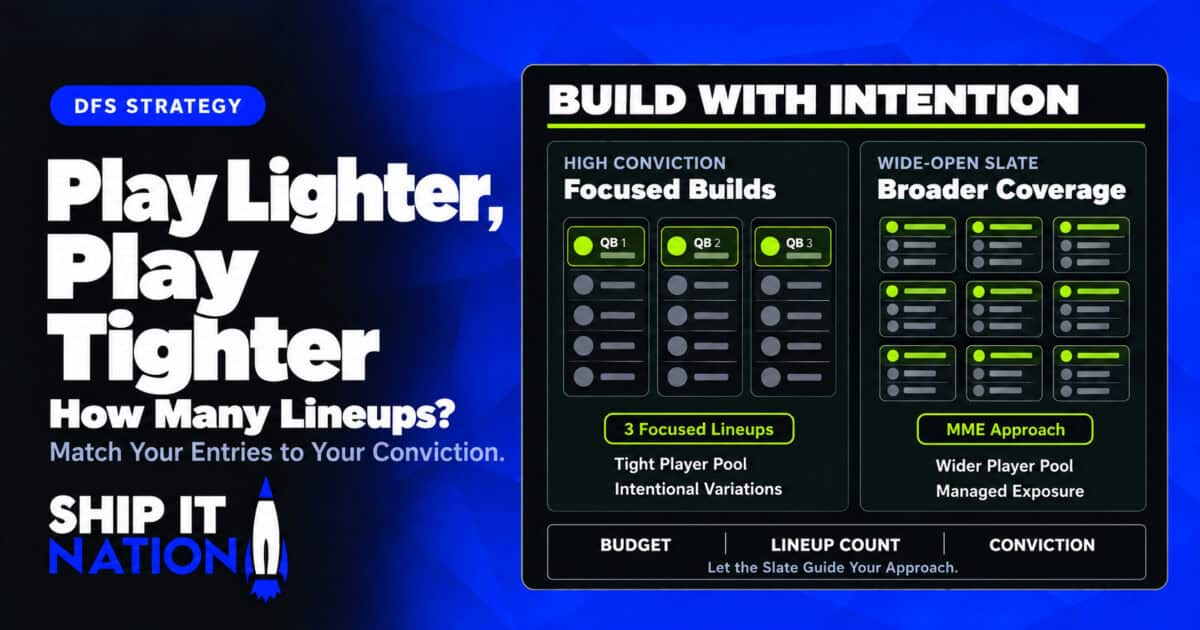
There’s a relationship between how many lineups you’re building and how wide your pool should be. Fewer lineups call for a tighter pool. A twenty maxTwenty-MaxA twenty-max contest lets each user enter up to 20 lineups. It sits between small-field formats like three-max and the largest 150-entry tournaments.Plan all 20 lineups before building any of them. Decide your stacks and exposure limits first, so the set works as a portfolio rather than 20 separate guesses.Full explanation ↗ slate with ten viable quarterbacks isn’t a real strategy, it’s just noise. Focus on a core group and rotate with intention instead.
The same logic applies to bankroll. If you’re only committing a small amount to a slate, there’s little reason to spread that risk across a huge pool of low conviction plays. Concentrate your exposure where your research actually points.
Flip it around and the same idea holds. If your pool is naturally tight because your research points to just a few strong options, don’t spray that conviction across fifty contests. Use it in the format where a tight pool actually pays off, like a three max or a qualifier, rather than burying it inside a massive lottery field where a single strong idea gets diluted.
Building in Sets for More Advanced Pools
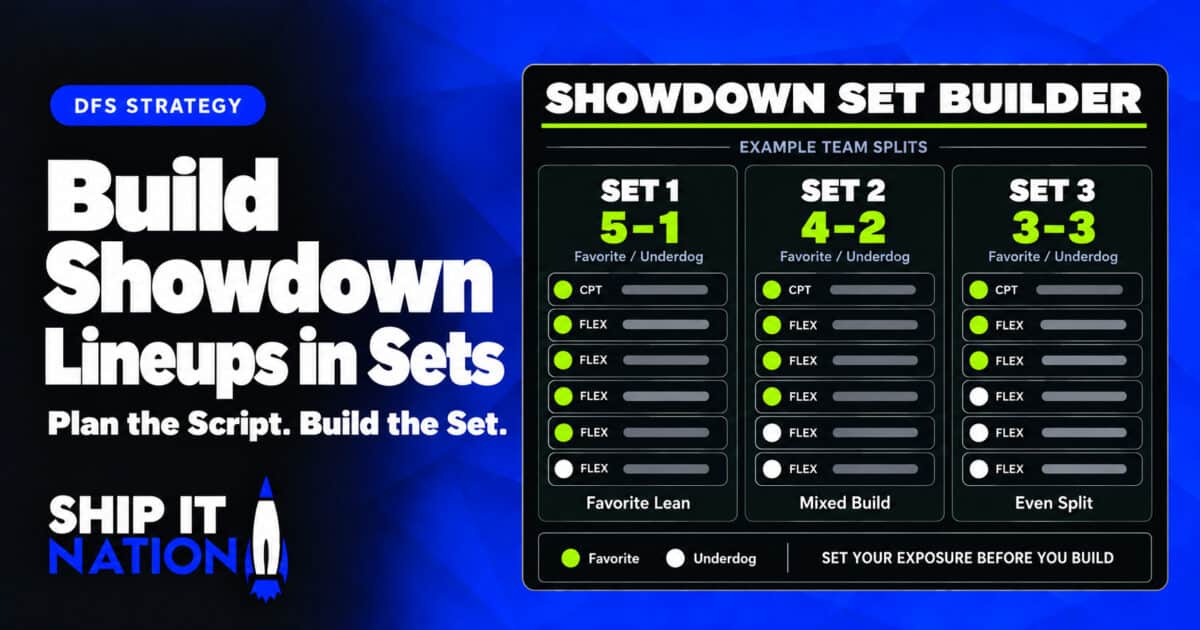
Once you’re comfortable with the basics, you can start grouping your pool into intentional sets tied to specific slate scripts. Think of it as telling a story with your builds instead of treating every lineup as an isolated guess. We’ll dig into exactly how to do this with showdown slates in a separate piece, but the short version is that a well organized pool naturally leads into a well organized set of lineups.
Getting your player pool right is less about hitting some ideal number and more about matching your conviction level, your format, and your bankroll into one coherent decision. That’s a process worth building deliberately, not guessing at slate to slate.
Full video courses on bankroll management, contest selection, roster construction and more, free for members.
Common Questions
How do you build a DFS player pool?
Start with players and game environments you believe in based on your research. Use that list to guide hand builds or optimizer rules, then test whether your preferred players fit complete lineups.
How many players should be in a DFS player pool?
There is no ideal number for every slate. Fewer lineups and stronger conviction call for a tighter pool, while a wider pool can fit MME when more options look viable.
Should an optimizer choose your DFS player pool?
Your research should define your pool before you use an optimizer. Feed your preferred plays into its rules and lock-ins instead of letting the default output decide your pool.
Keep reading