On this page
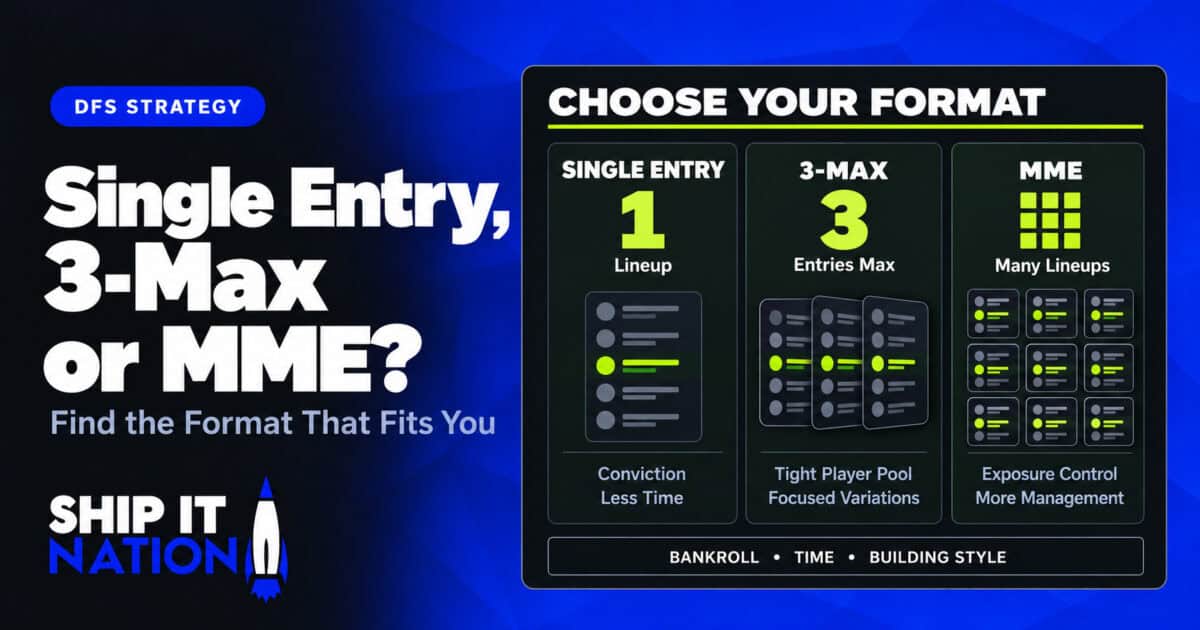
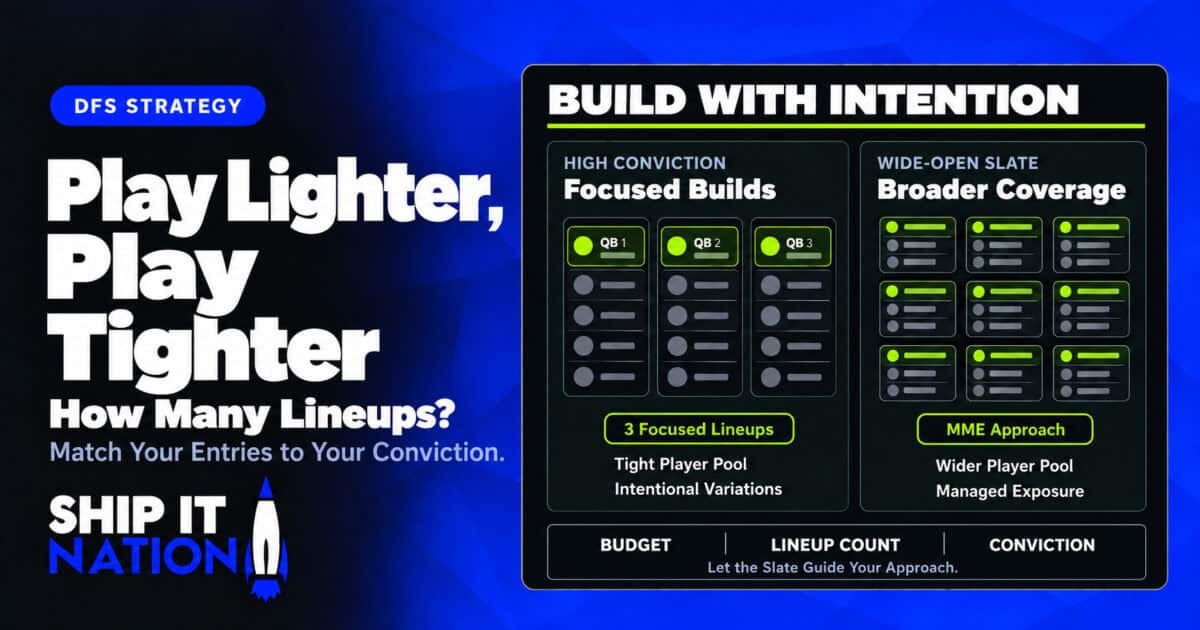
Let your slate budget and your confidence in your read decide how many lineups to enter. A tight, high conviction pool fits a few focused lineups, often in a 3-max or single entry contest. A wide open slate with many viable plays can justify more lineups in an MME.
Key takeaways
- Fewer lineups and smaller slate budgets call for tighter pools built around plays your research supports.
- A tight, confident read can fit fewer focused entries instead of being spread across many contests.
- Wider pools and more lineups can suit open slates where several options look viable.
The First Direction: Fewer Lineups Means a Tighter Pool
If you’re only building a handful of lineups for a slate, whether that’s a single entry or a small max contest, there’s no benefit to bringing a huge, sprawling player pool into the build. A twenty maxTwenty-MaxA twenty-max contest lets each user enter up to 20 lineups. It sits between small-field formats like three-max and the largest 150-entry tournaments.Plan all 20 lineups before building any of them. Decide your stacks and exposure limits first, so the set works as a portfolio rather than 20 separate guesses. slate built around ten quarterbacks or sixty golfers isn’t diversification, it’s just a lack of conviction dressed up as strategy.
Instead, identify a core group of plays you actually believe in and rotate through them with intention. Your handful of lineups should each represent a real, distinct idea, not a random shuffling of the same wide net.
The Second Direction: Less Money Means a Tighter Pool Too
The same principle applies when your budget for a slate is small. If you’ve only allocated twenty dollars to a given slate, there’s little reason to spread that risk across a pool so wide it dilutes any real conviction. Concentrate your exposureExposureExposure is the percentage of your lineups in a contest, or across a slate, that include a particular player, team or stack.Set exposure caps before you build, not after. Decide the most you're willing to have on any one player, then let your lineups fill in around those limits. on the plays your research actually supports, and let your bankroll size match the sharpness of your read.
Now Flip It: A Tight Pool Means You Can Play Lighter
Here’s the part people miss. The relationship works in both directions. If your research for a given slate has led you to a genuinely tight, high conviction pool, that doesn’t mean you need to spray that idea across every contest available.
If your best build for the week is truly your best build, don’t waste it entering fifty different lottery style GPPsGPP (Guaranteed Prize Pool)A GPP is a tournament whose prize pool is guaranteed to pay out in full even if the contest does not fill. Payouts are steep: usually only the top 20 to 25 percent of entries get paid, and a small group at the top wins most of the money.Before you enter a tournament lineup, ask how it finishes first, not just how it cashes. If you cannot name that scenario, rebuild it. where it competes against a hundred thousand other entries and gets no real credit for being sharp. Place it somewhere your conviction actually matters, like a three max or a smaller field qualifier, where a strong, tight build has a real chance to separate itself.
A Practical Example
Say you’ve narrowed a full slate down to three quarterbacks you genuinely like, with clear stacking partners for each. That’s a tight pool. Instead of building twenty scattered lineups trying to cover every possible outcome across the slate, you might build three focused lineups, one around each quarterback, and enter them in a three max contest where the format actually rewards that kind of precision.
Compare that to a week where the slate feels wide open, with a dozen viable plays and no clear separation in your projections. That’s a spread week, and it might actually call for a wider pool spread across more lineups in an MME format, where volume helps you capture more of the range of outcomes.
| Situation | Pool | Lineups | Format that fits |
|---|---|---|---|
| High conviction, small slate budget | Tight | A few focused lineups | Single entry or 3-max |
| Spread week, many viable plays | Wider | More lineups | MME |
| Tight pool but a large field GPP | Tight | Do not spray it across many contests | 3-max or a smaller field qualifier |
How to match lineup count to your read of the slate
Why This Matters for Your Bankroll
Getting this backwards is one of the fastest ways to waste both your research and your money. Building a huge, unfocused pool for a three max slate wastes your entries on lineups that don’t represent distinct ideas. Building an overly narrow pool for a 150 max slate leaves value on the table by not spreading exposure wide enough to capture the range of outcomes a big field format is designed for.
Making This Part of Your Weekly Process
Before you start building any lineups, ask yourself two quick questions. How many lineups am I actually entering this week, and how confident am I in my read on this slate? Let the honest answers to those two questions guide how wide or narrow your pool should be, rather than defaulting to the same habit every single week regardless of what the slate is actually telling you.
This isn’t a complicated concept once it clicks, but it’s one of those fundamentals that separates players who are intentional about their process from players who are just going through the motions slate after slate.
Go further: DFS PROcess 101 Members
Full video courses on bankroll management, contest selection, roster construction and more, free for members.
Common Questions
How many DFS lineups should I enter?
Let your slate budget and your confidence in your read decide. A tight, high conviction pool fits one to three lineups in a single entry or 3-max contest. A wide open slate with many viable plays can justify more lineups in an MME. If your budget for the slate is small, enter fewer lineups.
What does play lighter, play tighter mean in DFS?
Fewer lineups or a smaller slate budget call for a tighter player pool built around your strongest ideas. The relationship also works in reverse: a tight pool can justify playing fewer contests.
Should I use a wider player pool for MME?
A wider pool can suit MME when the slate offers many viable options without clear separation. The article argues that an overly narrow pool limits your ability to cover the range of outcomes.
Need a term explained? The Ship It Nation DFS glossary covers every DFS term we use in plain language. All articles

About the author
Tyler Tamboline
Tyler Tamboline co-founded Ship It Nation and is the face of the brand across our shows and community. He is also the Founder of DFS Mastermind, helping hundreds of DFS players find their own process. He has played DFS since 2012, focusing primarily on PGA and NFL, and has created DFS content full-time since 2018 at different sites across the industry. He is known for strategy, game theory and leverage in large-field tournaments. He has been a regular on many Fantasy Sports podcasts, including weekly PGA and NFL shows with Pat Mayo.
More from Tyler Tamboline