
The Field
What Is the Field in DFS?
Last updated September 22, 2026 by Ship It Nation
The field is everyone else entered in a contest, the group of lineups you are competing against.
Why It Matters
You win by scoring more than the field, not by building the best lineup in isolation. In tournaments, predicting the field's choices lets you decide where to match it and where to be different. Smaller, more skilled fields need less contrarian play than huge ones.
Go Deeper
Articles that put The Field to work.
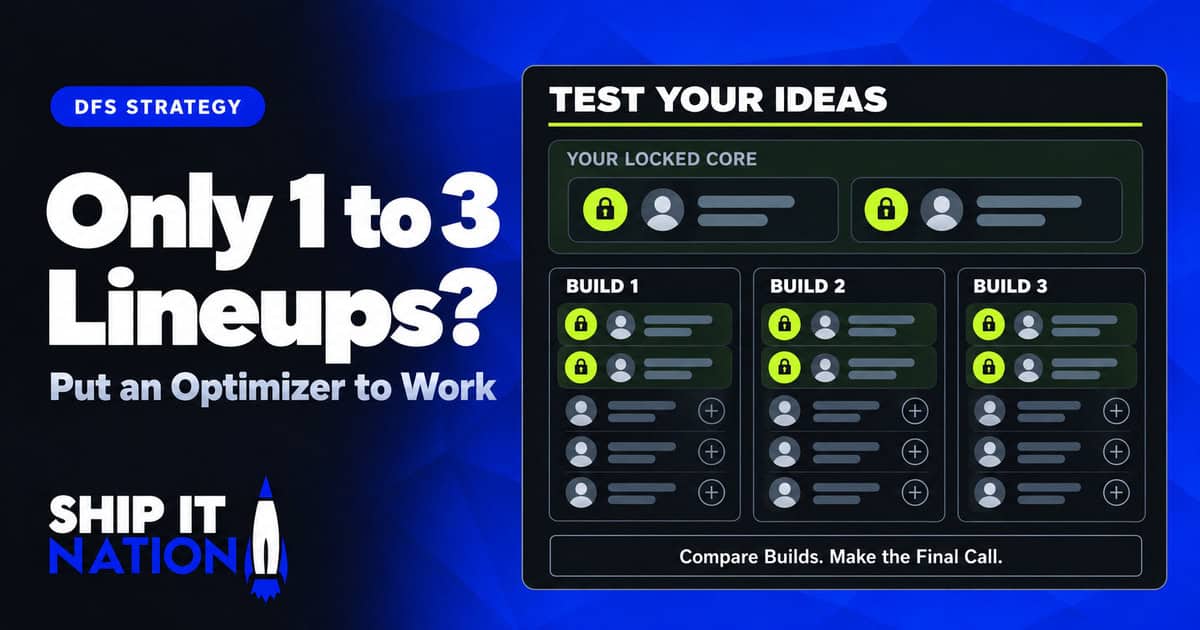 Do You Need a DFS Optimizer If You Only Play 1 to 3 Lineups?
Lineup Building · 3 min read
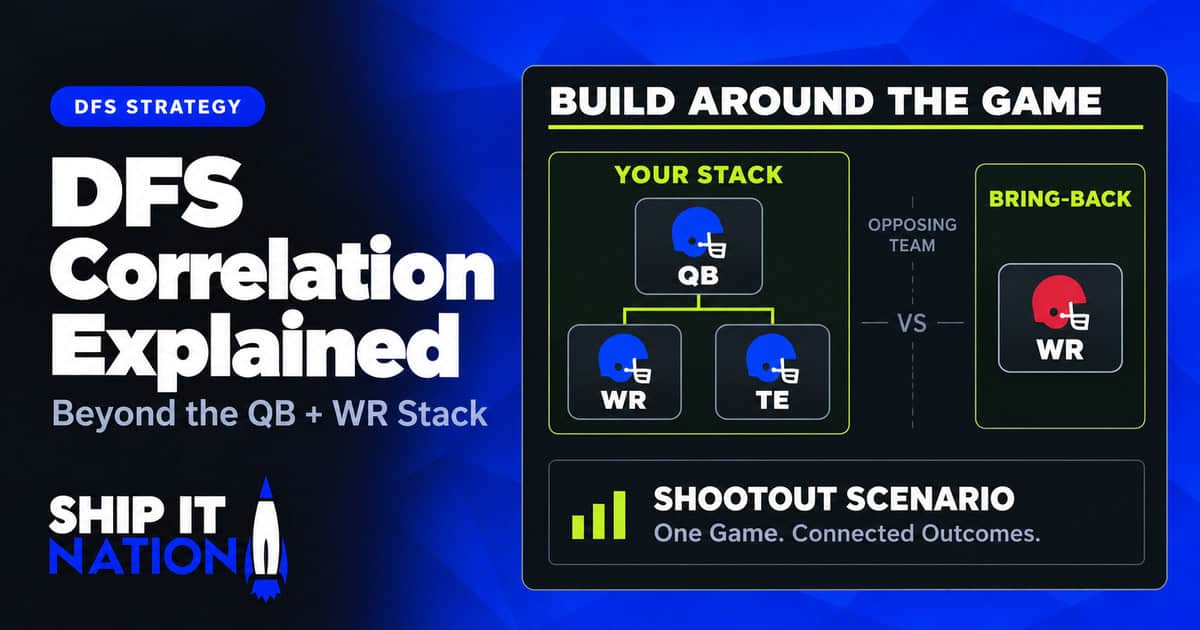 DFS Correlation Explained: Why Stacking Isn’t Just About QB and WR
Lineup Building · 3 min read
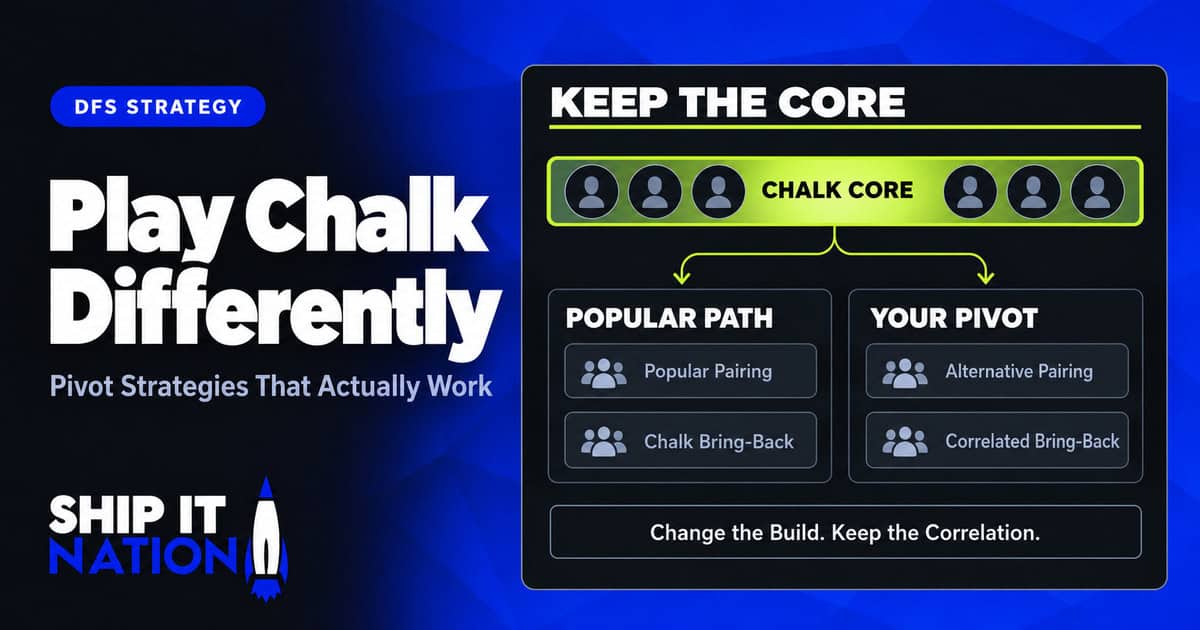 How to Play Chalk Differently: Pivot Strategies That Actually Work
Ownership & Leverage · 3 min read
Example
Say a college football slate has one game with a 70-point total, and projected ownership shows the field stacking it heavily. You still like that game, so you play a stack from it, but you pair it with a running back and receiver the field is ignoring. If the shootout happens, you keep pace with the lineups stacking that game, and if the players they skipped outscore the ones they chose, you gain ground on them.
Before you build, picture the typical lineup in your contest. Then decide on purpose where you'll match it and where you'll step away from it.
Heard on the Shows
This term has come up on 16 shows. Each line jumps to that moment of the video.
Common Questions
Does the field change with contest size?
Yes. A small high-stakes contest usually has a sharper field that builds similar, well-researched lineups. A huge low-entry-fee tournament has more casual players whose picks are harder to predict. That's why large fields usually call for more uniqueness.
How do you know what the field will do?
Projected ownership is the main tool. Beyond that, the field tends to chase low salaries, recent big games, popular matchups and plays pushed heavily in content. Watching how ownership shifts after news breaks sharpens your read close to lock.
How much of the field do you need to beat?
It depends on the contest. In cash games you generally need to beat about half the field. In tournaments you need to beat nearly all of it to reach the top payouts, which is why tournament lineups have to differ more from the typical build.