Simulations
What Are Simulations in DFS?
Last updated November 13, 2026 by Ship It Nation
Simulations play out a slate thousands of times using each player's range of outcomes, then record what happened. Contest sims go further and score your lineups against a simulated field to estimate how often they cash or win.
Why It Matters
A projection is one number, but a slate is many possible outcomes. Sims show which players reach the ceiling a tournament needs, how often stacks hit together, and how your lineups fare against a field playing the popular builds. They are only as good as the inputs, so a weak projection or ownership guess will produce confident but wrong results.
Go Deeper
Articles that put Simulations to work.
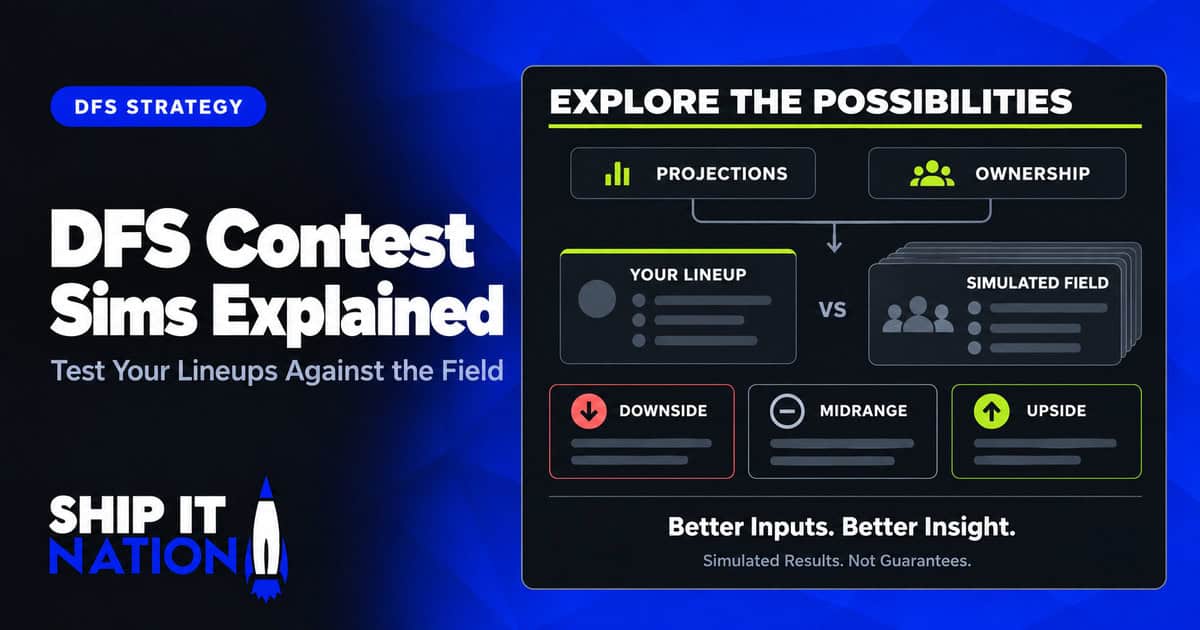 What Are DFS Contest Sims and How Do They Work?
Lineup Building · 3 min read
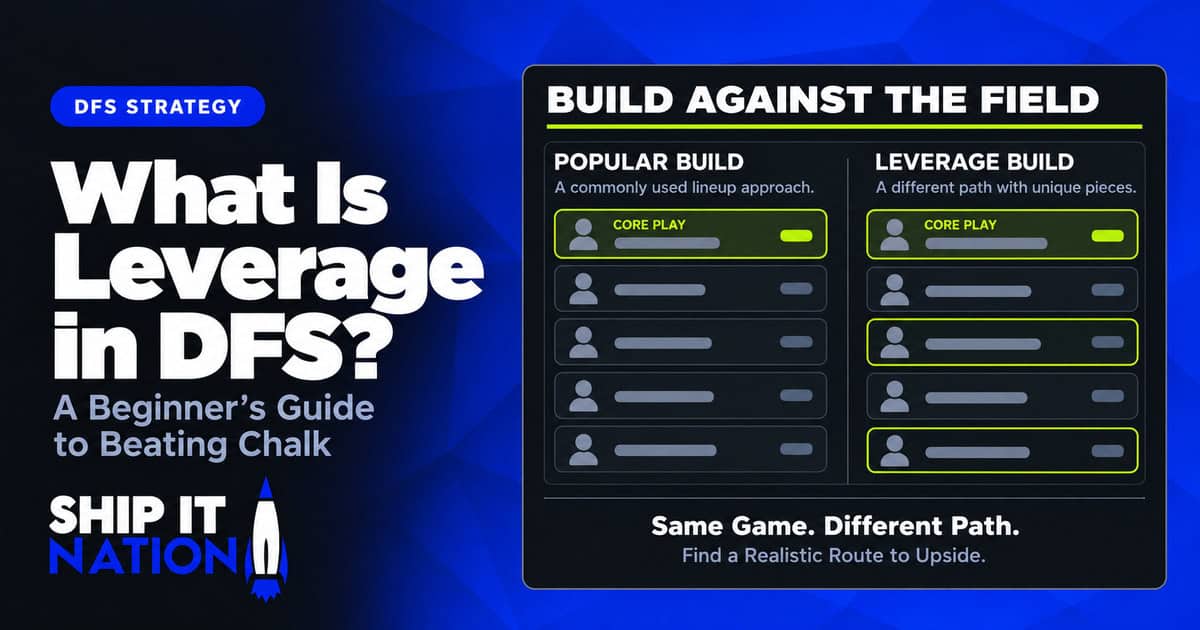 How to Find Leverage in DFS: A Beginner’s Guide to Beating Chalk
Ownership & Leverage · 3 min read
Example
Say two NFL receivers both project for 15 points. After 10,000 simulations, one goes over 30 points in 14% of runs and the other in 6%, because the first gets more deep targets. In a large tournament where you need a big score, the first receiver is the better pick even though their average projection is the same.
Use sims to compare close decisions, not to replace your read. If a sim result surprises you, check the input that caused it before trusting it.
Hear Us Break It Down
Hand-picked moments from our free live streams where our hosts break down this term.
More mentions 12
Common Questions
How many simulations do you need to run?
Thousands at minimum. A few hundred runs are too noisy to separate players with similar projections. Many tools use 10,000 or more, and contest sims with large fields often need even more to give stable win and top-finish rates.
What is sim ROI?
Sim ROI is the average return a lineup earned across all simulated contests, after entry fees. A positive number means the lineup won more than it cost in the sims. It is an estimate, so treat small differences between lineups as noise.
Are DFS simulations accurate?
They are as accurate as their inputs. Sims depend on projections, outcome ranges, correlations between players and ownership guesses. Good inputs make them a strong guide for comparing options; bad inputs make them precise-looking numbers that point the wrong way.