
Correlation
What Is Correlation in DFS?
Last updated September 22, 2026 by Ship It Nation
Correlation describes how two players' fantasy scores move together. Positively correlated players tend to have big games at the same time, usually because one player's success directly adds points for the other.
Why It Matters
Correlation does not raise a lineup's average score, it widens the range of outcomes. That makes a first-place finish more likely in tournaments, where only the top matters. In cash games, too much correlation makes a lineup less stable.
Go Deeper
Articles that put Correlation to work.
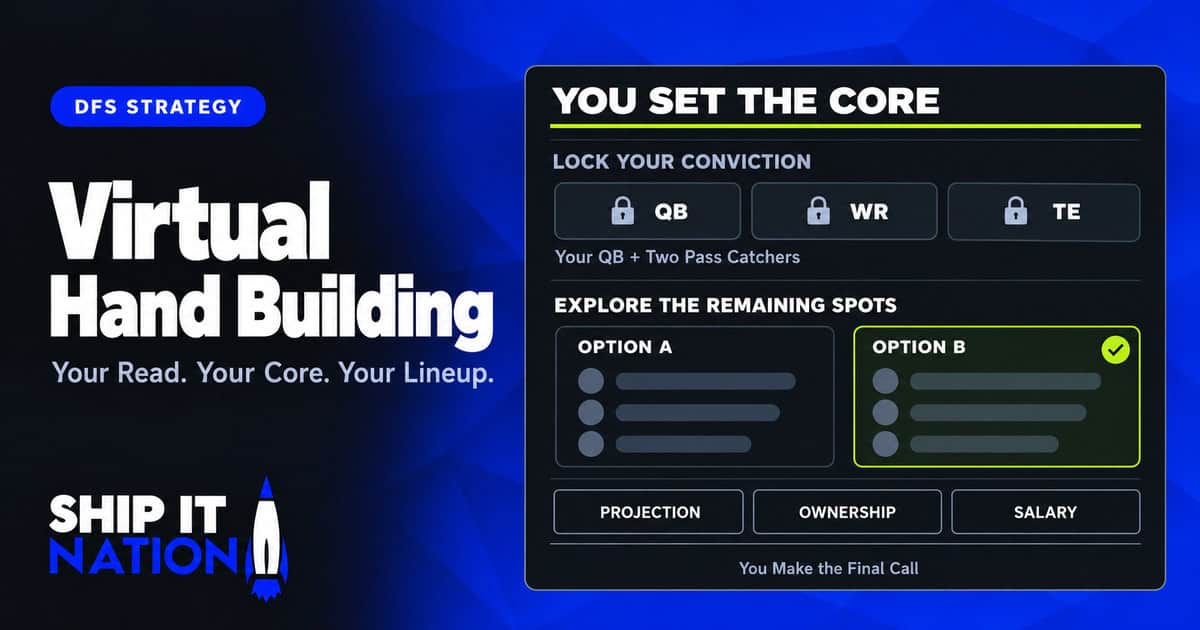 Virtual Hand Building: How to Use an Optimizer Without Losing Your Personal Style
Lineup Building · 3 min read
 Do You Need a DFS Optimizer If You Only Play 1 to 3 Lineups?
Lineup Building · 3 min read
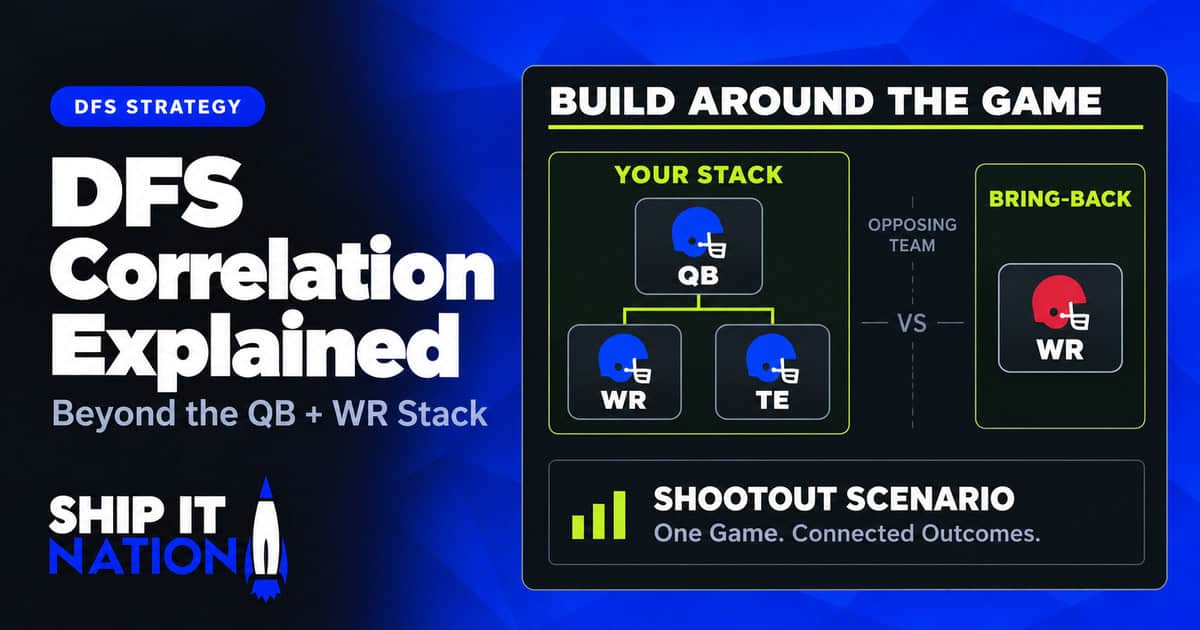 DFS Correlation Explained: Why Stacking Isn’t Just About QB and WR
Lineup Building · 3 min read
Example
Say you roster a quarterback and his top receiver. When the quarterback throws a 40-yard touchdown to that receiver, both players score on the same play, so your lineup collects points in two spots. If you had paired the quarterback with a receiver from another game, that touchdown would only help one spot.
When you build a tournament lineup, ask which of your players need the same thing to happen. The more of them that do, the higher your lineup's ceiling.
Heard on the Shows
This term has come up on 18 shows. Each line jumps to that moment of the video.
Common Questions
Does correlation matter in cash games?
Somewhat, but less. Heavy correlation widens a lineup's range of outcomes, which helps you win a tournament but raises the chance of a low score. Many cash lineups use light correlation, such as a quarterback and one receiver, rather than a full stack.
Which players are most correlated in DFS?
It depends on the sport. A quarterback and his pass catchers in football, consecutive hitters in a baseball lineup, and linemates on the same hockey line or power play unit are the strongest pairings. Basketball and golf have much weaker links.
How do you add correlation to optimizer lineups?
Use stacking rules. Most optimizers let you require a quarterback with at least one pass catcher, a minimum number of hitters from one team, or skaters from the same line. Without those rules, an optimizer treats every player as independent.