On this page
Sit out a DFS slateSlateA slate in DFS is the set of games, races, fights or tournament rounds covered by a contest. It determines which events your player selections can come from and which performances count toward your score.Before building, open the contest details and check the included events, scoring period and lock rules. Do not assume two sites offer identical slates just because both call them the main slate. when you can’t narrow your player pool, key information won’t clear before lockLineup LockLineup lock is the deadline after which you cannot change your selected players. Without late swap, your entire lineup locks together; with late swap, which allows edits after the contest begins, players lock at their games' listed deadlines.After saving an edit, reopen your entered lineups and confirm the change reached every intended entry. Check the site's displayed lock times and time zone instead of relying on the television schedule., your best format isn’t available, you’re tilted, or you’ve hit your budget. If a slate feels uncomfortable but not hopeless, scale back instead: play only your strongest format, enter fewer lineups, or drop to lower stakes.
Key takeaways
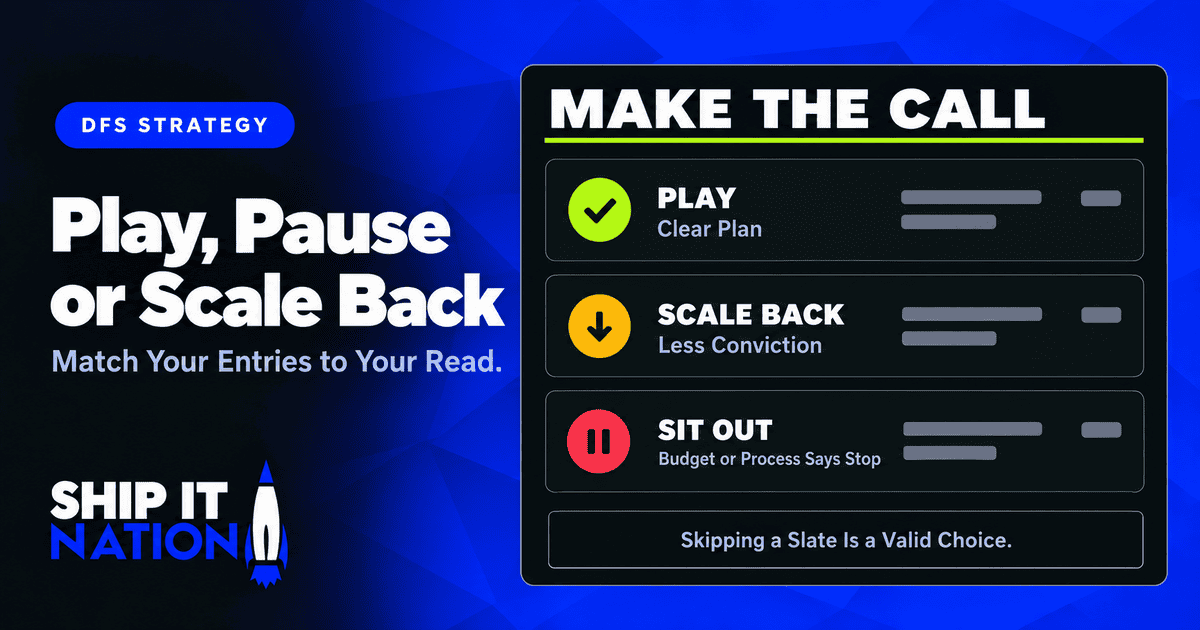
- Sit out a slate when you cannot narrow your player pool, key information will not clear before lock, your best format is not available, you are tilted, or you have hit your budget.
- If a slate feels uncomfortable but not hopeless, scale back by playing only your strongest format, entering fewer lineups, or dropping to lower stakes.
- When you skip a slate, do not make up for it with extra volume the next week, because unspent money stays in your bankroll.
Skipping a slate protects money for the weeks where your process has a real advantage.
Playing Every Slate Is Not a Strategy
Your edge isn’t spread evenly across the calendar. Some weeks you have a clear read, a format that fits, and a player pool you can narrow without much pain. Other weeks the slate is a fog. When you force action in the fog, you’re mostly paying entry fees to feel involved.
Skipping a slate doesn’t mean you’re falling behind. It means you’re protecting money for the weeks where your process actually has an advantage.
Signs You Should Consider Sitting Out
You can’t narrow your player pool. If you’re staring at ten viable quarterbacks or fifty golfers and nothing separates them, a single-entry or three-max contest is going to feel like guessing. That’s a sign the slate doesn’t fit a tight format.
Key information is unresolved. A slate where several major injury situations won’t clear until right before lock is hard to build for, especially if you can’t use late swap to fix a bad guess.
Your best format isn’t available. If you thrive in three-max contests and the week’s lobby has nothing in your range, don’t squeeze yourself into a format you play poorly.
You’re tilted. If you’re chasing losses from the previous slate, you aren’t making decisions from a clear place. That’s a good reason to step away, full stop.
You’ve hit your budget. If your weekly or monthly allocation is gone, the right answer is to wait. This is exactly why you set limits in the first place.
Scaling Back Is the Middle Option
Sitting out entirely isn’t your only move. If a slate feels uncomfortable but not hopeless, scale back. Here are some ways to do it:
- Play only your strongest format, and skip the rest
- Enter a smaller number of lineups
- Drop to lower stakes and treat the slate as practice
- Use the week to run dry builds and study how the field is likely to attack the slate, without committing real money
Low-exposureExposureExposure is the percentage of your lineups in a contest, or across a slate, that include a particular player, team or stack.Set exposure caps before you build, not after. Decide the most you're willing to have on any one player, then let your lineups fill in around those limits. weeks can be useful. You’re still watching the slate unfold, which means you’re still learning, without taking on the risk of a full commitment.
Connect It to Your Slate Tiers
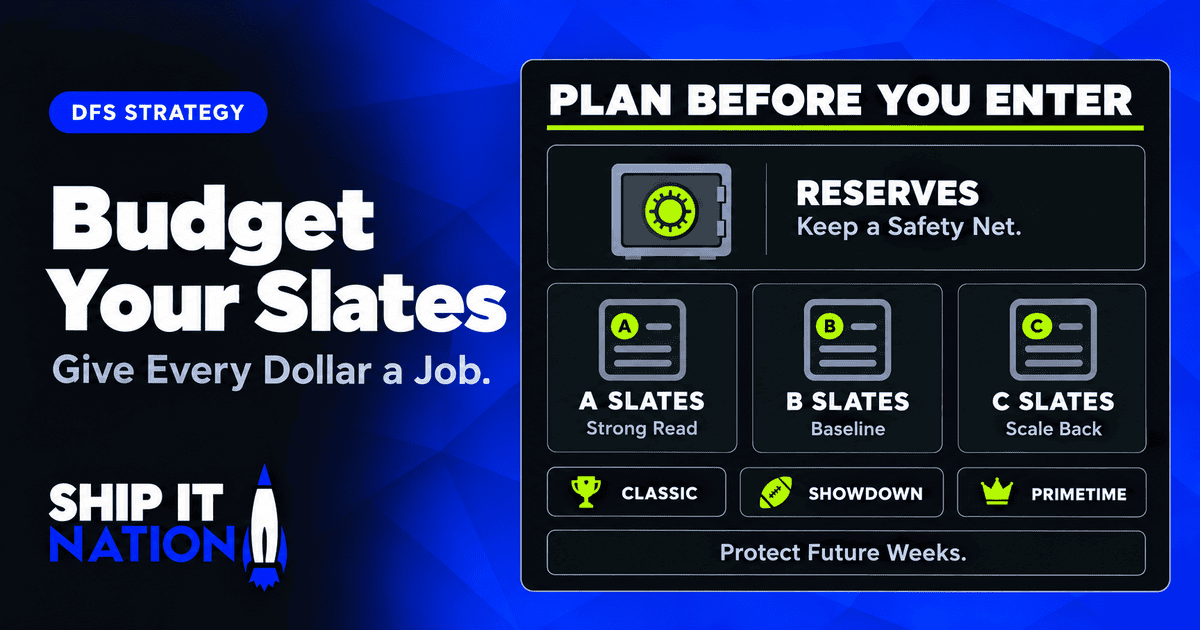
If you’ve sorted your slates into tiers, as in a bankroll plan that labels weeks as strong, normal, or murky, sitting out or scaling back is simply the lowest tier doing its job. You aren’t breaking the plan. You’re following it.
Avoid the Catch-Up Trap
When you skip a week, resist the urge to make up for it with extra volume the next week. Money you didn’t spend isn’t money you owe the contest lobby. If you skipped a slate and saved the budget, it stays in your bankroll. It doesn’t need to be spent on a bigger bet.
A Quick Check Before You Enter
Ask yourself three questions before you spend a dollar on any slate:
- Can I explain my main thesis for this slate in a sentence or two?
- Does my player pool match the contest format I’m about to enter?
- Am I entering because I have an edge, or because I feel like I should be playing?
If the answers are no, no, and the second one, you probably have your answer.
The Long Game
DFS rewards players who are still in the game after a long run of slates. A few skipped weeks won’t change your season, but a few forced weeks might. Staying selective is part of staying sustainable.
For help with problem gambling, call or text 1-800-MY-RESET.
Check the FanDuel contest rules before choosing a different format.
Go further: DFS PROcess 101 Members
Full video courses on bankroll management, contest selection, roster construction and more, free for members.
Common Questions
When should you sit out a DFS slate?
Sit out when you cannot narrow your player pool, key information will not clear before lock, your best format is not available, you are tilted, or you have hit your budget. Skipping protects money for the weeks where your process has a real advantage and is not falling behind.
What is the difference between sitting out and scaling back in DFS?
Sitting out means skipping the slate entirely. Scaling back means staying involved at lower risk: play only your strongest format, enter fewer lineups, drop to lower stakes, or run dry builds without real money. Scaling back suits slates that feel uncomfortable but not hopeless.
Should you play more after skipping a DFS slate?
No. Money you did not spend is not money you owe the contest lobby. If you skipped a slate and saved the budget, it stays in your bankroll. Trying to make it up with extra volume next week is the catch-up trap and turns a controlled plan into a risky one.
Need a term explained? The Ship It Nation DFS glossary covers every DFS term we use in plain language. All articles

About the author
Tyler Tamboline
Tyler Tamboline co-founded Ship It Nation and is the face of the brand across our shows and community. He is also the Founder of DFS Mastermind, helping hundreds of DFS players find their own process. He has played DFS since 2012, focusing primarily on PGA and NFL, and has created DFS content full-time since 2018 at different sites across the industry. He is known for strategy, game theory and leverage in large-field tournaments. He has been a regular on many Fantasy Sports podcasts, including weekly PGA and NFL shows with Pat Mayo.
More from Tyler Tamboline