Lineup Building
Late Swap Strategy Guide: How to React to Breaking News in NFL and NBA DFS
Published by Tyler Tamboline · Updated · 3 min read
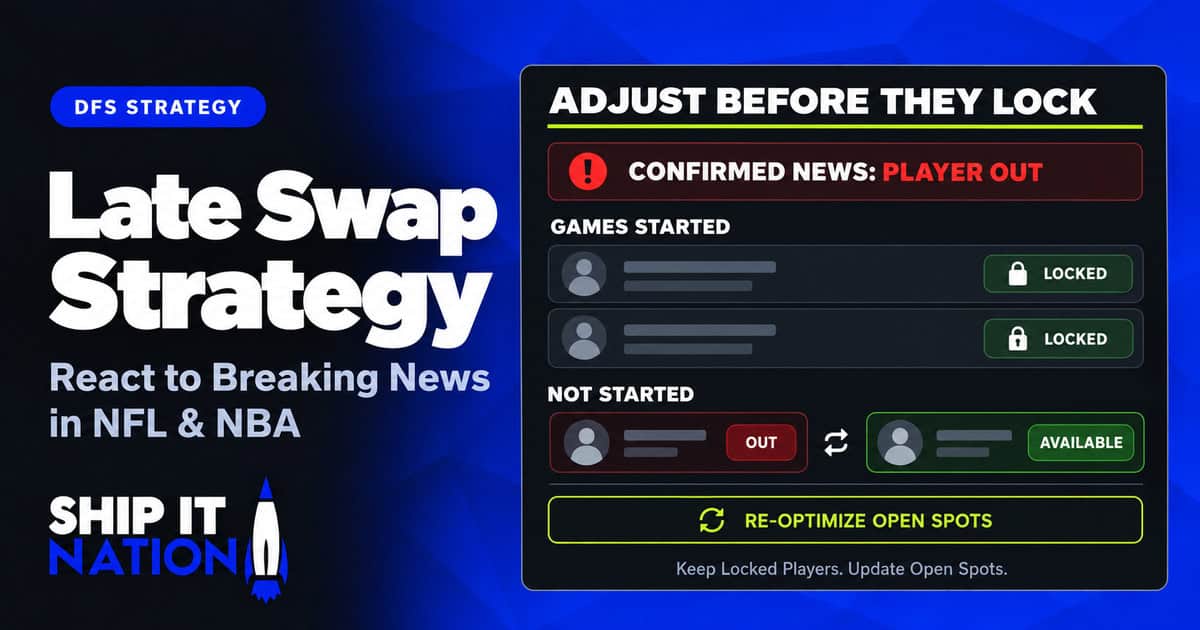
A good late swapLate SwapLate swap lets you change unlocked players in an entered DFS lineup after the contest starts. Both the players you remove and their replacements must remain eligible for editing under the contest's lock rules.Before the first games lock, identify affordable backup combinations for your later players. Check that each combination fits the open positions, then confirm your saved changes in every affected entry. strategy is one of the most underused edges in daily fantasy sports, especially in sports like NBA and large NFL slates where games start at staggered times throughout the day. Understanding how to use it well can be the difference between a near miss and a real result, particularly in tournaments where your entries are still alive across multiple time slots.
Key takeaways
- Check your live entries between game windows for news affecting players who have not started.
- Use updated projections and optimizer features to quickly evaluate changes to remaining roster spots.
- Make swaps when confirmed news changes your outlook, rather than reacting to speculation or minor updates.
What Late Swap Actually Allows
Late swap lets you change players in your lineup who haven’t started their game yet, even after other players in that same lineup have already locked. This means you’re not stuck with a full roster built hours or even a full day in advance. You can react to real time information as the slate unfolds.
Why This Matters More in Certain Sports
NBA is a natural fit for late swap because of how frequently news breaks close to game time, whether that’s a late scratchInjury NewsInjury news is information about a player's health that can change whether they compete, how much they play or how effectively they perform. In DFS, it also affects opportunities for teammates and opponents.Before an uncertain player's game locks, identify an alternative you can afford at each affected position. Check whether making that change would require another player whose game starts earlier., a minutes restriction announcement, or a lineup change that shifts the entire outlook for a game. Large NFL slates with games spread across the early window, the late window, and Sunday or Monday night also benefit heavily, since injuries and inactive lists from early games can inform decisions for players who haven’t kicked off yet.
Practical Ways to Use Late Swap
The most basic use is simply replacing a player who gets ruled out or added to an injury report after your lineup was originally built. But the more valuable use goes beyond just reacting to bad news.
If an early slate of games plays out in a way that confirms or contradicts your original thesis, you can adjust your remaining, still live roster spots accordingly. A running back who was in a suspected timeshare might see his role clarified based on how the early part of a game plays out, giving you information to act on for a similar situation later in the slate.
Late swap also becomes valuable in qualifiers and top heavy contests, where a small adjustment to a still live roster spot based on new information can meaningfully shift your remaining equity in the contest.
Using an Optimizer to Speed Up the Process
Trying to manually track every live roster spot across multiple lineups while news is breaking in real time is a recipe for missed opportunities. An optimizer that supports re-running your live lineups based on updated projections makes this process far more manageable, especially if you’re managing more than a handful of entries.
Instead of starting from scratch every time news breaks, you can re-optimize your still live roster spots based on updated information, letting the tool quickly surface the best available adjustments rather than manually cross referencing injury news against your remaining player pool by hand.
A Word of Caution
Late swap is powerful, but it’s not a license to overreact to every minor update. Changing a roster spot based on a genuinely meaningful piece of news, like a confirmed injury or a significant role change, is different from panic swapping based on speculation or a minor beat reporter tweet with little real substance behind it.
Stick to your original process and only make changes when the new information genuinely shifts your read on a player’s outlook, rather than second guessing every live roster spot just because you have the ability to.
Making Late Swap Part of Your Routine
If you’re playing sports with staggered game times and you’re not actively using late swap, you’re leaving a real edge on the table. Build the habit of checking in on your live entries between game windows, staying aware of breaking news relevant to your remaining roster spots, and using your optimizer’s live re-optimization features to act quickly when a genuine adjustment is warranted.
Full video courses on bankroll management, contest selection, roster construction and more, free for members.
Common Questions
What is late swap in DFS?
Late swap lets you change players whose games have not started, even after other players in your lineup have locked. It allows you to react to information as the slate unfolds.
When should you late swap in NFL and NBA DFS?
Make changes when meaningful news, such as a confirmed injury or significant role change, shifts your outlook on a remaining player. Check entries between game windows and avoid swapping based on speculation.
How can an optimizer help with DFS late swap?
An optimizer with live re-optimization features can evaluate remaining roster spots using updated projections. This makes adjustments more manageable when tracking multiple lineups during breaking news.
Need a term explained? The Ship It Nation DFS glossary covers every DFS term we use in plain language.

About the author
Tyler TambolineTyler Tamboline co-founded Ship It Nation and is the face of the brand across our shows and community. He is also the Founder of DFS Mastermind, helping hundreds of DFS players find their own process. He has played DFS since 2012, focusing primarily on PGA and NFL, and has created DFS content full-time since 2018 at different sites across the industry. He is known for strategy, game theory and leverage in large-field tournaments. He has been a regular on many Fantasy Sports podcasts, including weekly PGA and NFL shows with Pat Mayo.
More from Tyler Tamboline →Keep reading