NBA
Is NBA DFS Right for Your Schedule? What the Sport Demands
Published by Ship It Nation Staff · 4 min read
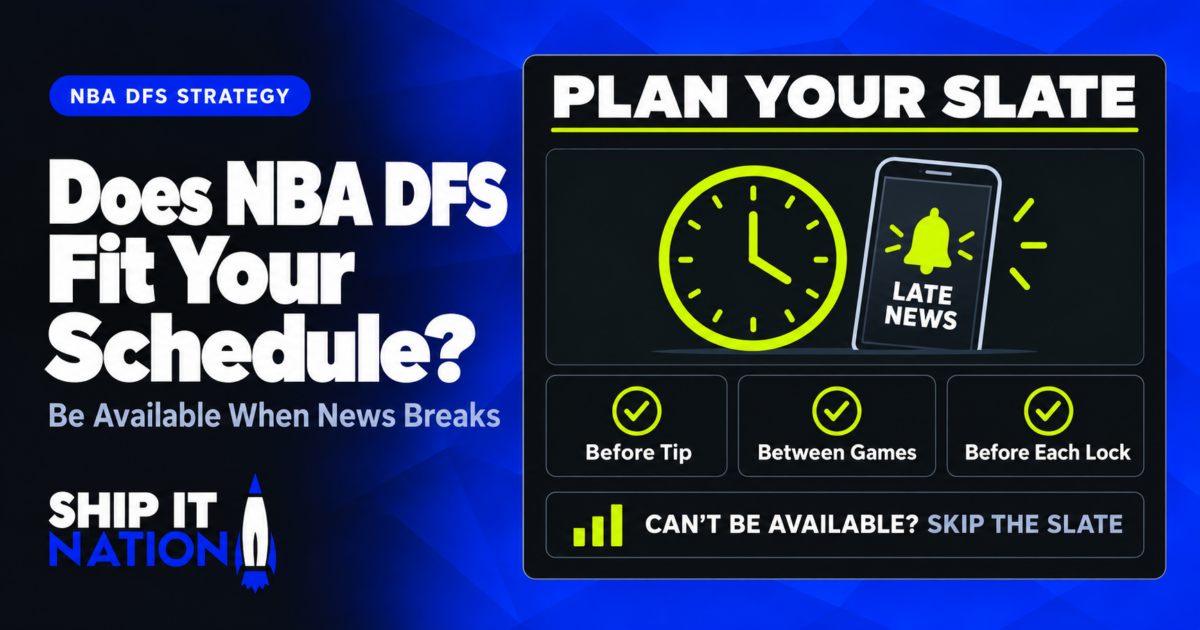
NBA DFS is right for your schedule only if you can be available, or at least reachable, in the hours before and during the slateSlateA slate in DFS is the set of games, races, fights or tournament rounds covered by a contest. It determines which events your player selections can come from and which performances count toward your score.Before building, open the contest details and check the included events, scoring period and lock rules. Do not assume two sites offer identical slates just because both call them the main slate.. News can change within an hour of tip, so your calendar matters as much as your skill. If you cannot be available for a slate, skip it.
Key takeaways
- NBA DFS is right for your schedule only if you can be available, or at least reachable, in the hours before and during the slate.
- If you cannot be available for a slate, skip it, because an unmanaged lineup can cost the whole entry fee.
- Match your number of entries to your time, since each extra lineup is one more thing to fix when news hits.
Why Basketball Is Different
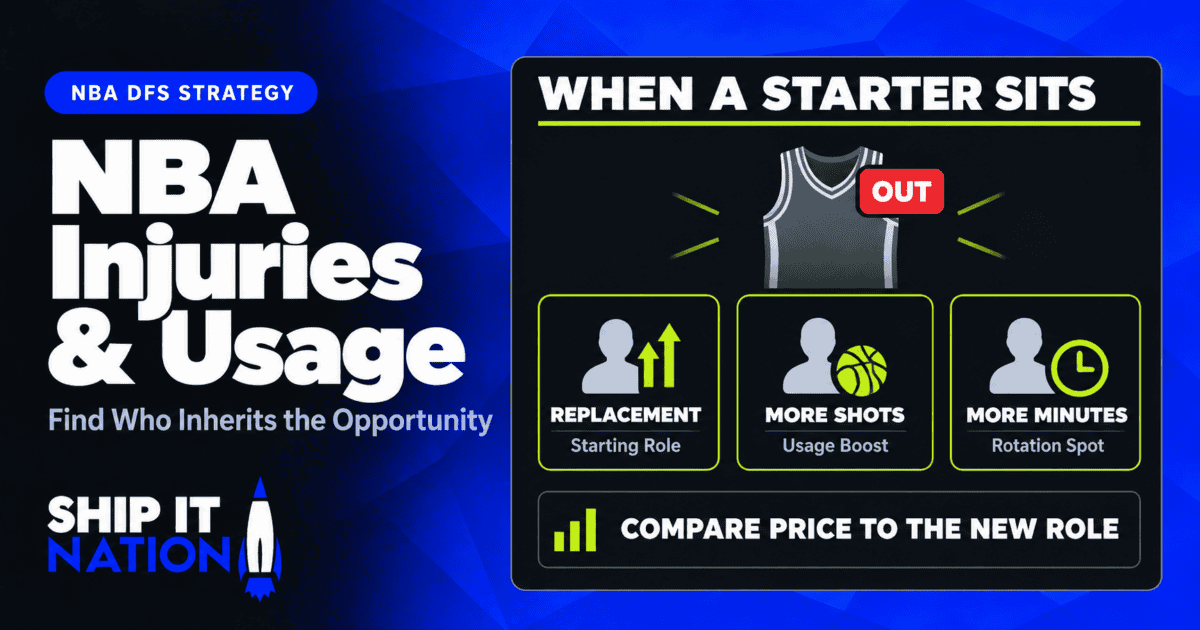
In NFL, most of the meaningful news arrives well before the first kickoff. In MLB, lineups are mostly posted hours before the first pitch and a late scratchInjury NewsInjury news is information about a player's health that can change whether they compete, how much they play or how effectively they perform. In DFS, it also affects opportunities for teammates and opponents.Before an uncertain player's game locks, identify an alternative you can afford at each affected position. Check whether making that change would require another player whose game starts earlier. rarely rewrites a slate. NBA is the opposite. Injury designations, minutes restrictions, rest decisions, and starting lineups can all change within an hour of tip, and sometimes inside the final few minutes before a game locks.
That means a lineup you love at lunchtime can be unplayable by dinner. One star ruled out can lift three or four teammates, shift ownershipOwnershipOwnership is the percentage of lineups in a contest that include a given player. Projected ownership is an estimate made before lock; actual ownership is posted once the contest locks.Ownership isn't something to avoid; it's something to build around. The goal is understanding how the field is likely to build, then finding your edge relative to that. across the whole slate, and turn your favorite build into a pile of stale decisions. The sport is not harder to understand than others. It is harder to stay current in.
The Real Cost Is Time
Players new to NBA often underestimate the hours. Building is the short part. Watching news, rebuilding after changes, and making swaps as games lock is the long part, and it happens on the sport’s schedule, not yours.
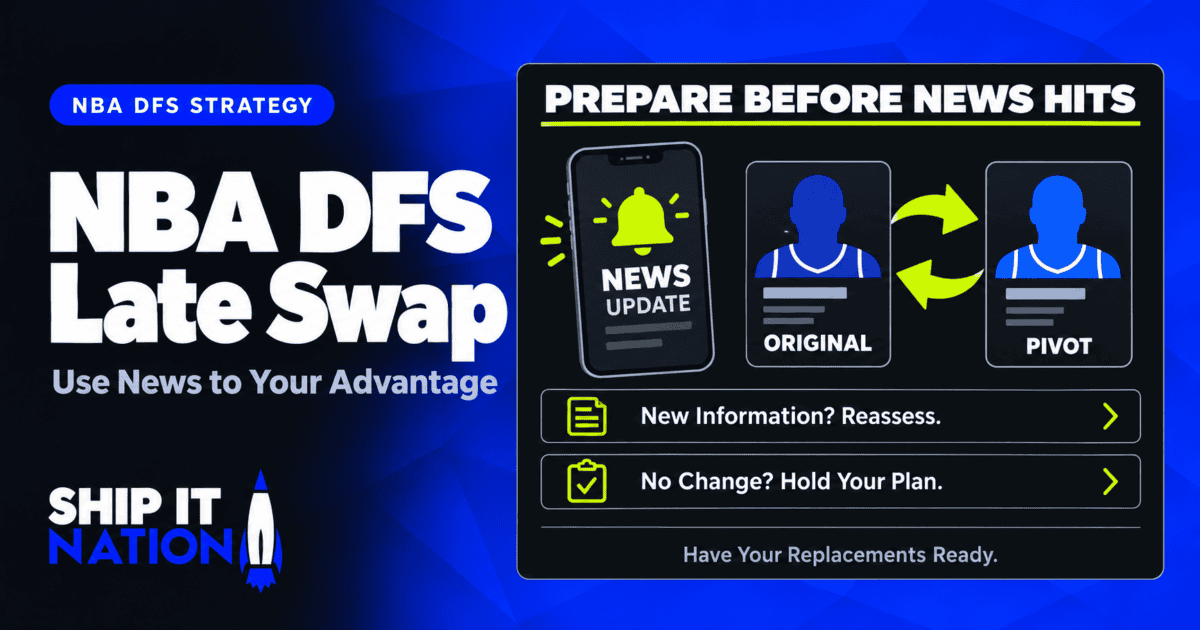
Late swap exists on both major sites, and it is a genuine edge, but it only helps if you are there to use it. If you enter a lineup and walk away, you are giving up the main advantage that engaged players have. You are also exposing yourself to a player who is ruled out, who plays two minutes, or who simply sits while your roster slot stays dead.
A Simple Self-Test
Ask yourself these questions honestly:
- Can I be at a phone or computer for the hour before the first tip?
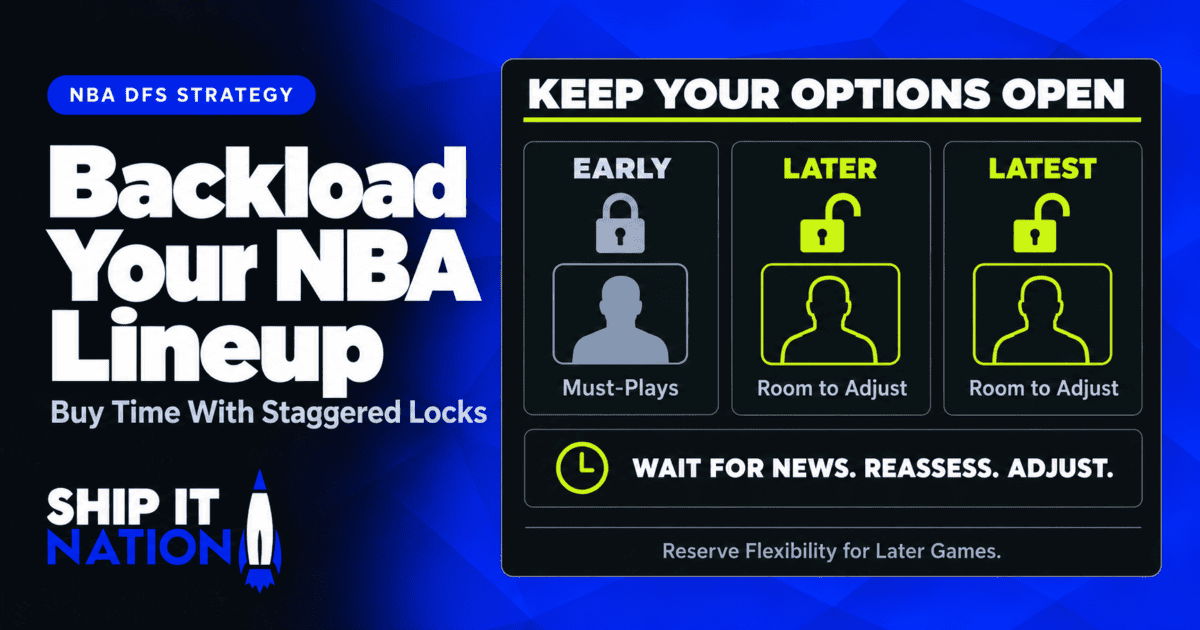
- Can I check back between games, since tip times are staggered?
- If a big name is ruled out with five minutes to lock, will I feel energized or dread it?
- Do I have a reliable way to make swaps if I am out of the house?
That third question is more revealing than it sounds. Players who enjoy NBA tend to like the scramble. A late scratch feels like an opening, because you know a share of the fieldThe FieldThe field is everyone else entered in a contest, the group of lineups you are competing against.Before you build, picture the typical lineup in your contest. Then decide on purpose where you'll match it and where you'll step away from it. will never adjust. If the same moment makes you feel resentful, the sport may be draining you more than it pays you.
Skipping a Slate Is a Strategy
The most useful rule in NBA DFS may be a simple one: if you cannot be available, do not play that slate. You do not need to be in every night. A skipped slate costs you nothing. A lineup you could not manage can cost you the entire entry fee, and it does so in the way that feels worst, which is a loss caused by something you could have fixed.
Decide before you register. Many experienced players enter their lineups the night before only on evenings they know they will be free. If you are not sure at registration time, treat that as your answer.
Match Your Commitment to Your Format
Your schedule should also shape how many entries you run. Each lineup is one more thing to fix when news hits. Ten lineups across several contests is a lot to rebuild with three minutes left. A single entry or a small handful is manageable almost anywhere.
If your time is limited, consider:
- Playing fewer entries and fewer contests per slate
- Focusing on slates that fit your evenings, such as late-starting windows
- Choosing contests where one well-managed lineup has a real chance
- Skipping nights when your commitments overlap with the first lock
Large multi-entry portfolios are a skill of their own, and they multiply the workload. Start small, learn how fast the news moves, and only add volume when your process can handle it.
If the Schedule Does Not Fit
There is no shame in deciding NBA is not your sport. Other sports give you more time to prepare and less pressure at lockLineup LockLineup lock is the deadline after which you cannot change your selected players. Without late swap, your entire lineup locks together; with late swap, which allows edits after the contest begins, players lock at their games' listed deadlines.After saving an edit, reopen your entered lineups and confirm the change reached every intended entry. Check the site's displayed lock times and time zone instead of relying on the television schedule.. Plenty of players do well by saving their heaviest effort for sports where their calendar helps them, and treating basketball as an occasional, low-volume addition.
You can also test the waters cheaply. Play a few low-stakes slates with a single lineup, stay present from morning to lock, and track how it feels. Note how many times the news changed your plan and whether you were able to respond.
If playing feels draining, NCPG offers help and treatment resources.
Your First Step
Pick the next three NBA slates and mark which ones you can truly commit to. Play only those, with one lineup each, and keep a short log of what changed and when. That log will tell you more about whether this sport suits your life than any strategy article can.
Learn the roster structure on each site before you build your first lineup.
Full video courses on bankroll management, contest selection, roster construction and more, free for members.
Common Questions
How much time does NBA DFS take?
Building is the short part. Watching news, rebuilding after changes, and making swaps as games lock is the long part, and it follows the sport’s schedule, not yours. You should be reachable for the hour before the first tip and able to check back between games.
Should I skip an NBA DFS slate if I can’t watch the news?
Yes. If you cannot be available, do not play that slate. A skipped slate costs you nothing, while a lineup you could not manage can cost the entire entry fee. Decide before you register, and if you are unsure at registration time, treat that as your answer.
How many NBA lineups should I enter if my time is limited?
Start with a single entry or a small handful, which is manageable almost anywhere. Each lineup is one more thing to fix when news hits, and ten lineups are a lot to rebuild with three minutes left. Add volume only when your process can handle it.
Need a term explained? The Ship It Nation DFS glossary covers every DFS term we use in plain language.

About the author
Ship It Nation StaffShip It Nation was founded in 2023 by Tyler Tamboline and Mike Petta to give DFS players the tools, projections, content, and community they need to build a winning process. Today, we're a fully remote team of active DFS players, analysts, and builders.
More from Ship It Nation Staff →Keep reading