NBA
NBA DFS Late Swap: How to Use News to Your Advantage
Published by Ship It Nation Staff · 5 min read
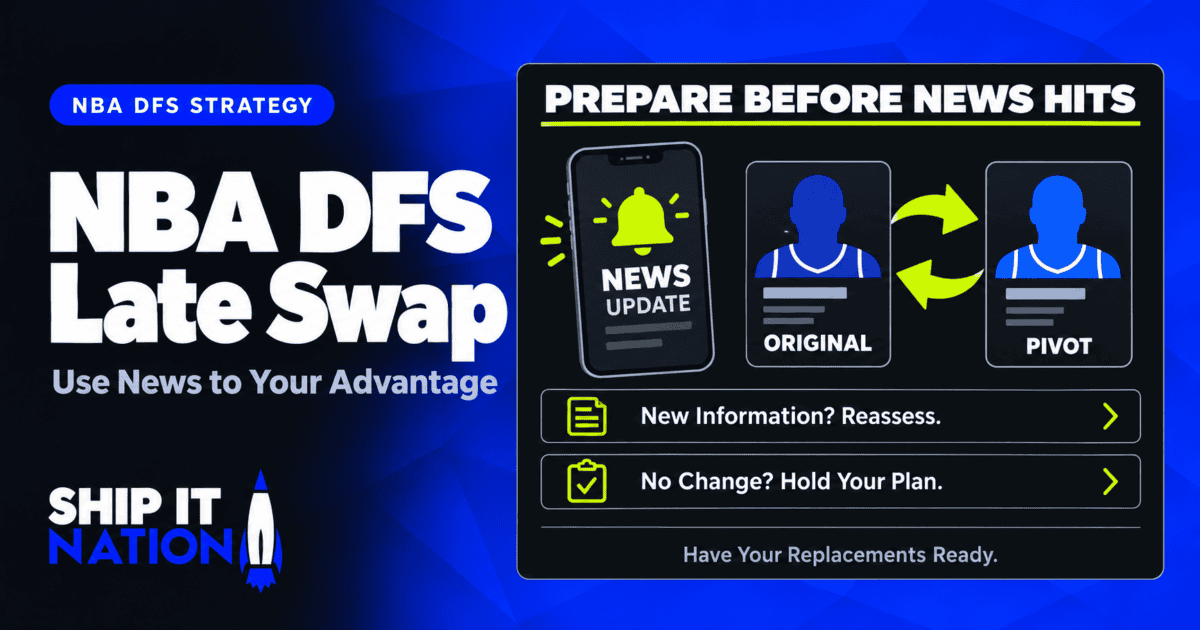
NBA DFS late swap lets you replace a player in your lineup until his own game starts, so you can use news to your advantage after the slateSlateA slate in DFS is the set of games, races, fights or tournament rounds covered by a contest. It determines which events your player selections can come from and which performances count toward your score.Before building, open the contest details and check the included events, scoring period and lock rules. Do not assume two sites offer identical slates just because both call them the main slate. has begun. Swap only when new information changes your expectation for a player, not to chase results, and confirm the contest offers late swap first.
Key takeaways
- Swap only when new information changes your expectation for a player, not to chase results or feel active.
- Set up for late swap when you build, with uncertain players in early games, salary room, and a list of replacements ready.
- Use late swap to get different from the field, since many lineups will pivot to the same replacement.
Rules vary by site, sport, and contest, so check the current rules before you rely on the feature.
What Is Late Swap?
In a late swap contest, lineups are not locked all at once. Each player locks when his own game begins. Until then, you can swap him for another player whose game has not started yet.
This matters because NBA slates often stretch across several hours. Early games tip off first, and the later ones lock hours afterward. You get time to see results, injury updatesInjury NewsInjury news is information about a player's health that can change whether they compete, how much they play or how effectively they perform. In DFS, it also affects opportunities for teammates and opponents.Before an uncertain player's game locks, identify an alternative you can afford at each affected position. Check whether making that change would require another player whose game starts earlier., and lineup changes before most of your roster locks.
Why Does Late Swap Help in NBA?
Basketball has more last minute lineup news than most sports. Players are ruled out close to tip, starting lineups are confirmed shortly before the game, and minutes restrictions or rest decisions can change the picture. A lineup built at noon can look different at seven.
Late swap lets you respond to that without gambling in advance. You can also use the early games to learn about how the night is playing out, though you should be careful not to overreact to small samples.
How Do You Set Up a Lineup for Late Swap?
The strategy begins when you build the lineup, not when you swap it.
Put uncertain players in early games. If you are unsure about a player’s status, slot him where you can replace him later. The reverse is also useful: keep the position with the most flexibility open for the final games.
Leave salary flexibility. If every dollar is tied up, a swap forces a bad trade. A bit of room, or a cheap player you can upgrade, gives you options.
Know your replacements. Have a short list ready for each slot, with your preferred pivot if a starter is scratched. Deciding under time pressure is how people make mistakes.
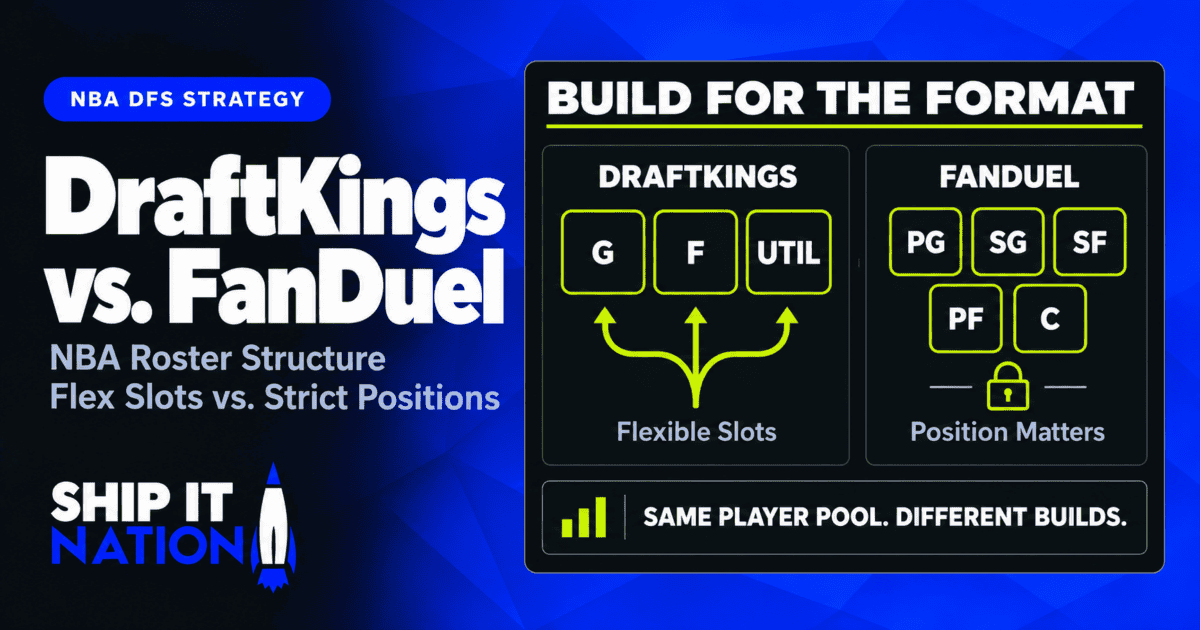
Keep position flexibility in mind. The guard, forward, and utility spots in most NBA formats let you move players around, which opens up swap combinations you might not see at first.
What Should You Check Before Tip-Off?
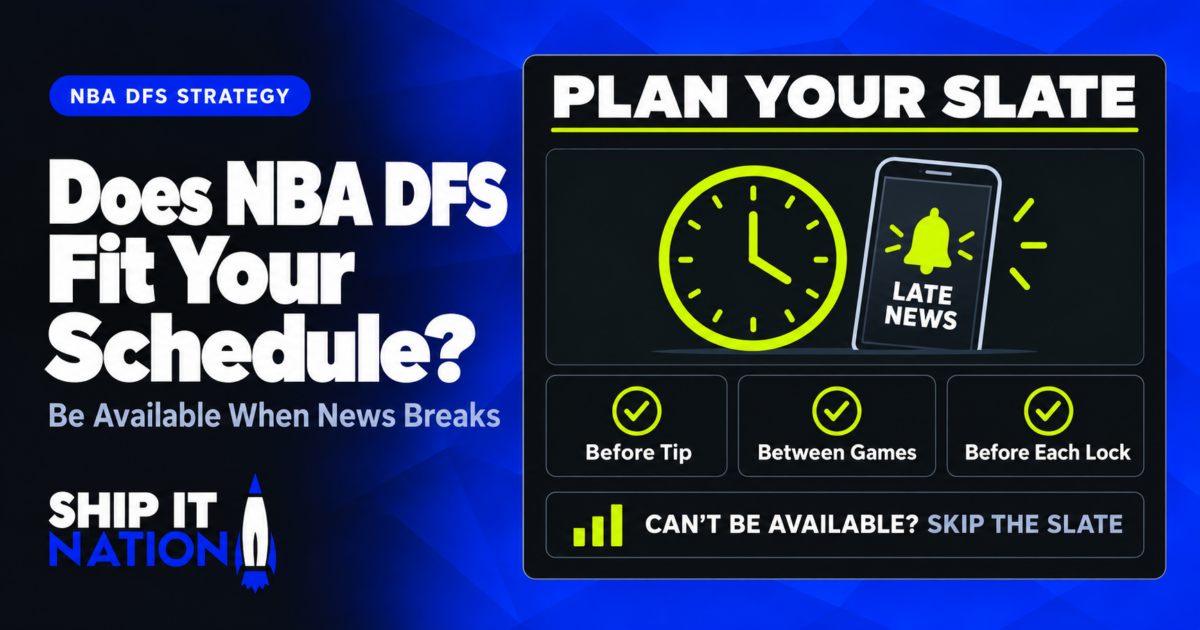
Late swap is only useful if you know when news arrives. Make a routine:
- Check official injury reports before the slate begins.
- Check again shortly before each game you are exposed to.
- Watch for confirmed starting lineups, which usually appear close to tip.
- Note any minutes restrictions or rest announcements.
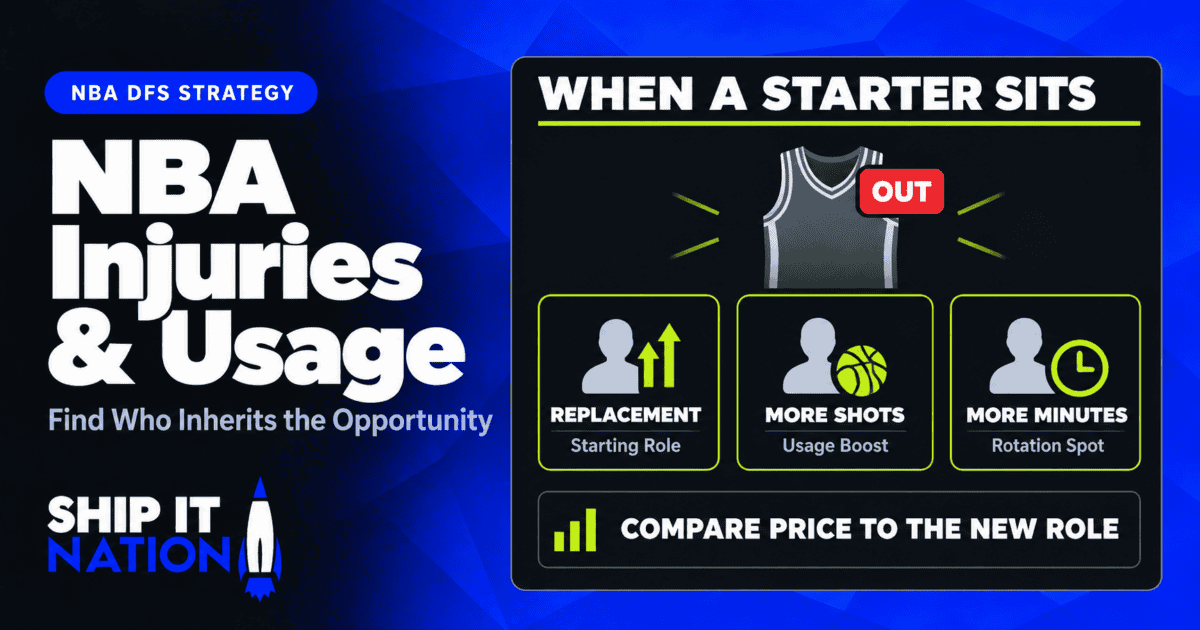
If a player is ruled out, look at who benefits, using the same usage and minutes logic you apply to your first build. If the player is confirmed active, your original plan stands and you can move on.
When Should You Not Swap?
This is where late swap costs players money. Having the option does not mean you should use it. Some good reasons not to swap:
You are chasing results. If an early player had a bad game, that is already done. The game is over, and you cannot get those points back. Swapping just to feel active is the most common mistake.
The new player is chalkChalkChalk is the most popular, highly owned play on a slate. The term comes from sports betting, where the favorite is called the chalk.Don't label chalk good or bad. Ask whether each popular play deserves its ownership, then decide which chalk you'll eat and which you'll fade.. If everyone makes the same swap after the same news, you may be moving toward the crowd. In a big tournament, that can hurt your upside.
The swap breaks your build. If your lineup was designed around a correlation or a game stack, replacing one piece may undo it.
Ask yourself one question before every swap: did new information change my expectation for this player, or am I reacting to emotion?
| Situation | Swap or hold | Why | Contest focus |
|---|---|---|---|
| New news changes a player’s expected role | Swap | Your expectation changed | Cash: stable replacement; GPP: upside |
| An early player had a bad game | Hold | The game is over, those points are gone | Both |
| Everyone is making the same swap to chalk | Consider a different option | You may move toward the crowd and lose upside | GPP |
| Swap would break a game stack or correlation | Hold or rebuild | Replacing one piece can undo the build | Mostly GPP |
| Player confirmed active | Hold | Original plan stands | Both |
How Do You Use Late Swap for Leverage?
News creates opportunity when the field is slow. If a key player is ruled out late, a large number of lineups will lose a roster spot. Many of them will pivot to the same replacement. You can look for the second best option, or a different stack, to avoid piling onto the most popular swap.
This ties into ownershipOwnershipOwnership is the percentage of lineups in a contest that include a given player. Projected ownership is an estimate made before lock; actual ownership is posted once the contest locks.Ownership isn't something to avoid; it's something to build around. The goal is understanding how the field is likely to build, then finding your edge relative to that.. Late swap is a strong tool when you use it to get different, not just reactive. Think about where other players are likely to go and decide whether you want to join them or move off them.
What About Late Swap in Different Contest Types?
In cash gamesCash GameA cash game is a contest that pays a large share of the field, usually close to half, the same flat prize. Fifty-fifties, double-ups and head-to-heads are the common cash games.Treat cash games as the steady base of your bankroll. Use one safe core across your cash entries on a slate, and save riskier ideas for tournaments., late swap is mostly about removing risk. If a player is out or a game environment collapses, you want a stable replacement.
In tournaments, you want upside. That means looking for a play with a real path to a big night, even if it means taking a bit more varianceVarianceVariance in DFS describes how widely fantasy scores or contest returns can swing around their expected outcomes. It explains why a sound lineup can lose and a poor decision can sometimes win.Track results by contest type and slate, and review opportunity separately from touchdowns or other rare scoring events. Entering the same lineup in ten contests does not give you ten independent performance samples..
Build a Late Swap Checklist
Before each slate, write down your swap plan: which players are uncertain, who replaces them, and what would make you hold. When news hits, you will already know what to do.
Late swap rewards the players who prepare for it. Make decisions before the pressure, and you will make better ones during it.
Full video courses on bankroll management, contest selection, roster construction and more, free for members.
Common Questions
What is late swap in NBA DFS?
In a late swap contest, each player locks when his own game begins, and until then you can swap him for another player whose game has not started. Rules vary by site, sport, and contest, so confirm the contest offers late swap and check the current rules first.
When should I not use late swap?
Do not swap to chase results, since a finished game cannot be undone. Also avoid swaps that follow the crowd into chalk, or that break a correlation or game stack. Ask whether new information changed your expectation for the player or whether you are reacting to emotion.
How should I prepare for late swap before the slate?
Put uncertain players in early games, leave salary room, and keep a short list of replacements for each slot. Know your preferred pivot if a starter is scratched. Deciding under time pressure is how people make mistakes, so write your swap plan before the slate.
Need a term explained? The Ship It Nation DFS glossary covers every DFS term we use in plain language.

About the author
Ship It Nation StaffShip It Nation was founded in 2023 by Tyler Tamboline and Mike Petta to give DFS players the tools, projections, content, and community they need to build a winning process. Today, we're a fully remote team of active DFS players, analysts, and builders.
More from Ship It Nation Staff →Keep reading