Lineup Building
I Won a DFS Satellite Ticket. Now What? A Step by Step Game Plan
Published by Tyler Tamboline · 3 min read
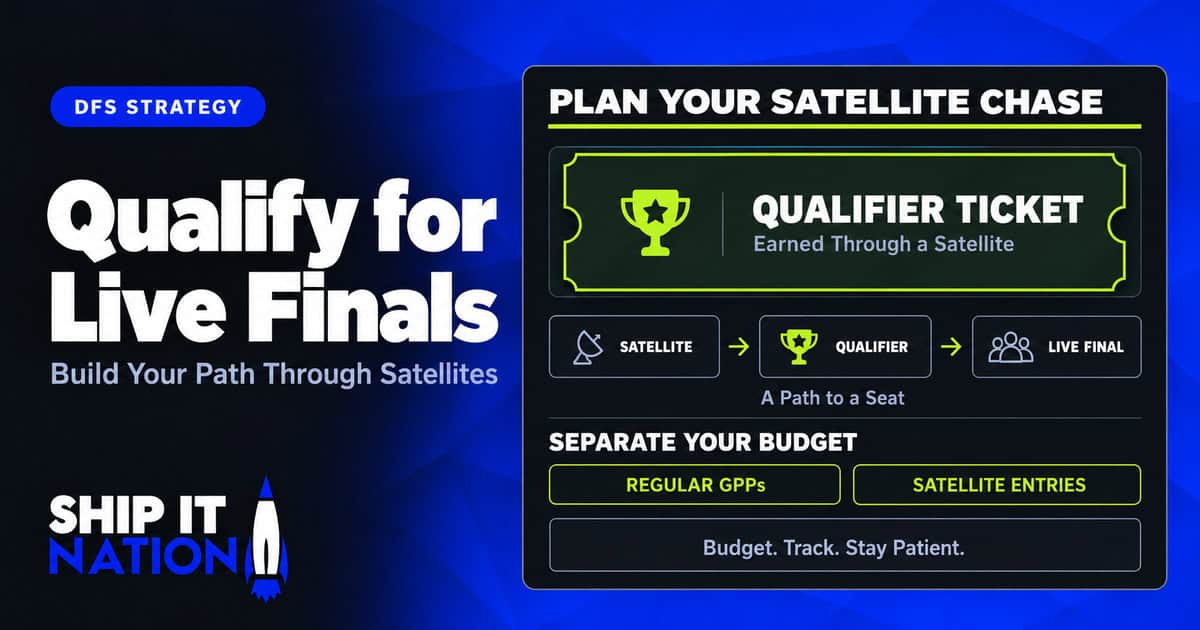
Winning a satelliteSatelliteA satellite, also called a qualifier, is a contest whose prizes are tickets into a more expensive contest or a live final instead of cash. Tickets are free entries into that bigger event.Before building, compare the number of seats to the size of the field. The share of entries that win a ticket tells you whether to build like a cash game or a tournament. ticket is one of the more exciting moments in DFS, but it also tends to be the moment where players start overthinking everything they’d been doing right up until that point. Here’s a practical, step by step way to handle it once you’ve actually won your seat.
Key takeaways
- Keep the process that earned your ticket while accounting for sharper opponents and more multi entry competitors.
- Give your single lineup a legitimate path to winning outright without getting different just for its own sake.
- Account for qualification costs and set a limited budget before using winnings to pursue another ticket.
Step One: Don’t Panic and Don’t Overhaul Your Approach
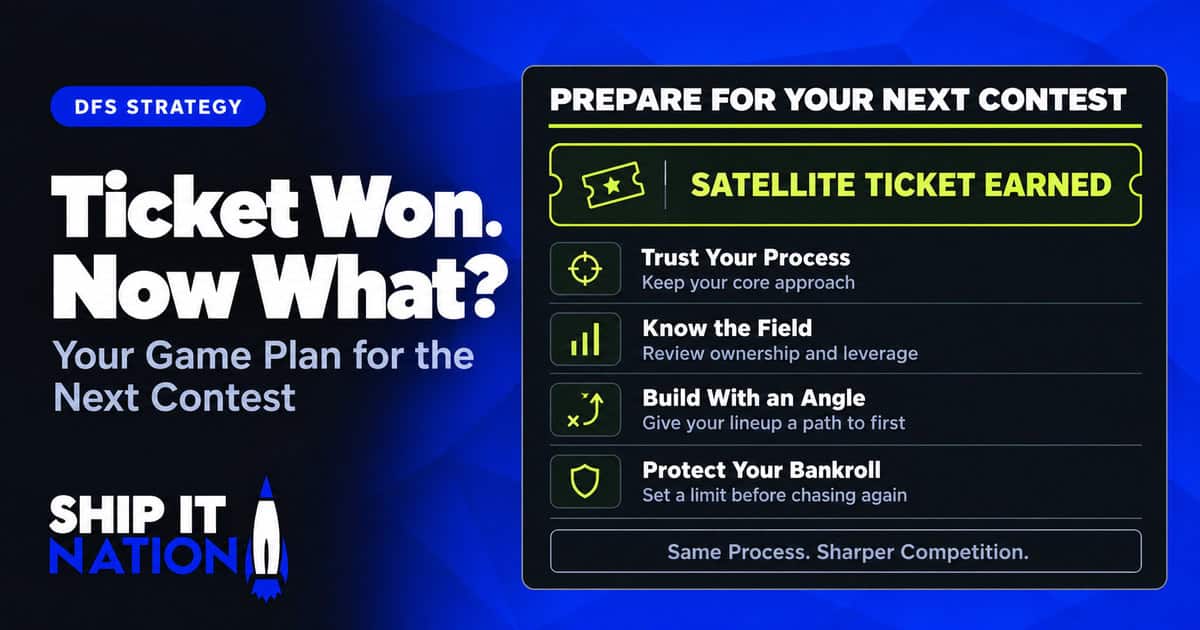
The instinct after winning a ticket is often to assume the bigger contest requires a completely different strategy. It doesn’t. The process that built the lineup good enough to win your seat is still a sound process. Scrapping it in favor of some new approach you’ve never actually tested is a common way players undo the advantage they just earned.
Step Two: Acknowledge What’s Actually Different
While your process doesn’t need to change, the environment around you does shift once you’re in the bigger field. You’re now facing a room full of players who are also serious enough to have qualified, which generally means sharper builds and more multi entry competitors than you’d typically see in a standard single entry contest.
Stay aware of this without letting it push you into second guessing every decision. It’s a reason to be a bit more mindful of leverage and ownership, not a reason to abandon your fundamentals.
Step Three: Build the Same Way You Always Build
Trust the process that earned you the seat. If you built a winning lineup using your standard approach to correlation, leverage, and player pool construction, use that same approach again rather than trying to reinvent your entire strategy just because the stakes are higher.
Your edge lies in consistency, not in suddenly trying to outsmart a field you don’t have any special new insight into just because the buy-in went up.
Step Four: Prepare for a Single Bullet Against Bigger Fields
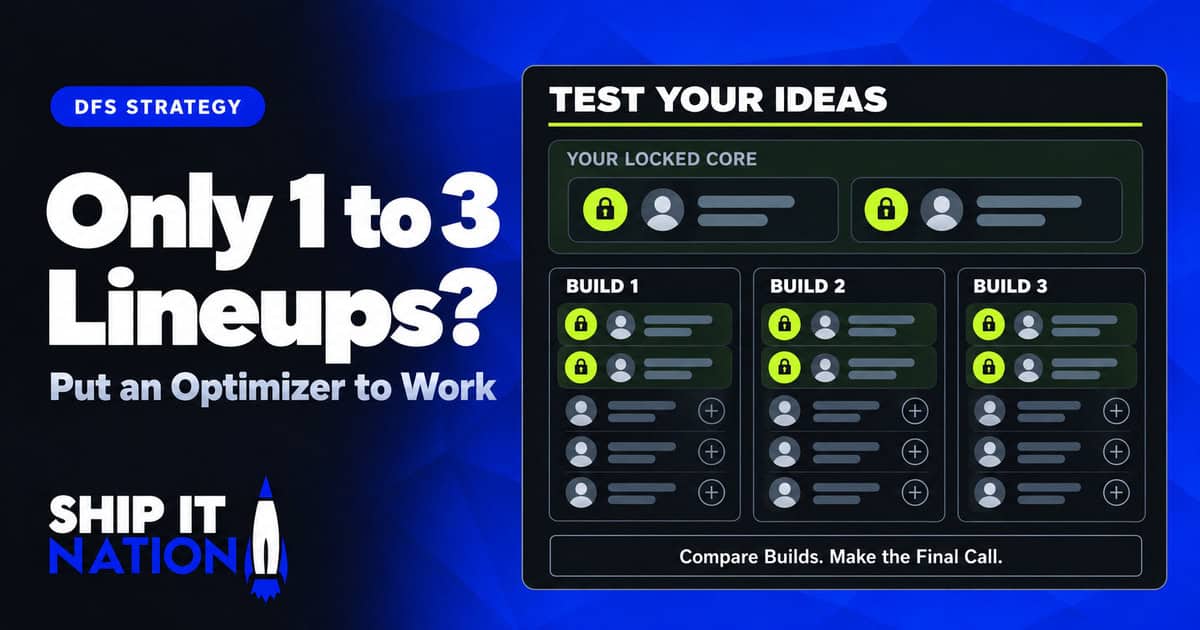
If you’re entering with just one lineup, remember you’re likely facing opponents who are entering multiple lineups, sometimes ten or more. They have the luxury of hedging across several builds. You don’t. That means your one lineup needs a real angle to beat the field outright, not just an angle that ties it.
This doesn’t mean getting overly weird with your build just for the sake of standing out. It means making sure your single entry has a legitimate path to winning outright, rather than playing it so safe that your best case outcome is a modest min cash.
Step Five: Treat the Experience as More Than Just the Money
If your ticket leads to an actual live final, remember that the experience itself, the travel, the community, the chance to compete in person against other serious players, is part of the value here too. Show up prepared, but also take in the experience for what it is. Plenty of players who’ve been to multiple live finals will tell you the community and the atmosphere end up mattering just as much as the prize on the line.
Step Six: Avoid the Free Money Trap Afterward
If you cash well in the bigger contest, resist the urge to treat that money as house money to immediately chase another ticket recklessly. Set a specific, limited budget if you want to pursue another seat, and make sure you’re accounting for what you already spent to win the first ticket before assuming you’re purely playing with profit.
A balanced approach here, locking in real profit while allowing a defined, limited amount to chase another opportunity, is how experienced players handle this cycle without letting one good result turn into a series of undisciplined decisions.
The Bottom Line
Winning a ticket is a reward for a process that already worked. The best thing you can do with that reward is trust the same process again, stay aware of the sharper environment around you, and keep your bankroll decisions just as disciplined after the win as they were before it.
Full video courses on bankroll management, contest selection, roster construction and more, free for members.
Common Questions
What should you do after winning a DFS satellite ticket?
Trust the process that earned your seat instead of switching to an untested strategy. Prepare for sharper competition and pay closer attention to leverage and ownership.
How should you play one DFS lineup against multi entry opponents?
Build with a real angle to beat the field outright, since opponents can hedge across multiple lineups. Keep your build logical rather than choosing unusual players solely to stand out.
Should you use DFS winnings to chase another satellite ticket?
If you pursue another seat, set a specific, limited budget and account for what you spent qualifying previously. Lock in real profit instead of treating the winnings as house money.
Need a term explained? The Ship It Nation DFS glossary covers every DFS term we use in plain language.

About the author
Tyler TambolineTyler Tamboline co-founded Ship It Nation and is the face of the brand across our shows and community. He is also the Founder of DFS Mastermind, helping hundreds of DFS players find their own process. He has played DFS since 2012, focusing primarily on PGA and NFL, and has created DFS content full-time since 2018 at different sites across the industry. He is known for strategy, game theory and leverage in large-field tournaments. He has been a regular on many Fantasy Sports podcasts, including weekly PGA and NFL shows with Pat Mayo.
More from Tyler Tamboline →Keep reading