Ownership & Leverage
How to Play Chalk Differently: Pivot Strategies That Actually Work
Last updated October 7, 2026 by Tyler Tamboline · 3 min read
Fading chalkChalkChalk is the most popular, highly owned play on a slate. The term comes from sports betting, where the favorite is called the chalk.Don't label chalk good or bad. Ask whether each popular play deserves its ownership, then decide which chalk you'll eat and which you'll fade.Full explanation ↗ sounds simple in theory. Just avoid the popular players and you’ll automatically be different from the fieldThe FieldThe field is everyone else entered in a contest, the group of lineups you are competing against.Before you build, picture the typical lineup in your contest. Then decide on purpose where you'll match it and where you'll step away from it.Full explanation ↗, right? In practice, blindly fading chalk is one of the fastest ways to build a lineup with no real chance of hitting, because a lot of chalk becomes chalk for good reason. The better approach isn’t avoiding popular players altogether. It’s learning how to play them differently than everyone else does.
- Create separation by changing the combinations around popular players instead of automatically fading them.
- Keep pivots correlated with the game environment rather than choosing unrelated players just to be different.
- Consider a team's passing game as an alternate way to access upside when its running back is popular.
It’s Not Who You Play, It’s How You Build Around Them
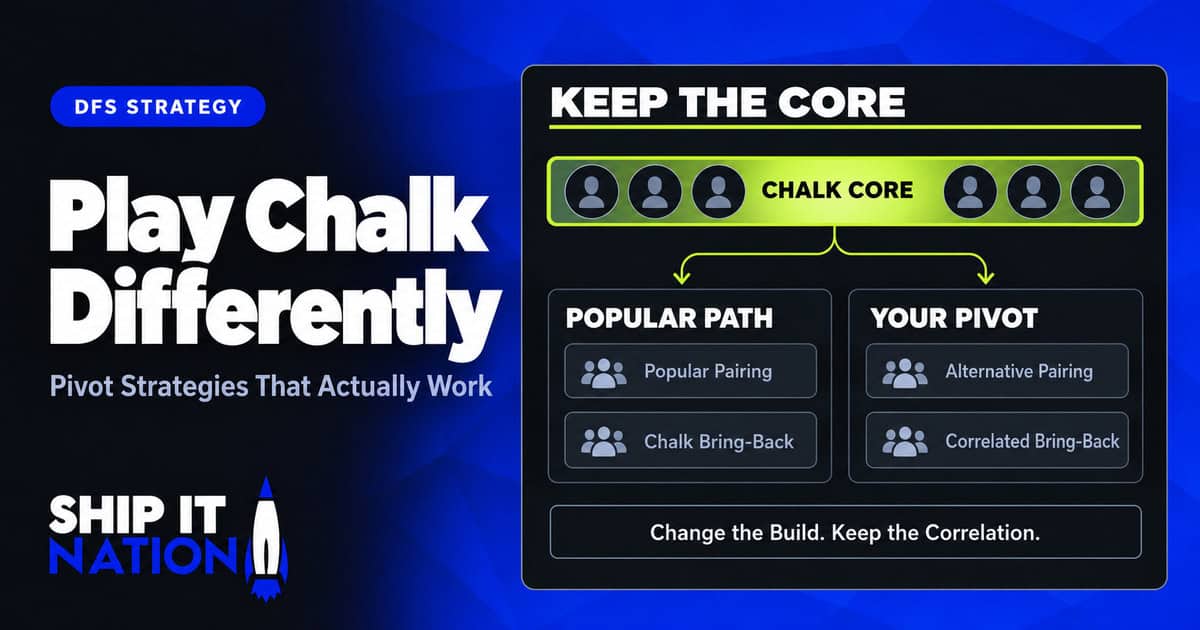
This distinction matters more than most players realize. You don’t need to bench a heavily owned running back just because a huge chunk of the field is going to use him too. What actually creates separation is how you construct the rest of your lineup around that player.
A few ways this shows up in practice. You can pair a chalk running back with a lower owned defense instead of the obvious matchup based choice. You can stack a popular wide receiver with a less popular quarterback on the same team, rather than the quarterback everyone assumes goes with him. You can use a chalky, cheap value play to unlock salary for a less obvious game stackGame StackA game stack is a group of players from both teams in the same game, built to capture a high-scoring matchup where both sides keep putting up points.Target games where the spread is close as well as the total high. A high total with a lopsided spread can turn into a blowout where only one side keeps scoring.Full explanation ↗ that most of the field never considers.
A Practical Way to Spot These Spots
Say a running back is going to be extremely popular across the field because of a great matchup. Rather than fading himFadeTo fade a player is to leave him out of your lineups on purpose, usually because you expect him to be popular or you think he is a poor play.Fade with a reason, not a feeling. If you can't say why a popular player will disappoint, you're probably just giving away points.Full explanation ↗ outright, ask what happens if the offense produces through a different combination of skill players than the field expects. If you believe there’s a real chance the passing game carries more of the workload than usual, building a stack around that alternate outcome lets you still benefit from the same favorable game environment everyone else is targeting, just through a different door.
Correlation Still Matters When You Pivot
This is important. Playing chalk differently doesn’t mean abandoning logic in favor of pure contrarianism. Your pivot still needs to make sense within the game environment. If the field is stacking one quarterback with a chalk bring back on the other side, a sharper move might be substituting in a different, still correlatedCorrelationCorrelation describes how two players' fantasy scores move together. Positively correlated players tend to have big games at the same time, usually because one player's success directly adds points for the other.When you build a tournament lineup, ask which of your players need the same thing to happen. The more of them that do, the higher your lineup's ceiling.Full explanation ↗ piece from that same team rather than picking a completely unrelated player just to be different.
You’re accessing the same underlying game scriptGame ScriptGame script is how a game's score and time remaining influence its pace, play choices and player opportunities. In football, teams protecting a lead often run more, while teams chasing a deficit often pass more.Before locking a lineup, ask who keeps playing if your expected script reverses. Check passing-down roles and backup rotations instead of assuming a team's leading rusher handles every situation.Full explanation ↗, just building toward it in a way most of the field isn’t considering.
Realistic Examples of This in Action
Think about a slate where one running back is the clear chalk play across the field. A common pivot might be building around that same team’s passing game instead, betting that if the run game gets bottled up or the score gets out of hand, the offense leans more heavily on the pass. You’re not fading the team’s overall upside, you’re just accessing it through a different, less crowded position.
Why This Approach Wins More Often Than Blind Fades
If the chalk play hits exactly as expected, a smart pivot that stayed correlated to the same game script often still benefits, just in a different way than the field. If the chalk play fails or the game plays out differently than expected, your pivot gives you a real chance to separate from a huge chunk of the field that leaned too hard into the obvious choice.
Compare that to a pure fade, where you’ve avoided the popular player with no real thesis behind your alternative. If the chalk play hits, you’re simply behind the field with no upside to show for the risk you took.
Building This Into Your Weekly Routine
Before finalizing your lineups, look at the two or three most popular plays projected for the slate and ask yourself specifically how you could still benefit from the same game environment those players represent, without using them the exact same way the rest of the field will. That single habit does more for your differentiation than randomly picking low owned players ever will.
Full video courses on bankroll management, contest selection, roster construction and more, free for members.
Common Questions
How do you play chalk differently in DFS?
Change how you build around popular players by using less popular combinations. A chalk value play can also free salary for a less obvious game stack.
Should you always fade chalk in DFS?
No. Popular players often attract ownership for good reasons, and avoiding them without a clear thesis can leave your lineup behind if they perform as expected.
How do you choose a correlated DFS pivot?
Choose an alternative that still makes sense within the game environment. You could replace a popular bring-back with another correlated player from the same team or target the passing game instead of a chalk running back.
Keep reading