On this page
Treat the Thanksgiving slate as a small-slateSlate SizeSlate size is the number of games or matchups included in a DFS contest's schedule. In sports built around one event, it can instead describe the number of eligible competitors; it does not mean the number of contest entries.Before building, count the credible alternatives at each position. A slate with plenty of games can still leave you with very few appealing choices at one position. puzzle: with only three games, the pool of viable plays is tiny, so game environment, ownershipOwnershipOwnership is the percentage of lineups in a contest that include a given player. Projected ownership is an estimate made before lock; actual ownership is posted once the contest locks.Ownership isn't something to avoid; it's something to build around. The goal is understanding how the field is likely to build, then finding your edge relative to that., and correlation matter more than they do on a full Sunday. Check the lobby for the exact contests, then build around the best game and one contrarian angle.
Key takeaways
- Treat Thanksgiving as a small-slate puzzle where game environment, ownership and correlation matter more than on a full Sunday.
- Rank the games, anchor on the best environment, build one clear stack and choose one place to be different.
- Set your player pool before the day, size your entry count to your holiday, and leave time to adjust for late news.
Holiday schedules also change who plays and how much time you have, so plan before the day arrives.
Know What the Holiday Slate Looks Like
The NFL typically plays a Thanksgiving Day slate of three games, often with a Black Friday game and sometimes a Thanksgiving Eve game. DFS sites usually offer a Thanksgiving Day contest set, often as a small slate, a Showdown contest, or both. Formats and times change, so check the current rules and the lobby for this year’s matchups and start times.
Write down the contest types you plan to enter before the first kickoff. Holiday slates move fast, and a short window between games leaves little room for improvising.
Why Short Slates Play Differently
On a full Sunday, you might have a dozen games and hundreds of reasonable players. With three games, you might have forty. That has a few effects:
- Good players get rostered a lot, so ownership concentratesOwnershipOwnership is the percentage of lineups in a contest that include a given player. Projected ownership is an estimate made before lock; actual ownership is posted once the contest locks.Ownership isn't something to avoid; it's something to build around. The goal is understanding how the field is likely to build, then finding your edge relative to that..
- Most rosters share a core, so the gap between lineups comes from just a few decisions.
- A single bad game environment can remove a large part of the pool.
- Variance rises, because fewer games means each result carries more weight.
The takeaway is not to avoid the chalkChalkChalk is the most popular, highly owned play on a slate. The term comes from sports betting, where the favorite is called the chalk.Don't label chalk good or bad. Ask whether each popular play deserves its ownership, then decide which chalk you'll eat and which you'll fade. entirely. It is to decide, on purpose, which pieces of the chalk you will keep and where you will differ.
Start With the Game Environment
When the pool is small, the game itself is your best filter. Look at the total, the spread, and how each team wants to play. A high total with a close spread gives you the most paths to a big score for both offenses. A lopsided spread can still work, but it usually points you toward the favorite’s passing game and the underdog’s late, desperate scoring.
Rank the three games from most to least appealing. Then ask which one is most likely to produce the winning lineup, not just a good one. In most tournaments, the best game on a short slate should anchor your builds. A lineup with no piece of it is usually leaving upside on the table.
Check the stadium forecast for outdoor games before finalizing your rankings.
Build Correlation, Then Decide Where to Be Different
Correlation matters more when the slate is small, because you cannot spread your exposure across many games. A quarterback paired with a receiver from his own team is the starting point. In a game you expect to be a shootout, many players add a bring-back from the opposing team, since that player gains when the other side is forced to throw.
Once you have a base, pick your differences carefully:
- Choose one position where you will fade the most popular option.
- Pair that fade with a same-team pivot who benefits if the popular player disappoints.
- Keep the rest of the lineup solid, so you are not stacking several risky bets at once.
Differentiation works best in small doses. If every piece of your lineup is a contrarian bet, you have built a long shot, not a strategy.
Plan for the Holiday Itself
Many players have family plans on the holiday, and that changes how you should approach the day. Some choose to sit out entirely, and that is a legitimate decision. Others scale back to a handful of entries, which cuts down the time you need at the screen.
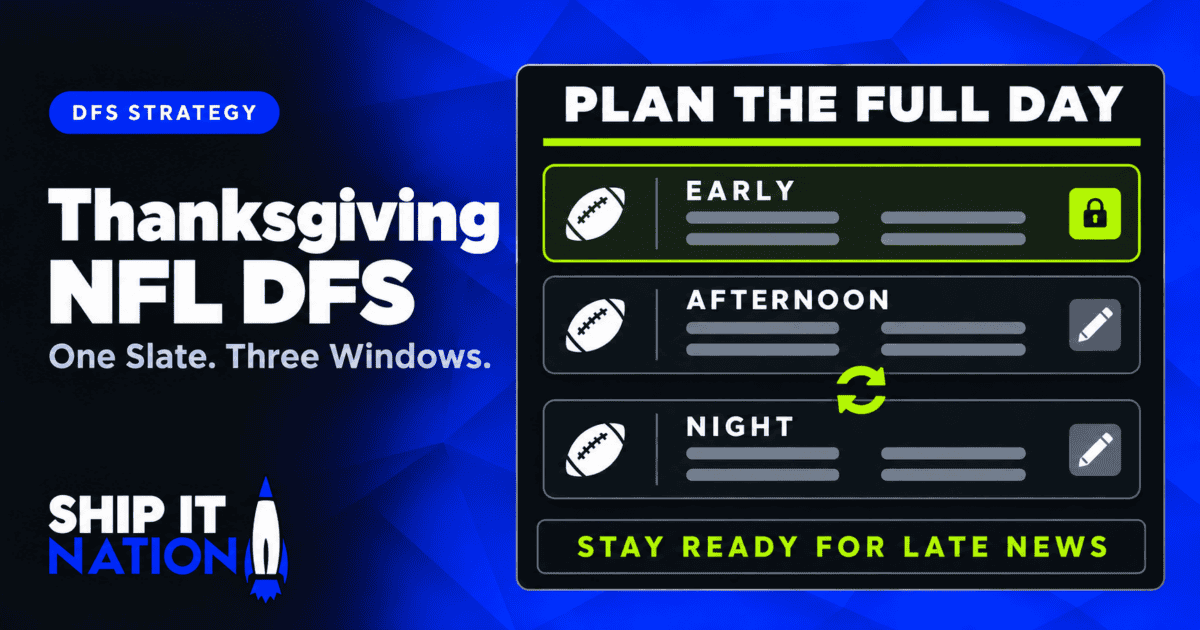
If you do play, do your research early. Lock in your player pool the night before, note the injury report and any news you want to check, and make your final edits before kickoff. Late news matters most on a slate this small, since a single inactive player can reshape the whole pool, so build in a short window to adjust before lock. Remember that the earliest game locks first, and a Showdown contest locks at its own game’s kickoff.
Match Your Entries to the Contest
Different contests ask for different approaches:
- In a small-slate tournament, lean on correlation and a clear point of difference.
- In a Showdown contest, remember the captain slot costs more but scores more, and the final result often depends on a handful of players. Check the current rules for how captain scoring and salaries work.
- In cash games, favor the safest floor and the players with the clearest roles.
Keep your entry count sensible. With so few players to choose from, extra entries often end up too similar to one another, which adds cost without adding much new coverage.
| Contest type | Main approach | What to watch |
|---|---|---|
| Small-slate tournament | Correlation plus one clear point of difference | Do not stack several risky bets at once |
| Showdown | Build around a handful of players | Check the current rules for captain scoring and salary |
| Cash game | Safest floor and clearest roles | Late news can reshape the pool |
Review the Slate Afterward
After the games, spend a few minutes on what happened. Did the game you ranked first deliver? Did your fade pay off or cost you? Short slates produce noisy results, so do not overreact to one day, but do write down what you learned. The same pattern shows up on other small slates through the year.
A Simple Thanksgiving Game Plan
Rank the games, anchor on the best environment, build one clear stack, and choose one place to be different. Set your player pool before the day starts, decide how many entries fit your holiday, and then enjoy the meal. A plan made early beats a rushed one made between courses.
Go further: DFS PROcess 101 Members
Full video courses on bankroll management, contest selection, roster construction and more, free for members.
Common Questions
How should I approach the NFL Thanksgiving DFS slate?
Treat it as a small-slate puzzle. With only a few games the viable pool is tiny, so rank the games, anchor on the best environment, build one clear stack and choose one place to be different. Check the lobby for this year’s contests, formats and start times.
Why does a short DFS slate play differently from a full Sunday?
Good players get rostered often, so ownership concentrates and most rosters share a core. The gap between lineups comes from a few decisions, one bad game environment can remove much of the pool, and variance rises because each result carries more weight.
How many entries should I play on Thanksgiving?
Keep it sensible. With so few players to choose from, extra entries often end up too similar and add cost without adding coverage. Many players scale back to a handful of entries on the holiday, and sitting out entirely is a legitimate decision. Decide before kickoff.
Need a term explained? The Ship It Nation DFS glossary covers every DFS term we use in plain language. All NFL articles

About the author
Ship It Nation Staff
Ship It Nation was founded in 2023 by Tyler Tamboline and Mike Petta to give DFS players the tools, projections, content, and community they need to build a winning process. Today, we're a fully remote team of active DFS players, analysts, and builders.
More from Ship It Nation Staff