NHL
NHL DFS Lineup Confirmation: Line Combos, Scratches, and Late News
Published by Ship It Nation Staff · 5 min read
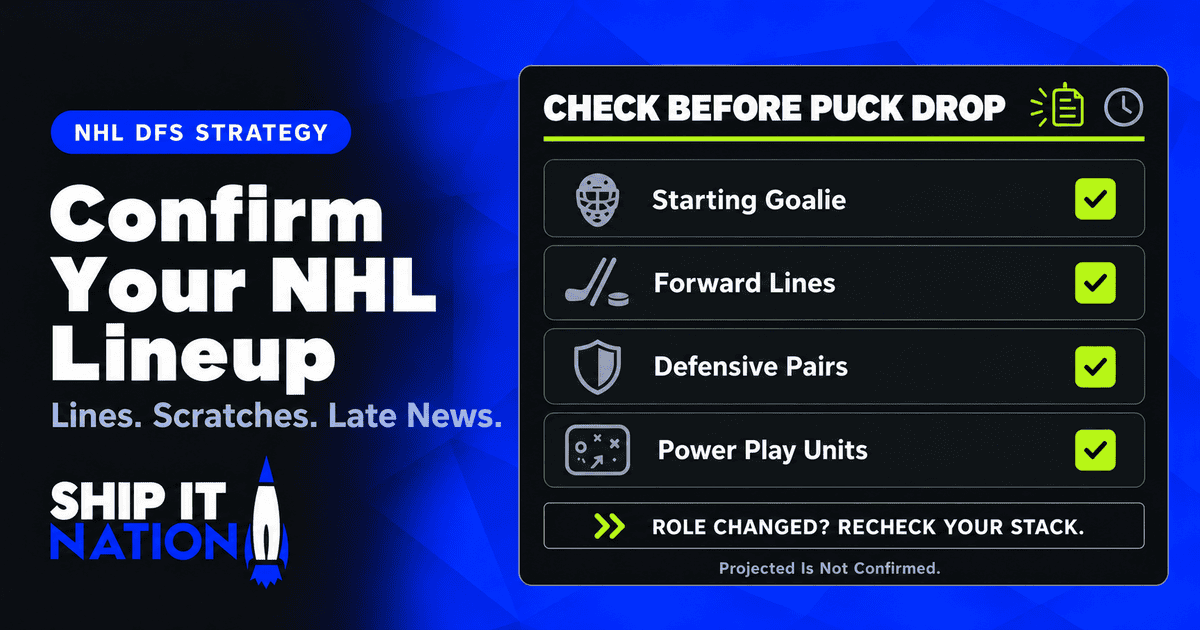
Confirm your NHL lineups on game day by checking the starting goalie, the forward lines, the defensive pairs, and the power play units, then adjusting before lockLineup LockLineup lock is the deadline after which you cannot change your selected players. Without late swap, your entire lineup locks together; with late swap, which allows edits after the contest begins, players lock at their games' listed deadlines.After saving an edit, reopen your entered lineups and confirm the change reached every intended entry. Check the site's displayed lock times and time zone instead of relying on the television schedule.. Projected lines are only a starting point, and late changes to any of them can break a lineup you built hours earlier.
Key takeaways
- Check the starting goalie first, because a backup in the net changes the whole game environment.
- Treat projected lines as a working draft and confirm who skates together, who is on the power play and whether anyone moved before you finalize a stack.
- Build a late swap routine: build early, mark unconfirmed players, return after morning skate and check goalies again before your last games lock.
Hockey is one of the sports where the news cycle matters most. Here is a simple way to handle it.
Why Confirmation Matters More in Hockey
In many sports, a lineup is mostly set by the time you build. In NHL DFS, the information that drives your decisions often arrives close to puck drop. Coaches tweak lines after morning skate, a player gets a late scratchInjury NewsInjury news is information about a player's health that can change whether they compete, how much they play or how effectively they perform. In DFS, it also affects opportunities for teammates and opponents.Before an uncertain player's game locks, identify an alternative you can afford at each affected position. Check whether making that change would require another player whose game starts earlier., or a goalie decision gets announced after most players have already entered.
Because hockey scoring is sparse, one wrong assumption about ice time or line placement can cost you a big chunk of your ceilingCeilingCeiling is the high end of a player's or lineup's realistic range of fantasy scores. It describes a big performance that could happen when things go well, not the expected score or an absolute maximum.Describe what must happen for each player to have a huge game. Then check whether those conditions help or hurt the other players in your lineup.. Treat confirmation as part of the build, not an afterthought.
Start With the Goalie
The goalie is the single most important piece to confirm. Starting goalies are usually confirmed on game day, often after morning skate, and a backup in the net changes the whole game environment. A team facing a backup is generally a more attractive target for skater stacks, while a team with a surprise backup of its own may drop in valueValueValue is the fantasy production you expect from a player relative to his salary. A value play offers more production or upside than his price suggests, whether he is cheap or expensive.Identify why the salary looks wrong: workload, matchup, scoring ability or a pricing error. Then check whether that reason still holds when you submit your lineup..
If you roster a goalie, you need to know he is actually starting. If you stack against one, you want to know who is on the other side. Check the current rules on the site for how a goalie who does not play is handled in your contest, and plan for it before lock.
Check the NHL schedule before you build.
Know the Line Combinations
Linemates share ice time, which is why stacking works in hockey. When one goal happens, it can pay out across several roster spots through goals and assists. That only works if the players you stacked are actually skating together.
Before you finalize a stack, confirm:
- Who is on each forward line
- Which line is skating first, second, third, or fourth
- Whether anyone moved up or down since the last game
- Whether a line was reshuffled because of an injury or scratch
A top line player who gets dropped to the third line can lose a large share of his ice time, and his scoring chances along with it. Projected lines are useful, but they can change late, so treat them as a working draft until you see them confirmed.
Check the Power Play Units
Power play units produce far more per minute than even strength lines. A player on the first power play unit can see a meaningful boost in shots and scoring chances compared to a similar player on the second unit.
This is also where defensemen enter the picture. Pairing a forward line with a defenseman who plays on the same power play unit is a common stacking approach, because one power play goal can pay several of your roster spots at once. Confirm that the defenseman is on the unit you think he is, and check the current scoring rules on the site to see how much value he carries.
Watch for Scratches and Injuries
A scratch changes more than one player. It can pull a forward up a line, move a defenseman onto the power play, or open a role for a cheap player who was never in your pool. Late news can create value, and it can also remove it.
Keep an eye on these signals:
- Warmup reports on who is skating and who is not
- Announced lineups from the team or beat reporters
- Changes to defensive pairs, which affect ice time and power play roles
- A cheap player stepping into a top line role, which can create a salary-saving option
When a player is scratched, do not assume the replacement automatically fits. Look at where he is actually slotted before adding him.
Build a Late Swap Routine
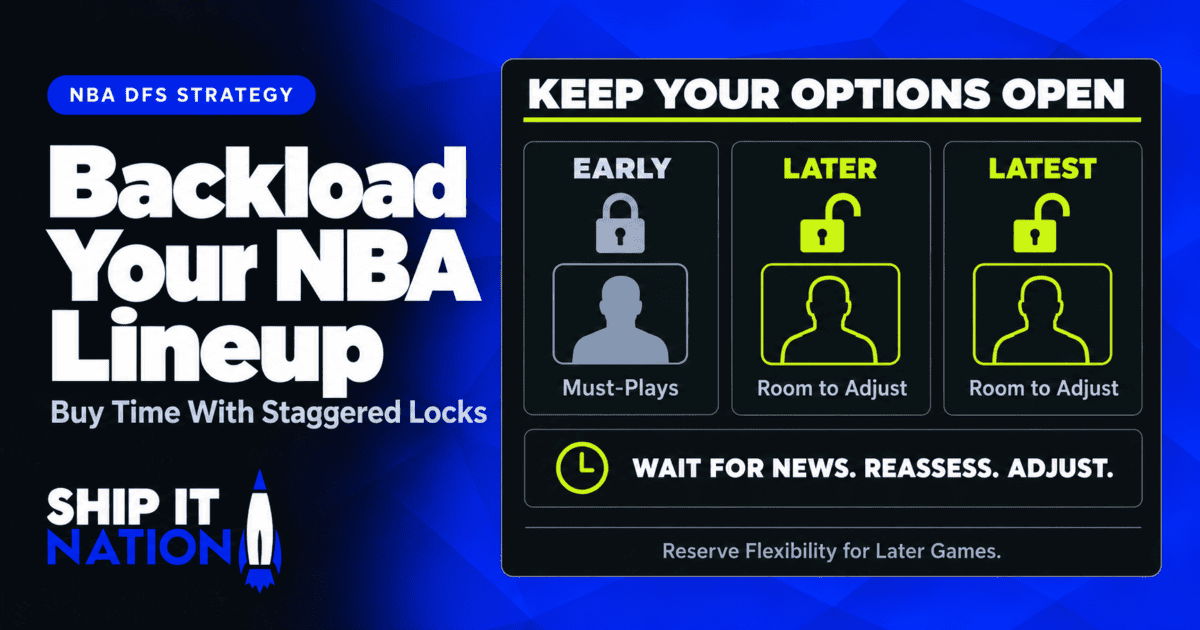
Many sites let you edit lineups until each game locks, which means you can often wait for confirmation on later games. If you are playing a full slateSlateA slate in DFS is the set of games, races, fights or tournament rounds covered by a contest. It determines which events your player selections can come from and which performances count toward your score.Before building, open the contest details and check the included events, scoring period and lock rules. Do not assume two sites offer identical slates just because both call them the main slate. with staggered starts, build around the information you have, then fill in the later spots once news breaks. Check the lobby for the current late swap rules on the site you are playing.
A simple routine looks like this:
- Build a first pass early, using projected lines and goalies.
- Mark every player whose role depends on unconfirmed news.
- Return after morning skate and again before the first lock.
- Swap players whose roles changed, and rebuild stacks if a line fell apart.
- Check goalies one more time before your last games lock.
This keeps you from locking in a lineup that quietly stopped making sense.
| Item to confirm | When to check | What can go wrong | Action |
|---|---|---|---|
| Starting goalie | After morning skate, again before last lock | Backup starts | Swap goalie or opposing stack |
| Forward lines | After morning skate and warmups | Line reshuffled or scratch | Rebuild the stack |
| Defensive pairs | Before lock | Role or ice time changes | Re-check PP role |
| Power play units | Before lock | Unit changes quietly | Verify defenseman partner |
| Late swap rules | Before building | Locks vary by contest | Check the current rules on the site |
Be Careful Rostering Against Your Own Goalie
A common practice is to avoid rostering skaters who face your own goalie, because their success is usually your goalie’s failure. When a goalie change comes through late, double check that you have not created that conflict by accident.
Make Confirmation a Habit
Late news is part of the game, and the players who handle it best are the ones with a routine. Before every slate, write down the three things that must be true for your lineup to work: the goalie, the line combination, and the power play role. Then check them. If one changes, adjust. If you do this consistently, you will avoid the mistakes that sink most hockey lineups before the first puck drops.
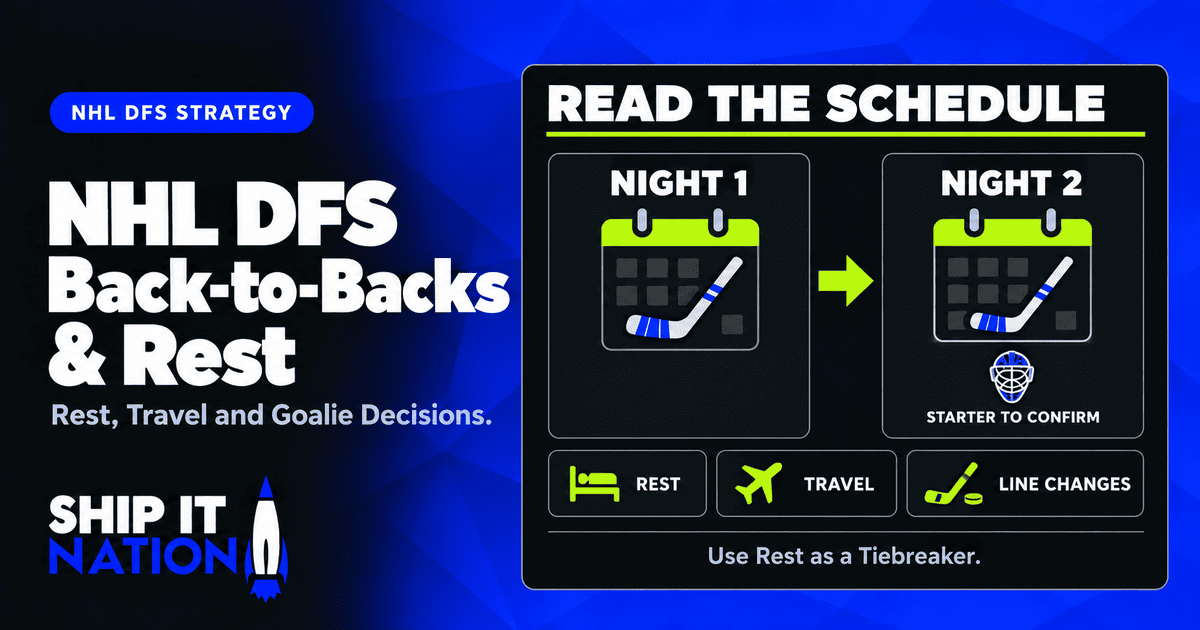
Factor back-to-backs and rest into your goalie check.
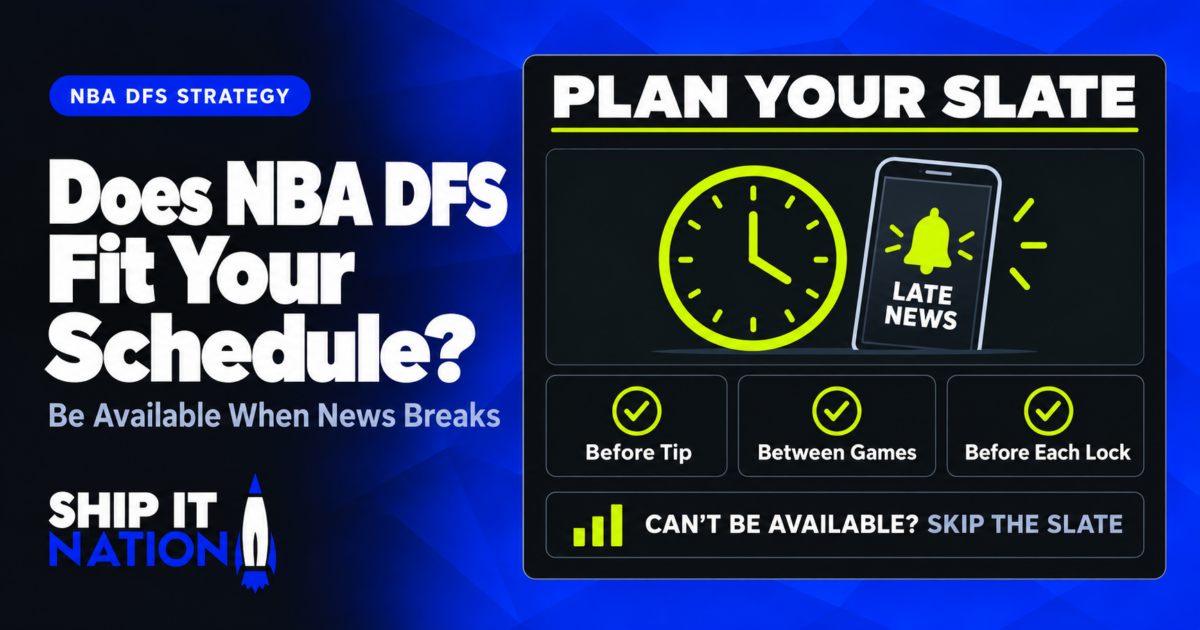
Check today’s NHL games before you build.
Full video courses on bankroll management, contest selection, roster construction and more, free for members.
Common Questions
How do I confirm NHL DFS lineups?
Check the starting goalie, forward lines, defensive pairs and power play units on game day, then adjust before lock. Projected lines are only a starting point, and late changes can break a lineup you built hours earlier.
When do NHL teams confirm their starting goalie?
Starting goalies are usually confirmed on game day, often after morning skate. A backup in the net changes the whole game environment for both teams, so recheck goalies one more time before your last games lock.
What should I do if a player is scratched late?
Look at where the replacement is actually slotted before adding him. A scratch can pull a forward up a line or move a defenseman onto the power play. Rebuild any stack that fell apart and check the late swap rules on the site.
Need a term explained? The Ship It Nation DFS glossary covers every DFS term we use in plain language.

About the author
Ship It Nation StaffShip It Nation was founded in 2023 by Tyler Tamboline and Mike Petta to give DFS players the tools, projections, content, and community they need to build a winning process. Today, we're a fully remote team of active DFS players, analysts, and builders.
More from Ship It Nation Staff →Keep reading