Value
What Is Value in DFS?
Last updated October 17, 2026 by Ship It Nation
Value is the fantasy production you expect from a player relative to his salary. A value play offers more production or upside than his price suggests, whether he is cheap or expensive.
Why It Matters
Underpriced players help you fit more production under the salary cap, but the cheapest player or highest points-per-dollar ratio does not automatically improve your lineup. Compare what you give up at that spot with what the savings buy elsewhere. In tournaments, also consider the player's upside and how often competing lineups will use him.
Go Deeper
Articles that put Value to work.
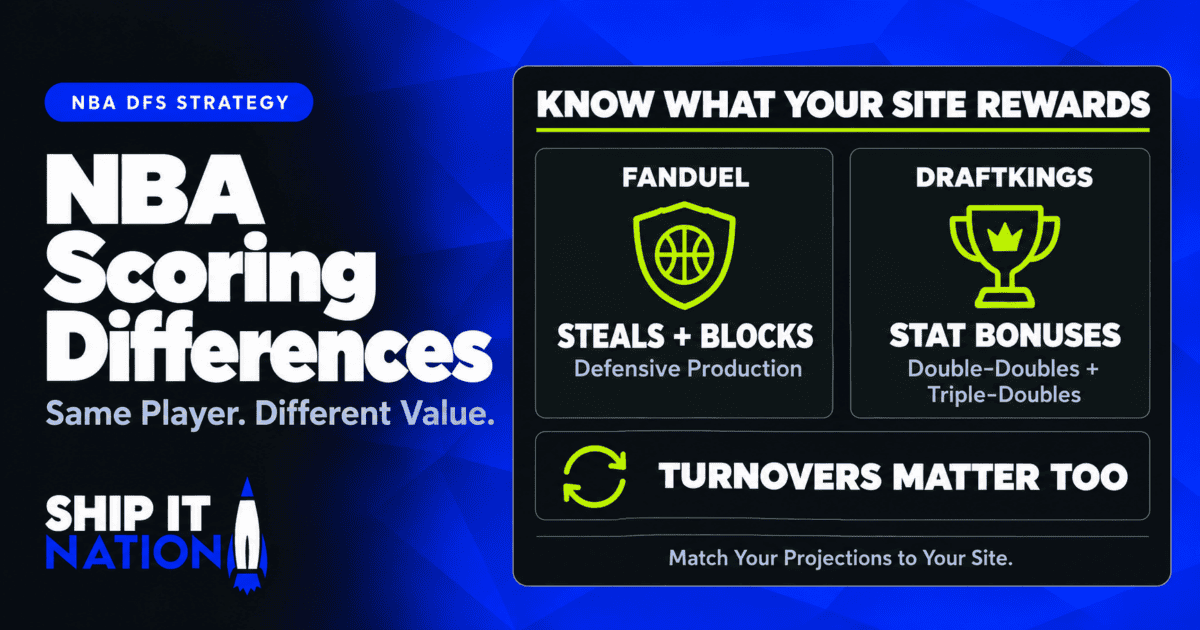 NBA Scoring Differences: How Steals, Blocks, and Turnovers Change Values by Site
NBA · 4 min read
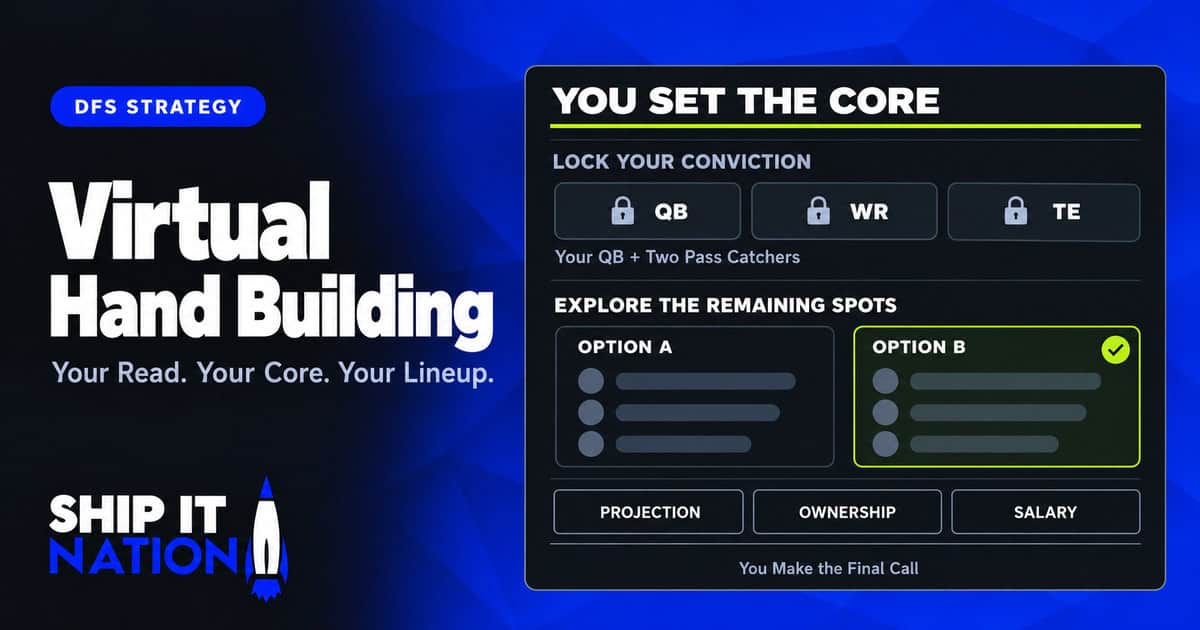 Virtual Hand Building: How to Use an Optimizer Without Losing Your Personal Style
Lineup Building · 3 min read
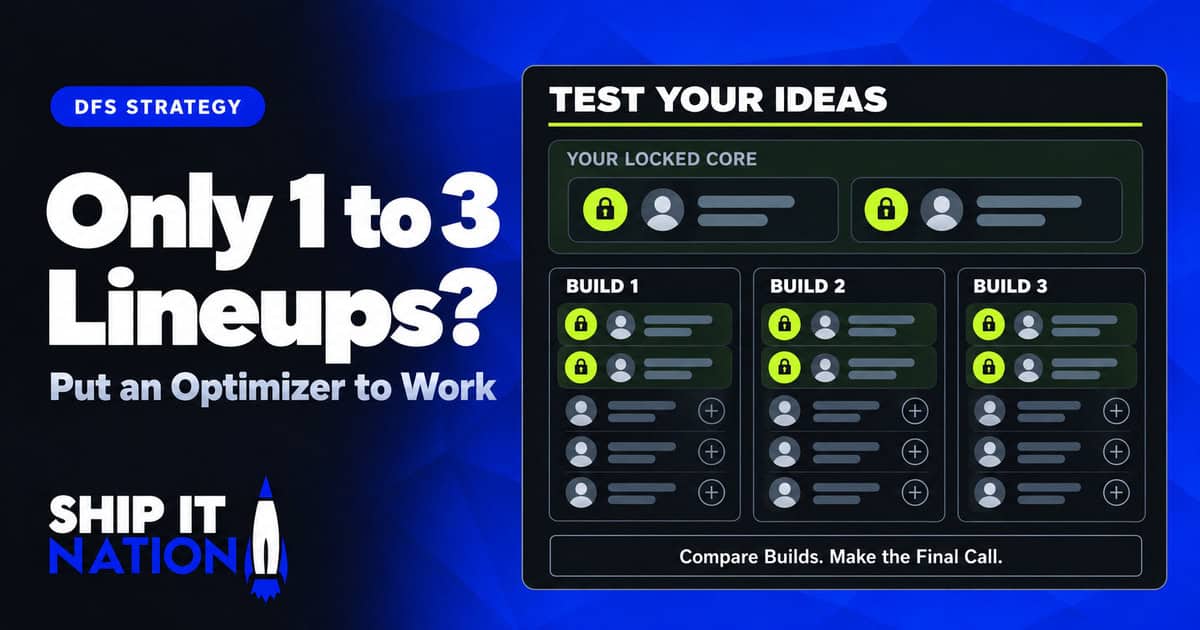 Do You Need a DFS Optimizer If You Only Play 1 to 3 Lineups?
Lineup Building · 3 min read
Example
Say a $4,000 hockey winger moves onto his team's first line and top power-play unit after an injury. You now project him near comparable wingers priced at $6,000. His old salary creates value if the larger role holds, allowing you to improve another position without sacrificing much expected production at winger.
Identify why the salary looks wrong: workload, matchup, scoring ability or a pricing error. Then check whether that reason still holds when you submit your lineup.
Hear Us Break It Down
Hand-picked moments from our free live streams where our hosts break down this term.
More mentions 12
Common Questions
How do you find value plays in DFS?
Compare realistic production estimates with salaries, then investigate the biggest gaps. Injuries, lineup changes, favorable matchups and pricing errors can all create value. Points per $1,000 help you screen players, but you still need to check role security, upside and the alternatives available at that position.
Should you play popular value in tournaments?
Yes, when its production and salary savings justify the roster spot. Popularity alone does not make a value play bad. Consider how reliable the opportunity is, what the savings let you afford and whether a different construction offers enough upside to justify passing on it.
Can an expensive player be a value play?
Yes. A high-priced player can still be underpriced for his expected production and upside. Value is relative to salary, not a synonym for cheap. You should still compare the complete lineups you can build with and without him, because paying for that value limits spending elsewhere.