NHL
How to Pick a Goalie in NHL DFS
Published by Ship It Nation Staff · 4 min read
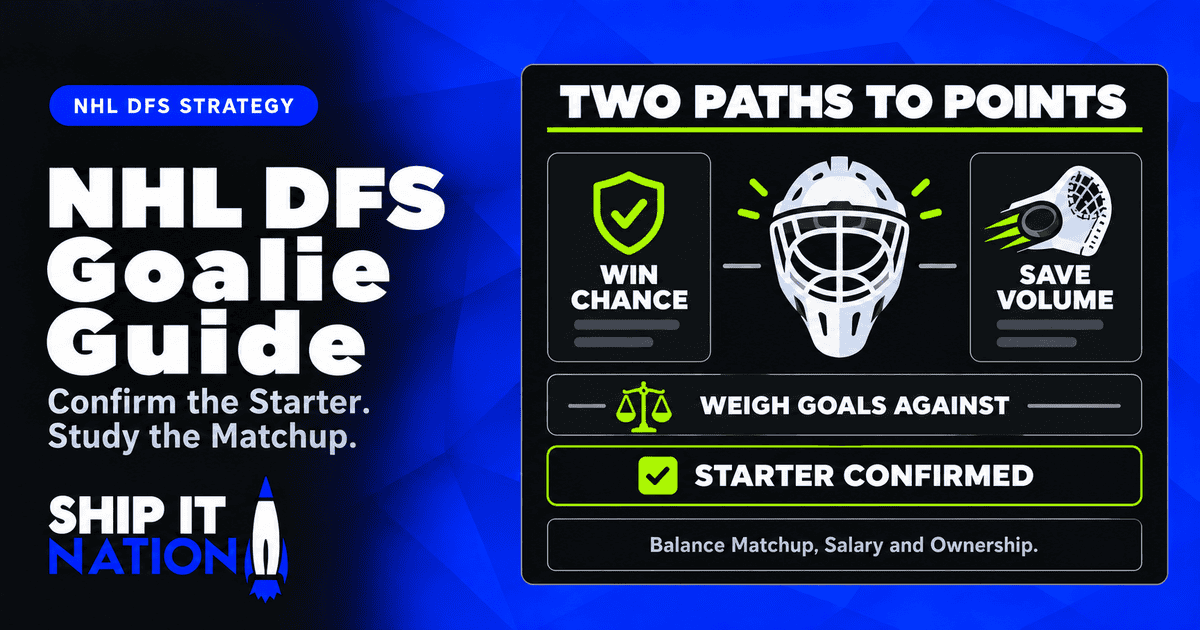
To pick a goalie in NHL DFS, start with whether he is confirmed to start, then weigh the team’s win chance, the opponent’s shot volume and scoring, and his salary. Goalies score from wins and saves and lose points on goals against, so the best choice is usually a strong favorite facing a team that shoots a lot.
Key takeaways
- Confirm that your goalie is actually starting before you commit, since starters are usually confirmed on game day and back-to-backs often send the backup to the net.
- Look for a goalie on a strong team facing an opponent that shoots a lot but finishes poorly, which tends to give a high floor.
- In large tournaments, ownership matters: a cheaper goalie with a plausible path to a win can separate your lineup from the field.
You only roster one goalie, which makes the pick feel simple. It is not, because that single spot swings your lineup more than any other.
Confirm the Starter First
The first rule is the most basic: make sure the goalie is actually playing. Starters are usually confirmed on game day, often after the morning skate, and some are not official until close to puck drop. A projected starter can turn out to be the backup.
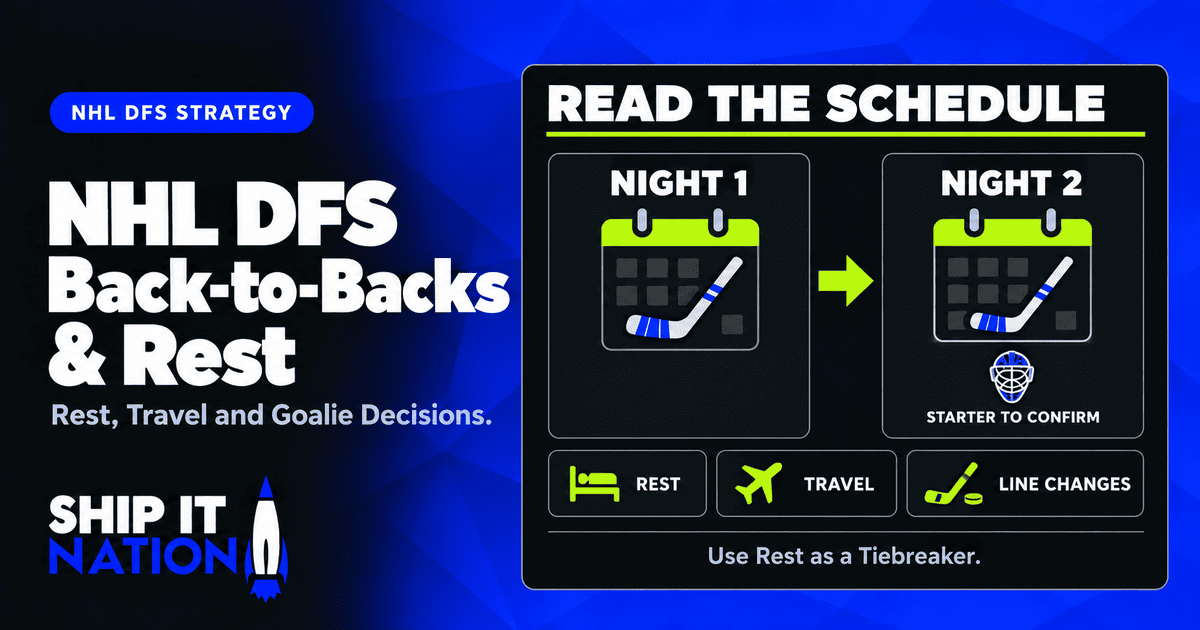
Back-to-back games are a common warning sign. Teams often send the backup goalie to the net in the second game of a back-to-back, though that is a pattern and not a law. If you roster a goalie before he is confirmed, you accept the risk that he never plays and your lineup loses its anchor. Many players wait for confirmation, or at least build a lineup with a backup plan.
Check the NHL schedule to see who played last night.
How Goalies Score
Check the current rules on the site, because scoring can change. On DraftKings, goalies have recently earned points for a win, for each save, and for an overtime loss, with a bonus for a shutout and another for a high save total. They lose points for every goal against. FanDuel’s rules page lists 12 points for a win, 0.8 per save, 8 for a shutout, and minus 4 per goal against, so a win and a shutout carry more weight there.
That structure rewards two different goalie profiles:
- The winner: a goalie on a strong team who wins most of his starts and rarely allows many goals.
- The volume goalie: a goalie who faces a lot of shots, collecting saves even in a loss.
The best outcome is both at once, a goalie on a good team that still faces plenty of shots. That is rare and usually expensive.
Look at the Opponent
Most of the information you need is on the other side of the ice. Two things matter most:
- How many shots does the opponent take? More shots mean more saves, and saves score points.
- How well do they score? A high-scoring opponent threatens to put goals against your goalie, which costs points.
A low-shot opponent can still be a good matchup if they also score rarely, because a shutout is possible. A high-shot opponent that scores a lot is a gamble, since the saves help and the goals hurt. Try to find a team that shoots often but finishes poorly. Those matchups tend to give a goalie a high floorFloorA player's floor in DFS is an estimate of the low end of their realistic fantasy scoring range. It describes downside, not a guaranteed minimum or their average projected score.Before trusting a floor estimate, check what could change the player's role today: a returning teammate, a minutes restriction, a lineup change or a different game script..
| Opponent profile | Saves | Goals against risk | Read |
|---|---|---|---|
| Shoots a lot, finishes poorly | High | Low | Strong floor, often the best matchup |
| Shoots a lot, scores a lot | High | High | Gamble: saves help, goals hurt |
| Shoots little, scores little | Low | Low | Shutout possible, lower volume |
| Shoots little, scores a lot | Low | High | Usually avoid |
Weigh Win Probability
Wins are worth a lot, so the betting market is a useful guide. A heavy favorite is more likely to win, and a team playing from ahead tends to protect the lead. Look at the moneyline and the game total together. A low total means fewer goals expected, which is good for a goalie. A high total is a warning.
Do not chase the favorite blindly. A goalie priced like a heavy favorite has less room to outperform his salary, and if he fails, the money you spent could have gone to skaters.
Balance Salary and Ownership
The goalie is one of your larger salary decisions. Check the current rules on the site for the cap, but whatever it is, the question is the same: does the extra money for an elite goalie buy enough upside, or would a mid-priced option free up salary for a better skater stack?
In cash gamesCash GameA cash game is a contest that pays a large share of the field, usually close to half, the same flat prize. Fifty-fifties, double-ups and head-to-heads are the common cash games.Treat cash games as the steady base of your bankroll. Use one safe core across your cash entries on a slate, and save riskier ideas for tournaments., a reliable favorite is usually the safest choice. In large tournaments, ownershipOwnershipOwnership is the percentage of lineups in a contest that include a given player. Projected ownership is an estimate made before lock; actual ownership is posted once the contest locks.Ownership isn't something to avoid; it's something to build around. The goal is understanding how the field is likely to build, then finding your edge relative to that. matters more. The most popular goalieChalkChalk is the most popular, highly owned play on a slate. The term comes from sports betting, where the favorite is called the chalk.Don't label chalk good or bad. Ask whether each popular play deserves its ownership, then decide which chalk you'll eat and which you'll fade. on the slateSlateA slate in DFS is the set of games, races, fights or tournament rounds covered by a contest. It determines which events your player selections can come from and which performances count toward your score.Before building, open the contest details and check the included events, scoring period and lock rules. Do not assume two sites offer identical slates just because both call them the main slate. will be in many lineups, so if he has an average night, you gain little. A cheaper goalie with a plausible path to a win can separate your lineup from the field.
Pair the Goalie With Your Stack
A common approach is to pair your skater stack with your own goalie. If a team scores a lot and wins, both parts of your lineup benefit. The reverse is also true: avoid rostering skaters who play against your goalie, because their success is his failure. This is common practice, not a rule, and tournament builds sometimes break it on purpose.
A Simple Goalie Routine
Before every slate, do this:
- Wait for starter confirmations, and note any back-to-back games.
- Rank the confirmed goalies by win probability.
- Check each opponent’s shot volume and scoring.
- Compare salaries, then decide how much you want to spend.
- Pick a goalie that fits your stack and your contest type.
That routine takes a few minutes and keeps you from overpaying for a name when the matchup says otherwise.
Full video courses on bankroll management, contest selection, roster construction and more, free for members.
Common Questions
What makes a good goalie pick in NHL DFS?
A good pick is confirmed to start, plays for a likely winner and faces an opponent that shoots a lot but scores rarely. Goalies score from wins and saves and lose points on goals against, so check the current rules on the site.
Should I pay up for a goalie in NHL DFS?
Only if the extra salary buys enough upside. A goalie priced like a heavy favorite has less room to outperform his salary. Compare an elite option with a mid-priced one that frees money for a better skater stack.
When are NHL starting goalies confirmed?
Starting goalies are usually confirmed on game day, often after morning skate, and some are not official until close to puck drop. Back-to-back games often send the backup to the net, so check the schedule and confirmations before lock.
Need a term explained? The Ship It Nation DFS glossary covers every DFS term we use in plain language.

About the author
Ship It Nation StaffShip It Nation was founded in 2023 by Tyler Tamboline and Mike Petta to give DFS players the tools, projections, content, and community they need to build a winning process. Today, we're a fully remote team of active DFS players, analysts, and builders.
More from Ship It Nation Staff →Keep reading