Lineup Building
Play Lighter, Play Tighter: How Many Lineups Should You Actually Enter?
Last updated October 7, 2026 by Tyler Tamboline · 3 min read

There’s a phrase that gets repeated a lot in DFS circles without much explanation behind it. Play lighter, play tighter. It sounds catchy, but it actually describes a real relationship between how many lineups you build, how much money you commit, and how wide your player pool should be. Understanding it properly can save you from two of the most common mistakes in the game.
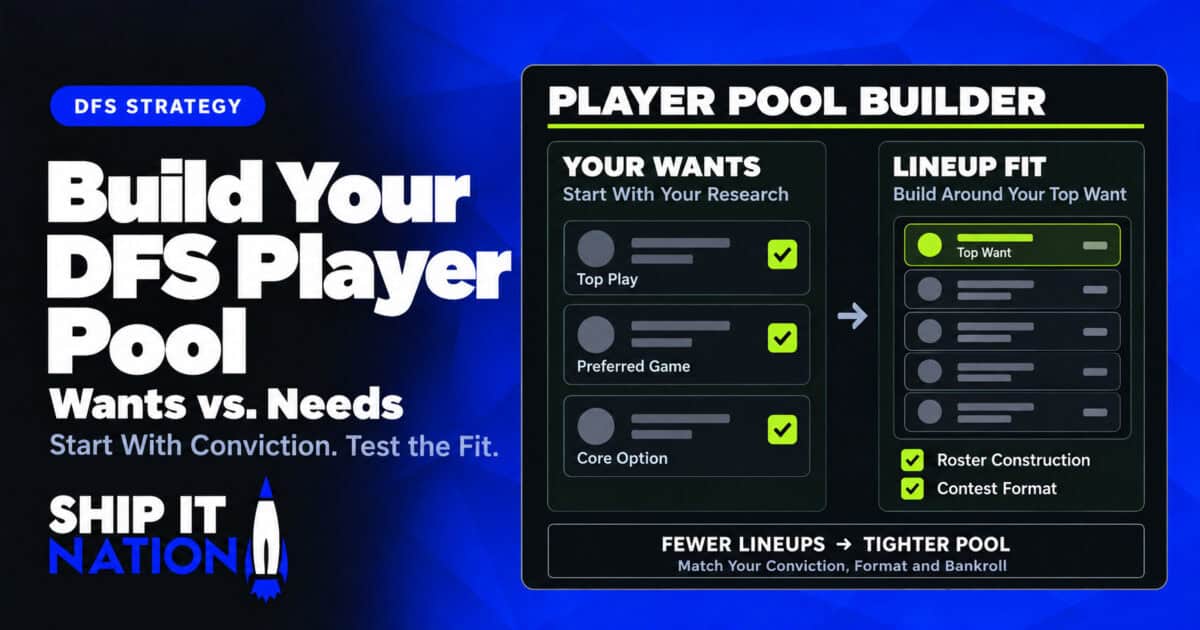
- Fewer lineups and smaller slate budgets call for tighter pools built around plays your research supports.
- A tight, confident read can fit fewer focused entries instead of being spread across many contests.
- Wider pools and more lineups can suit open slates where several options look viable.
The First Direction: Fewer Lineups Means a Tighter Pool
If you’re only building a handful of lineups for a slate, whether that’s a single entrySingle-EntryA single-entry contest allows each user exactly one lineup. It can be a cash game or a tournament.In single-entry, one or two contrarian decisions are usually enough. Pair a strong, popular core with a lower-owned piece instead of fading everything the field likes.Full explanation ↗ or a small max contest, there’s no benefit to bringing a huge, sprawling player pool into the build. A twenty maxTwenty-MaxA twenty-max contest lets each user enter up to 20 lineups. It sits between small-field formats like three-max and the largest 150-entry tournaments.Plan all 20 lineups before building any of them. Decide your stacks and exposure limits first, so the set works as a portfolio rather than 20 separate guesses.Full explanation ↗ slate built around ten quarterbacks or sixty golfers isn’t diversification, it’s just a lack of conviction dressed up as strategy.
Instead, identify a core group of plays you actually believe in and rotate through them with intention. Your handful of lineups should each represent a real, distinct idea, not a random shuffling of the same wide net.
The Second Direction: Less Money Means a Tighter Pool Too
The same principle applies when your budget for a slate is small. If you’ve only allocated twenty dollars to a given slate, there’s little reason to spread that risk across a pool so wide it dilutes any real conviction. Concentrate your exposureExposureExposure is the percentage of your lineups in a contest, or across a slate, that include a particular player, team or stack.Set exposure caps before you build, not after. Decide the most you're willing to have on any one player, then let your lineups fill in around those limits.Full explanation ↗ on the plays your research actually supports, and let your bankrollBankroll ManagementBankroll management is how you size your DFS spending relative to the money you have set aside to play, called your bankroll, so normal losing streaks do not wipe you out.Write down your per-slate limit before the season starts. Spending rules are much easier to keep when you set them before a losing streak, not during one.Full explanation ↗ size match the sharpness of your read.
Now Flip It: A Tight Pool Means You Can Play Lighter
Here’s the part people miss. The relationship works in both directions. If your research for a given slate has led you to a genuinely tight, high conviction pool, that doesn’t mean you need to spray that idea across every contest available.
If your best build for the week is truly your best build, don’t waste it entering fifty different lottery style GPPsGPP (Guaranteed Prize Pool)A GPP is a tournament whose prize pool is guaranteed to pay out in full even if the contest does not fill. Payouts are steep: a small group at the top wins most of the money.Before you enter a tournament lineup, ask how it finishes first, not just how it cashes. If you cannot name that scenario, rebuild it.Full explanation ↗ where it competes against a hundred thousand other entries and gets no real credit for being sharp. Place it somewhere your conviction actually matters, like a three maxThree-MaxA three-max contest lets each user enter up to three lineups. It is a small step up from single-entry.Give each of your three lineups a clear role. Make sure they differ in at least one major decision, like the main stack or the most expensive player.Full explanation ↗ or a smaller field qualifier, where a strong, tight build has a real chance to separate itself.
A Practical Example
Say you’ve narrowed a full slate down to three quarterbacks you genuinely like, with clear stacking partners for each. That’s a tight pool. Instead of building twenty scattered lineups trying to cover every possible outcome across the slate, you might build three focused lineups, one around each quarterback, and enter them in a three max contest where the format actually rewards that kind of precision.
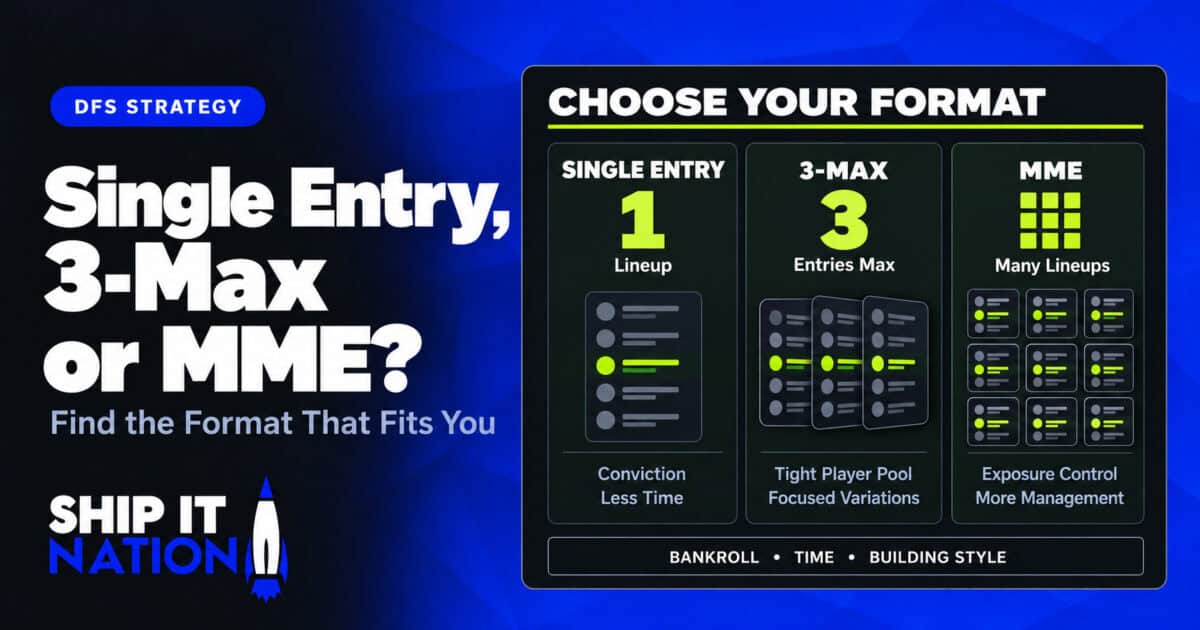
Compare that to a week where the slate feels wide open, with a dozen viable plays and no clear separation in your projections. That’s a spread week, and it might actually call for a wider pool spread across more lineups in an MME format, where volume helps you capture more of the range of outcomes.
Why This Matters for Your Bankroll
Getting this backwards is one of the fastest ways to waste both your research and your money. Building a huge, unfocused pool for a three max slate wastes your entries on lineups that don’t represent distinct ideas. Building an overly narrow pool for a 150 max slate leaves value on the table by not spreading exposure wide enough to capture the range of outcomes a big field format is designed for.
Making This Part of Your Weekly Process
Before you start building any lineups, ask yourself two quick questions. How many lineups am I actually entering this week, and how confident am I in my read on this slate? Let the honest answers to those two questions guide how wide or narrow your pool should be, rather than defaulting to the same habit every single week regardless of what the slate is actually telling you.
This isn’t a complicated concept once it clicks, but it’s one of those fundamentals that separates players who are intentional about their process from players who are just going through the motions slate after slate.
Full video courses on bankroll management, contest selection, roster construction and more, free for members.
Common Questions
How many DFS lineups should I enter?
Let your slate budget and confidence in your research guide your lineup count. A tight pool can fit fewer focused lineups, while a wide-open slate may call for more lineups in MME.
What does play lighter, play tighter mean in DFS?
Fewer lineups or a smaller slate budget call for a tighter player pool built around your strongest ideas. The relationship also works in reverse: a tight pool can justify playing fewer contests.
Should I use a wider player pool for MME?
A wider pool can suit MME when the slate offers many viable options without clear separation. The article argues that an overly narrow pool limits your ability to cover the range of outcomes.
Keep reading