Lineup Building
What Is SLB and Why Every MME Player Needs One
Published by Tyler Tamboline · 3 min read
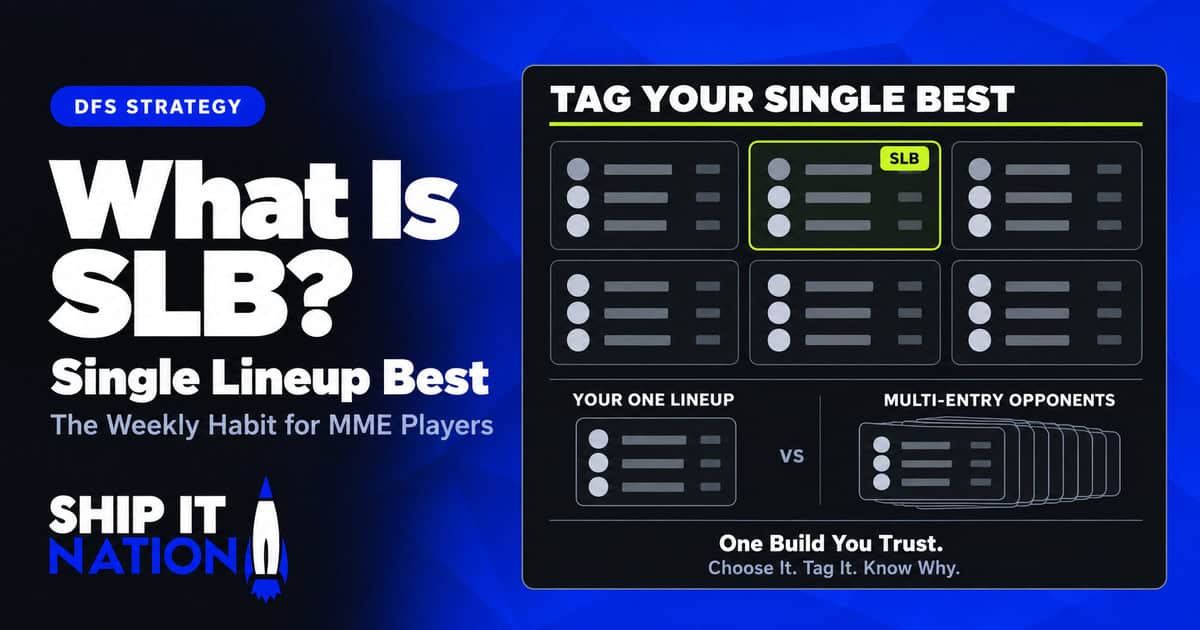
If you’re a player who regularly enters twenty, fifty, or even a hundred and fifty lineups a week, there’s a specific habit worth building that most MME players never think about until they actually need it. It’s called SLB, short for single lineup best, and it’s one of the more useful preparation tools available to volume players.
Key takeaways
- SLB identifies the lineup you would trust against opponents who have more entries than you.
- Tag a lineup from your weekly pool and explain why you chose it over the alternatives.
- Practice committing to one build before a satellite ticket or qualifying opportunity puts that decision under pressure.
What SLB Actually Means
SLB refers to the practice of tagging one specific lineup out of your larger pool each week as the build you’d play if you only had one shot, and specifically if you were facing a field where your opponents had far more entries than you did.
This is an important distinction. It’s not the same as simply picking your favorite single entry style lineup where everyone else in the contest also has just one entry. SLB is about identifying the lineup you’d trust in a scenario where you’re outnumbered, facing opponents with twenty, fifty, or even more lineups each, while you’re down to just one.
Why This Distinction Matters
Building a lineup for a standard single entry contest, where the whole field is on equal footing with one entry each, is a different mental exercise than building a lineup meant to compete against opponents who can hedge across dozens of builds. If you’ve never actually practiced identifying your best single shot against a numerically stacked field, the first time you’re forced into that scenario for real stakes is not the ideal moment to figure it out.
Why MME Players Specifically Need This Habit
If you’re used to spreading exposureExposureExposure is the percentage of your lineups in a contest, or across a slate, that include a particular player, team or stack.Set exposure caps before you build, not after. Decide the most you're willing to have on any one player, then let your lineups fill in around those limits. across a wide pool every single week, you may never have had to genuinely commit to just one build under pressure. That’s exactly the scenario you’ll face if you win a satelliteSatelliteA satellite, also called a qualifier, is a contest whose prizes are tickets into a more expensive contest or a live final instead of cash. Tickets are free entries into that bigger event.Before building, compare the number of seats to the size of the field. The share of entries that win a ticket tells you whether to build like a cash game or a tournament. ticket or otherwise qualify for a contest where you’re limited to a single entry against a field of much larger stacks.
Practicing SLB regularly, even in weeks where it doesn’t matter for real stakes, builds the decision making muscle you’ll need if that moment actually arrives.
How to Practice This Weekly
As part of your normal lineup building process, once you’ve generated your full pool for the week, take a moment to specifically identify which single lineup from that pool you’d trust the most if you were suddenly told you could only play one of them, against a field full of opponents entering considerably more than one lineup each.
Write it down or tag it somehow. Ask yourself why you chose that particular build over the others in your pool. Is it the highest projected combination, the one with the cleanest correlation, or the one that gives you the best combination of floorFloorIn daily fantasy sports (DFS), a player's floor is an estimate of the low end of their realistic fantasy scoring range. It describes downside, not a guaranteed minimum or their average projected score.Before trusting a floor estimate, check what could change the player's role today: a returning teammate, a minutes restriction, a lineup change or a different game script. and ceiling against a field you can’t outnumber?
Single Entry Players Are Already Ahead Here
If you already play single entry regularly, you have a natural head start on this skill, since you’re used to committing to one lineup under real stakes every week. But even single entry players benefit from specifically thinking through how they’d adjust their approach if they knew their one opponent field was full of players entering considerably more lineups than they were.
The Payoff
The valueValueValue is the fantasy production you expect from a player relative to his salary. A value play offers more production or upside than his price suggests, whether he is cheap or expensive.Identify why the salary looks wrong: workload, matchup, scoring ability or a pricing error. Then check whether that reason still holds when you submit your lineup. of building this habit shows up exactly when you need it most, in the moment you’ve won a ticket or otherwise find yourself limited to a single shot against a much larger field. Having already practiced identifying and trusting your SLB lineup means you’re not scrambling to figure out how to think about the situation for the first time under real pressure. You’re simply executing a decision you’ve already rehearsed.
Full video courses on bankroll management, contest selection, roster construction and more, free for members.
Common Questions
What does SLB mean in DFS?
SLB stands for single lineup best. It means tagging the lineup from your larger pool that you would play with one shot against opponents entering more lineups.
How is SLB different from a single entry lineup?
A standard single entry lineup competes against opponents who also have one entry. SLB specifically prepares you to choose one lineup against opponents who can hedge across multiple builds.
How should MME players practice choosing their SLB?
After generating your weekly pool, tag the lineup you would trust most against opponents with more entries. Explain your choice by considering projection, correlation, and the combination of floor and ceiling.
Need a term explained? The Ship It Nation DFS glossary covers every DFS term we use in plain language.

About the author
Tyler TambolineTyler Tamboline co-founded Ship It Nation and is the face of the brand across our shows and community. He is also the Founder of DFS Mastermind, helping hundreds of DFS players find their own process. He has played DFS since 2012, focusing primarily on PGA and NFL, and has created DFS content full-time since 2018 at different sites across the industry. He is known for strategy, game theory and leverage in large-field tournaments. He has been a regular on many Fantasy Sports podcasts, including weekly PGA and NFL shows with Pat Mayo.
More from Tyler Tamboline →Keep reading