PGA
PGA DFS Slate Types Explained: Full Tournament, Weekend, and Single Round Contests
Published by Ship It Nation Staff · 4 min read

PGA DFS features an excellent array of distinct tournament slate architectures: traditional full-tournament contests covering all four rounds, weekend slates scoring only the final two rounds, and fast-paced single-round showdown slates. Each individual format operates under a completely unique scoring engine and rewards a highly specific strategic approach. To build a profitable bankroll, you must match your lineup constructionRoster ConstructionRoster construction is how you organize a DFS lineup within its salary cap and roster rules. It includes where you spend or save, which positions you prioritize, and how your players fit together.Build two versions around your biggest spending decision, then compare every player who changes. Revisit the comparison when injury news changes the available value. to the exact slate parameters you are entering.
Key takeaways
- Architectural Diversity: PGA DFS features three distinct slate windows (Full, Weekend, and Daily Showdown), each requiring an entirely unique strategic mindset and lineup composition.
- The Weekend Clean Slate: Weekend slates carry zero cut risk because the player pool does not generate until after the Friday cut line is secured, shifting your strategy entirely toward raw scoring upside.
- Daily Showdown Volatility: Single-round contests amplify hole scoring metrics and wipe out previous leaderboard scores, transforming daily weather wave splits into your premier analytical edge.
What Is a Full Tournament Slate?
The full-tournament contest is the undisputed flagship format of professional golf DFS. Lineups lockLineup LockLineup lock is the deadline after which you cannot change your selected players. Without late swap, your entire lineup locks together; with late swap, which allows edits after the contest begins, players lock at their games' listed deadlines.After saving an edit, reopen your entered lineups and confirm the change reached every intended entry. Check the site's displayed lock times and time zone instead of relying on the television schedule. on Thursday morning before the very first group hits their opening tee shots, and your scoring accumulates across all four full rounds of play.
This standard classic formatClassic ContestsClassic contests are the standard salary-cap DFS format: you select a full lineup from a designated set of games or events within a fixed budget. Roster requirements and scoring depend on the sport and site.Check the included games before building. A Classic contest can cover a small afternoon slate rather than the full day, changing your available players and lineup options. rewards intensive, macro-level baseline research covering long-term ball-striking metrics, course history, and historical cut-line safety. Because final leaderboard placement points (+30 for a win) are heavily distributed at the conclusion of Sunday’s play, having even a single golfer miss the Friday cut line completely cripples your math, making cut-avoidance your primary operational goal.
What Is a Weekend Slate?
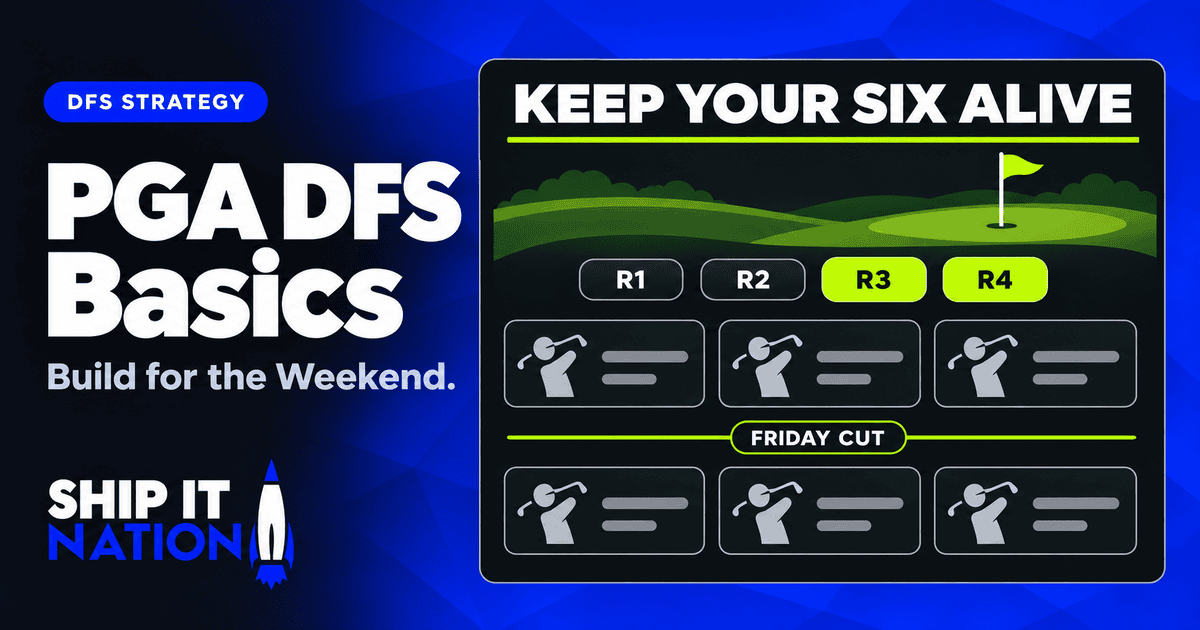
A weekend contest isolates its scoring exclusively to the final 36 holes played across Round 3 (Saturday) and Round 4 (Sunday). DraftKings creates and populates a completely brand-new, independent player pool for this slate on Friday evening after the official cut line is secured.
Because the slate doesn’t lock for entries until the earliest round-three tee time on Saturday morning, there is absolutely zero cut risk in a Weekend Slate. Every single golfer available in the draft pool is completely guaranteed to play the final two rounds of the tournament. This allows you to aggressively leverage data from the first two rounds and target ball-strikers who barely made the cut but might be showing flashing form.
The hole-by-hole scoring matches the DraftKings Classic Golf Layout, where birdies award 3 points, eagles award 8 points, and the birdie streak and bogey-free round bonuses pay 3 points each. Additionally, weekend slates feature an exclusive ‘All Rounds Under 70’ bonus (+5 Pts) if your golfer breaks 70 on both Saturday and Sunday. However, note this massive rule constraint: FanDuel completely disables final tournament finishing placement points for weekend contests, making raw, hole-by-hole birdie hunting your primary objective on that site.
What Is a Single-Round Slate (Showdown)
A single-round contest, globally known as a Showdown slate, tracks performance across one single day of golf. You construct a fresh six-player lineup for that specific round only, and all golfers start completely even at zero points, completely wiping away their real-world leaderboard standing from previous days.
These slates move incredibly fast and lock daily. Immediate weather wave forecasts, morning vs. afternoon wind splits, and daily pin placements matter immensely. Because a single 18-hole round represents a micro-sample size, statistical varianceVarianceVariance in DFS describes how widely fantasy scores or contest returns can swing around their expected outcomes. It explains why a sound lineup can lose and a poor decision can sometimes win.Track results by contest type and slate, and review opportunity separately from touchdowns or other rare scoring events. Entering the same lineup in ten contests does not give you ten independent performance samples. If you build with an optimizer, its randomness setting nudges projections up or down on each build, so your lineups spread across different players instead of repeating the same top projections. and luck play a highly magnified role.
Hole-by-hole point values are drastically amplified in single-round Showdowns to reward hyper-aggressive play: birdies jump to 5.75 points and eagles escalate to 11 points. Roster structures vary by format: standard stroke-play showdowns use a flat six-utility budget, while specialty Cup Showdowns (like the Presidents Cup or Ryder Cup) implement a Captain Mode where one designated player costs elevated salary but scores a massive 1.5x point multiplier. Tournament placement points are completely absent from Showdown slates unless you are explicitly entering the Round 4 Final Round Showdown, which awards full final leaderboard bonuses at the conclusion of the event.
What About Match Play and Cup Events?
Specialty formats completely break away from traditional stroke-play rules, and DraftKings Rules & Scoring alter fundamentally to match them. In official match play brackets, golfers score points based on hole outcomes relative to their direct opponent: +3 points for a hole won, +0.75 points for a hole tied, -0.75 points for a hole lost, and a +5 point bonus for clinching the match win outright.
During team cup exhibitions, the opening days utilize paired alternate-shot or best-ball configurations where both partners are credited with an identical statistical round score. The final day transitions into traditional head-to-head singles matches. In unique team stroke-play events (like the Zurich Classic), partners share their statistics, and classic roster configurations explicitly bar you from drafting both members of the same dual partnership.
Comprehensive Format Comparison
| Slate Type Architecture | Lineup Lock Timing | Weekend Cut Risk | Primary Strategic Focus |
|---|---|---|---|
| Full Tournament | Thursday morning before Round 1 | Yes | Long-term ball-striking metrics, course history, and cut safety. |
| Weekend Slate | Saturday morning before Round 3 | No | Capitalizing on early-week tracking form and weekend course setups. |
| Single Round (Showdown) | Daily before individual round locks | No | Exploiting daily tee-time wind splits and aggressive birdie makers. |
| Match Play / Team Cup | Before tournament or day starts | Event Dependent | Direct head-to-head metrics and format-specific scoring scripts. |
Strategic Bankroll Allocation
Professional bankroll management requires you to distribute your capital according to the historical volatility of each slate architecture. A highly proven, industry-standard strategy is to deploy 60% to 70% of your weekly golf bankroll into the flagship full-tournament slate, where your long-term research edge has 72 full holes to smooth out variance.
Use your remaining 30% to take aggressive shots at weekend slates or daily Showdowns. For beginners, daily Showdowns and weekend slates function as a phenomenal, low-cost training ground; they completely eliminate the frustration of having your entire Thursday roster ruined by a Friday cut-line exit, allowing you to learn scoring dynamics with minimal financial risk.
Use the PGA process course to organize your weekly preparation.
Full video courses on bankroll management, contest selection, roster construction and more, free for members.
Common Questions
What are the primary PGA DFS slate types?
The three primary architectures are full-tournament slates (covering all four rounds), weekend slates (covering Rounds 3 and 4 only), and daily single-round Showdown contests. Platforms also feature custom scoring adjustments for match-play brackets and international team cup formats.
Is there cut risk in weekend PGA DFS contests?
No, there is absolutely no cut risk. DraftKings and FanDuel do not open weekend contests for entries until Friday evening after the cut line is finalized, meaning the draft pool only consists of players safely advancing to the weekend.
Which PGA DFS slate is best for beginners?
Weekend slates or daily Showdowns are highly ideal for beginners. Because they feature zero cut risk, they prevent your entire weekend from being ruined by a player missing the Friday cut line, providing a highly engaging, low-cost way to learn live fantasy scoring mechanics.
Need a term explained? The Ship It Nation DFS glossary covers every DFS term we use in plain language.

About the author
Ship It Nation StaffShip It Nation was founded in 2023 by Tyler Tamboline and Mike Petta to give DFS players the tools, projections, content, and community they need to build a winning process. Today, we're a fully remote team of active DFS players, analysts, and builders.
More from Ship It Nation Staff →Keep reading