NHL
NHL DFS Basics: Roster Rules, Scoring, and How DraftKings and FanDuel Differ
Published by Ship It Nation Staff · 6 min read
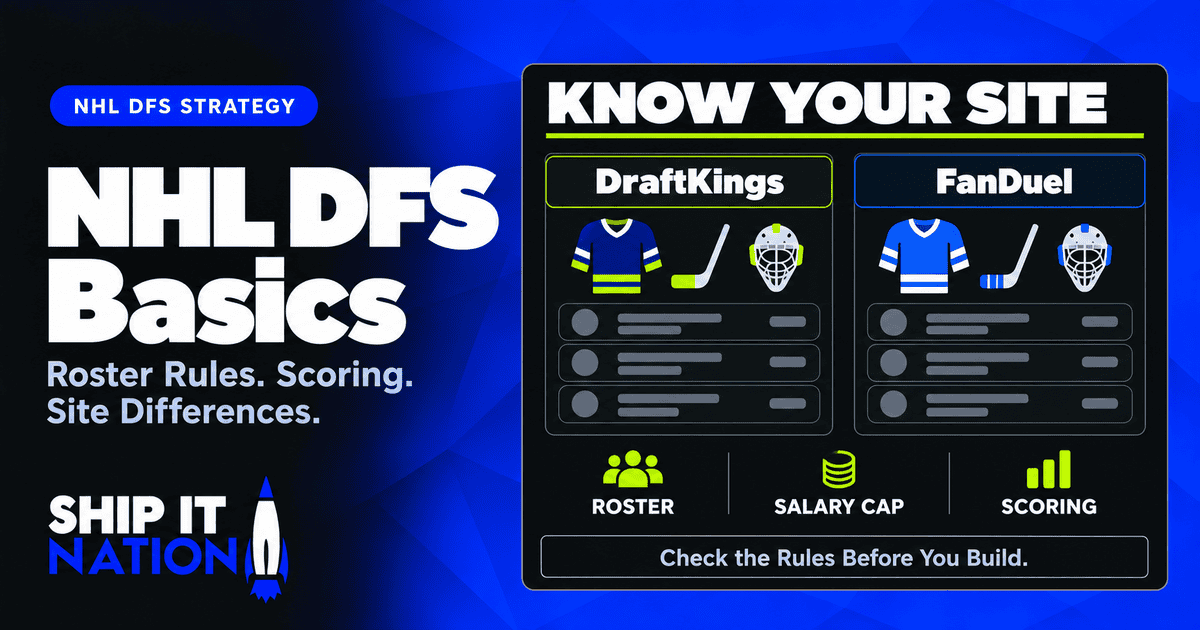
NHL DFS asks you to build a roster of centers, wings, defensemen, and a goalie under a salary cap, scoring points for goals, assists, shots, blocks, and goalie results. DraftKings and FanDuel differ in roster layout, cap, and scoring weights, so always check the current rules on each site.
Key takeaways
- DraftKings and FanDuel differ in roster layout, salary cap and scoring: for example, a goal is 8.5 on DraftKings and 12 on FanDuel, so check the current rules on each site before you build.
- Shots and blocks give skaters a steadier floor than goals, which is why shot volume and ice time matter so much.
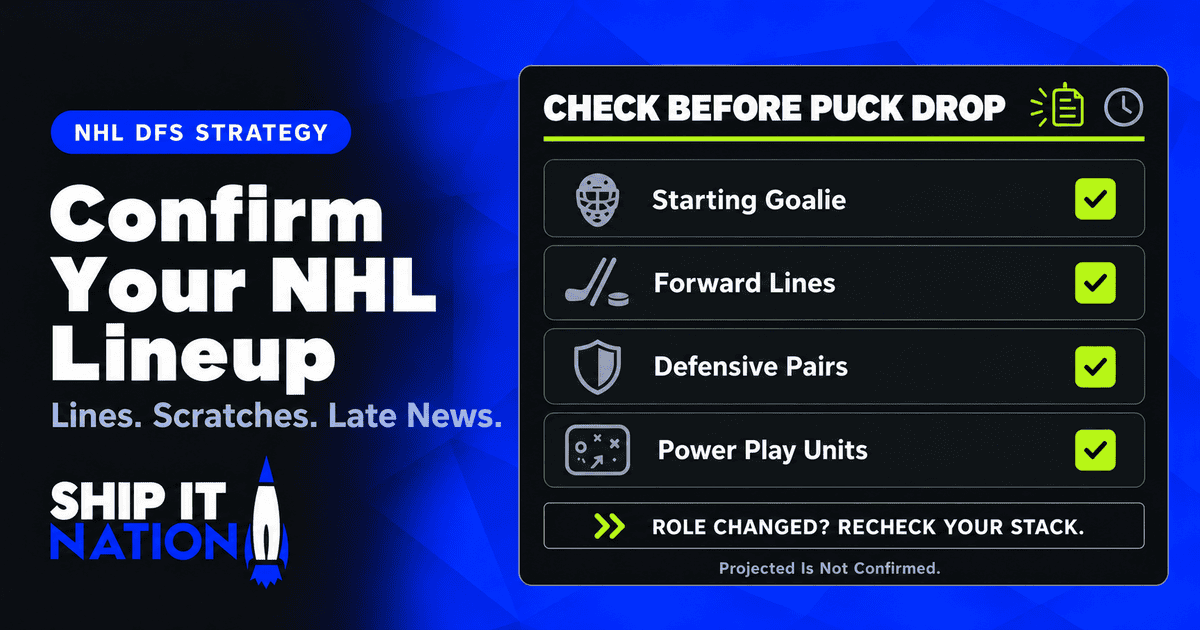
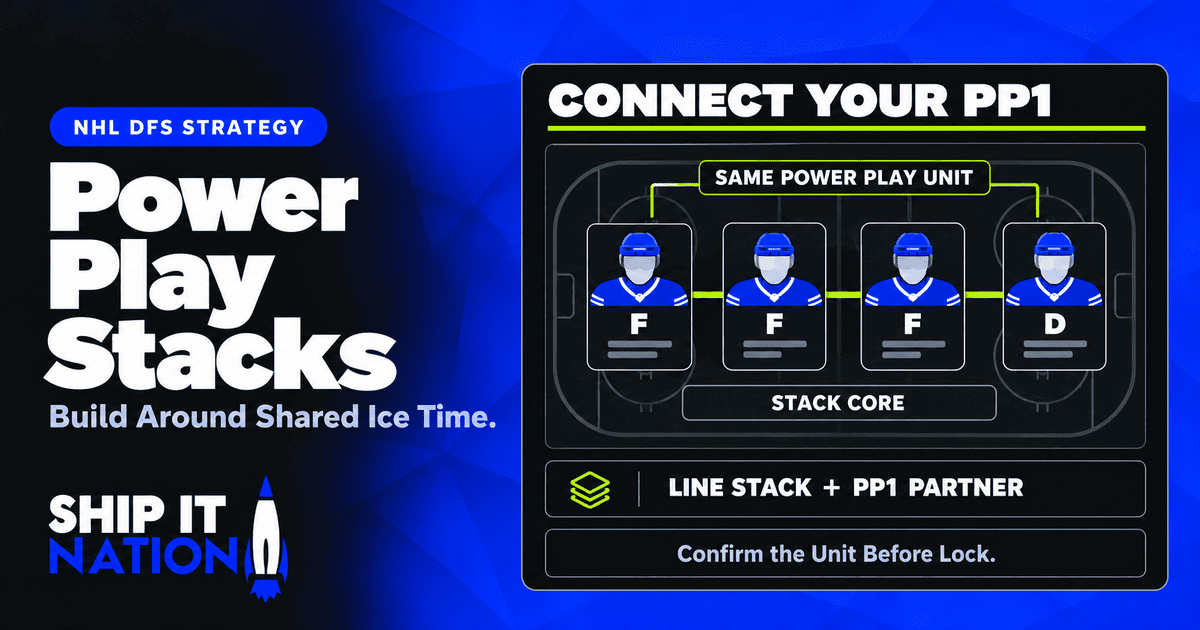
- Linemates share ice time, so stack a forward line, consider a defenseman from the same power play unit, and confirm starting goalies and lines before lock.
Here is how the pieces fit together.
The Roster Structure
On DraftKings, NHL rosters include nine players: two centers, three wings, two defensemen, one UTIL spot, and one goalie, with a $50,000 cap and skaters required from at least three NHL teams. FanDuel uses nine players too, with two centers, two wings, two defensemen, two UTIL players, and one goalie, a $55,000 cap, and a limit of four players from one team. These sites do change rules, so check the current ones on each site before you build.
The key difference is flexibility. DraftKings gives you one UTIL spot that can hold any skater, while FanDuel gives you two UTIL spots and only two wings.
How DraftKings Scoring Works
Scoring values can change, so confirm them on the site. As of the 2026 season, DraftKings listed the following scoring rules for DraftKings skaters:
- Goal: 8.5 points
- Assist: 5 points
- Shot on goal: 1.5 points
- Blocked shot: 1.3 points
- Short-handed point bonus: 2 points
- Shootout goal: 1.5 points
It also listed bonuses: a hat trick adds 3, five or more shots adds 3, three or more blocked shots adds 3, and three or more points adds 3.
For goalies, the listed values were 6 for a win, 0.7 per save, minus 3.5 per goal against, a shutout bonus of 4, 2 for an overtime loss, and a 35 or more saves bonus of 3.
How FanDuel Differs
FanDuel pays more per event, so its point totals run higher, and it weights the categories differently. According to FanDuel’s rules page, skaters earn 12 points for a goal, 8 for an assist, 1.6 for a shot on goal, and 1.6 for a blocked shot, with 0.5 extra for a power play point and 2 extra for a short-handed point. Goalies earn 12 for a win, 0.8 per save, and 8 for a shutout, and lose 4 for each goal against. The page also says no points are awarded for goals or saves in shootouts.
Compare that with DraftKings above and a few differences stand out:
- Assists: A goal is worth about 1.5 assists on FanDuel and about 1.7 assists on DraftKings, so assists carry a little more relative weight on FanDuel.
- Bonuses: DraftKings adds bonuses for hat tricks, five or more shots, three or more blocked shots, three or more points, overtime losses, and big save totals. FanDuel’s rules page does not list those, but it adds a small bonus for power play points that DraftKings does not have.
- Goalies: A win and a shutout are worth more on FanDuel, and so is each goal against.
Because of this, do not copy a lineup from one site to the other. Rebuild it with each site’s roster and scoring in mind.
| Stat | DraftKings | FanDuel | Difference |
|---|---|---|---|
| Goal | 8.5 | 12 | FanDuel pays 3.5 more |
| Assist | 5 | 8 | FanDuel pays 3 more |
| Shot on goal | 1.5 | 1.6 | FanDuel pays 0.1 more |
| Blocked shot | 1.3 | 1.6 | FanDuel pays 0.3 more |
| Power play point | None | +0.5 | FanDuel only |
| Short-handed point | +2 | +2 | Same |
| Shootout goal | 1.5 | None (no shootout points) | DraftKings only |
| Hat trick | +3 | Not listed | DraftKings bonus |
| 5 or more shots | +3 | Not listed | DraftKings bonus |
| 3 or more blocked shots | +3 | Not listed | DraftKings bonus |
| 3 or more points | +3 | Not listed | DraftKings bonus |
| Goalie win | 6 | 12 | FanDuel pays 6 more |
| Goalie save | 0.7 | 0.8 | FanDuel pays 0.1 more |
| Goal against | -3.5 | -4 | FanDuel penalizes 0.5 more |
| Shutout | +4 | +8 | FanDuel pays 4 more |
| Overtime loss | +2 | Not listed | DraftKings only |
| 35 or more saves | +3 | Not listed | DraftKings bonus |
| Same stat line | DraftKings | FanDuel |
|---|---|---|
| Forward: 1 goal, 1 assist, 4 shots, 1 block | 20.8 | 28.0 |
| Defenseman: 1 assist (a power play point), 3 shots, 4 blocks | 17.7 | 19.7 |
| Defenseman as a share of the forward | About 85 percent | About 70 percent |
What the Scoring Tells You
Goals pay the most, but they are also the hardest to predict. Shots and blocks are steadier, and they give players a floorFloorA player's floor in DFS is an estimate of the low end of their realistic fantasy scoring range. It describes downside, not a guaranteed minimum or their average projected score.Before trusting a floor estimate, check what could change the player's role today: a returning teammate, a minutes restriction, a lineup change or a different game script. even when the puck does not go in. That is why shot volume and ice time matter so much.
A few things to look for:
- Skaters who take many shots, since each one scores even if it does not become a goal.
- Defensemen who block shots and also play on a power play unit.
- Players on lines that get heavy minutes, since more ice time means more chances at every stat.
Goalies are a different story. A win, saves, and a shutout can add up to a large score, but goals against can erase it quickly.
| Feature | DraftKings (older figures) | FanDuel | What to do |
|---|---|---|---|
| Roster size | 9 players | 9 players | Check the current rules on each site |
| Skater layout | 2 C, 3 W, 2 D, 1 UTIL | 2 C, 2 W, 2 D, 2 UTIL | Rebuild your lineup per site |
| Goalie spots | 1 G | 1 G | Confirm the starter before lock |
| Salary cap | $50,000 | $55,000 | Verify the cap in the lobby |
| Team rule | Skaters from at least 3 teams | Max 4 players from one team | Confirm limits before stacking |
Stacking Basics
Linemates share ice time, so one goal can pay several roster spots at once. That is the core idea behind NHL stacking. A forward line is the usual starting point, and many players add a defenseman who plays the same power play unit. Power play units produce far more per minute than even-strength lines, so pairing players from the same unit can raise your ceilingCeilingCeiling is the high end of a player's or lineup's realistic range of fantasy scores. It describes a big performance that could happen when things go well, not the expected score or an absolute maximum.Describe what must happen for each player to have a huge game. Then check whether those conditions help or hurt the other players in your lineup..
Another common approach is to pair a forward line with the team’s goalie, since a win and a high-scoring game often go together. As a common practice, avoid rostering skaters against your own goalie by default, because a goal for them is a goal against you.
Check the Goalie and the Lines
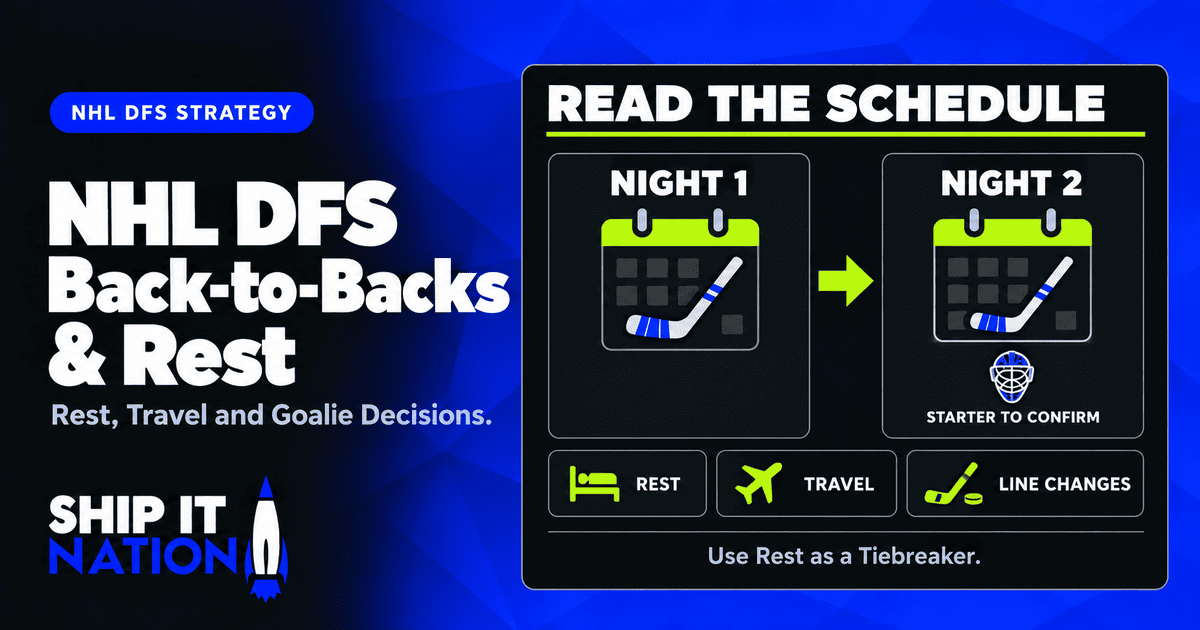
Starting goalies are usually confirmed on game day, often after morning skate, and projected lines can change late. Back-to-back games often send the backup goalie to the net, so check the schedule when you are choosing a goalie. Because of this, treat early lineups as drafts rather than final answers.
Build in time to review confirmations before lock. A late scratchInjury NewsInjury news is information about a player's health that can change whether they compete, how much they play or how effectively they perform. In DFS, it also affects opportunities for teammates and opponents.Before an uncertain player's game locks, identify an alternative you can afford at each affected position. Check whether making that change would require another player whose game starts earlier. or goalie change can reshape your whole build.
Start Simple
Pick one site, learn its roster and scoring, and begin with small contests. Build around one line, one power play pairing, and a goalie you trust. Confirm the lineups before lockLineup LockLineup lock is the deadline after which you cannot change your selected players. Without late swap, your entire lineup locks together; with late swap, which allows edits after the contest begins, players lock at their games' listed deadlines.After saving an edit, reopen your entered lineups and confirm the change reached every intended entry. Check the site's displayed lock times and time zone instead of relying on the television schedule., and keep notes on what worked. NHL DFS rewards players who learn the scoring first and the strategy second.
Decide how many lineups to enter before you build.
Full video courses on bankroll management, contest selection, roster construction and more, free for members.
Common Questions
How does NHL DFS scoring work?
Skaters earn points for goals, assists, shots on goal and blocked shots, with bonuses for things like hat tricks. Goalies earn points for wins and saves and lose points for goals against. Values differ by site and can change, so check the current rules on the site you play.
How many players are on an NHL DFS roster?
Both DraftKings and FanDuel use nine players, including one goalie, but the position mix, salary cap and team limits differ. FanDuel has two wings and two UTIL spots, while DraftKings has three wings and one UTIL. Check the current rules on the site before building your lineup.
Is NHL DFS different on DraftKings and FanDuel?
Yes. Roster layout and salary cap differ, and so does scoring. For example, a goal is 8.5 on DraftKings and 12 on FanDuel, while DraftKings adds bonuses such as hat tricks and FanDuel adds a small power play point bonus. Check the current rules on each site.
Need a term explained? The Ship It Nation DFS glossary covers every DFS term we use in plain language.

About the author
Ship It Nation StaffShip It Nation was founded in 2023 by Tyler Tamboline and Mike Petta to give DFS players the tools, projections, content, and community they need to build a winning process. Today, we're a fully remote team of active DFS players, analysts, and builders.
More from Ship It Nation Staff →Keep reading