DFS projections estimate a player's fantasy points for an upcoming slate using expected opportunities, performance and the contest's scoring rules. They describe an expected result, not a guaranteed score.
Why It Matters
Check starting position and scheduled race length before comparing driver projections. The number of available laps changes the opportunity to lead, while a driver's starting spot affects the potential for position gains. Similar point estimates can therefore depend on very different race paths.
Say two drivers each project for 45 fantasy points. One starts near the front and needs to lead a substantial portion of the race; the other starts deep in the field and needs to advance. Their equal projections do not mean they carry the same risks or depend on the same race outcome.
Pro tip
Check the projection's update time and assumed role before using it. If news is already included, adjusting again for that same news can double-count its effect.
Hear Us Break It Down
Hand-picked moments from our free live streams where our hosts break down this term.
DFS projections combine expected opportunities with estimates of what a player will produce from them. Inputs can include playing time, historical performance, teammates, opponents, weather and betting markets. Models translate the projected statistics into fantasy points, and different assumptions can produce different forecasts.
Can I use the same projections for DraftKings and FanDuel?
Use fantasy-point projections built for your specific site and contest format. A statistical forecast can inform both sites, but the conversion to fantasy points must match the applicable scoring. Salary affects a player's value at that projection, rather than directly changing how many points the projected statistics produce.
How accurate are DFS projections?
Accuracy depends on the model, its assumptions and how current its information is. Even a useful model will miss individual performances by large margins. Evaluate forecasts across many comparable cases rather than one result, and check whether the published number represents a mean or a median.
Every term we use on the shows, explainedWritten for the sport you play, with the moments where we use them.

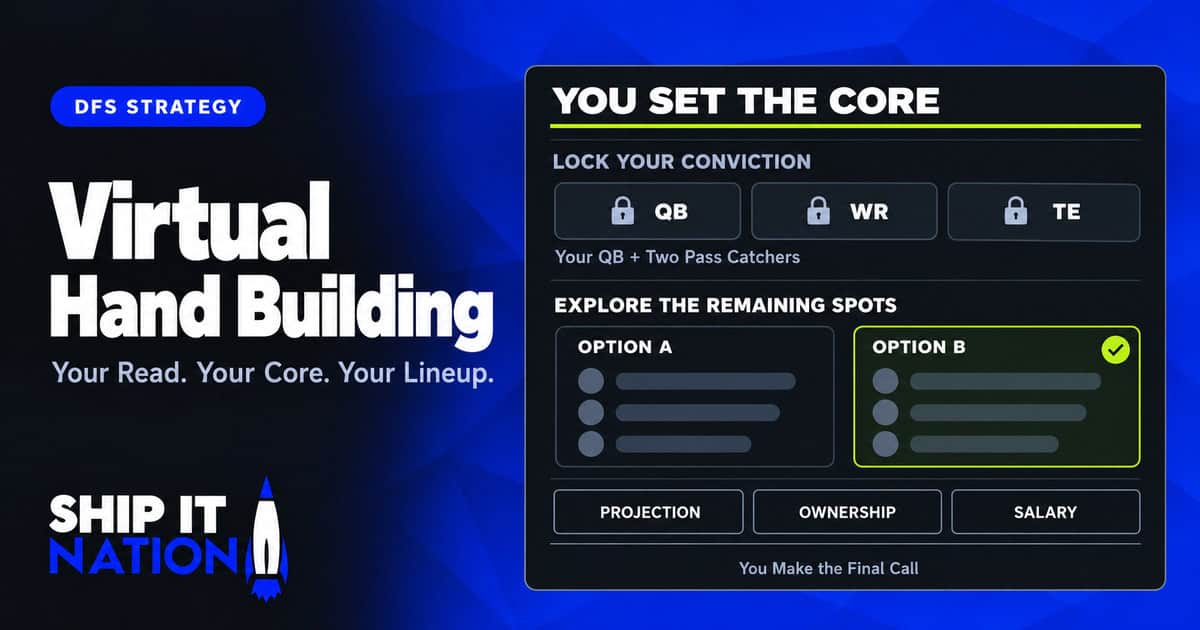 Virtual Hand Building: How to Use an Optimizer Without Losing Your Personal Style
Lineup Building · 3 min read
Virtual Hand Building: How to Use an Optimizer Without Losing Your Personal Style
Lineup Building · 3 min read
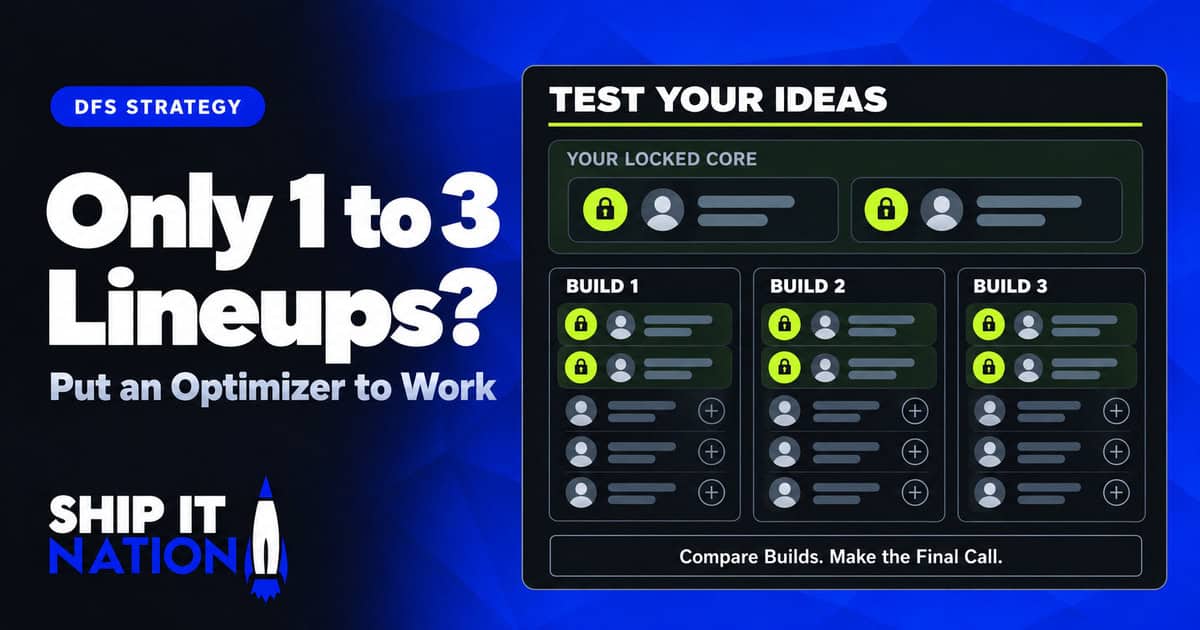 Do You Need a DFS Optimizer If You Only Play 1 to 3 Lineups?
Lineup Building · 3 min read
Do You Need a DFS Optimizer If You Only Play 1 to 3 Lineups?
Lineup Building · 3 min read
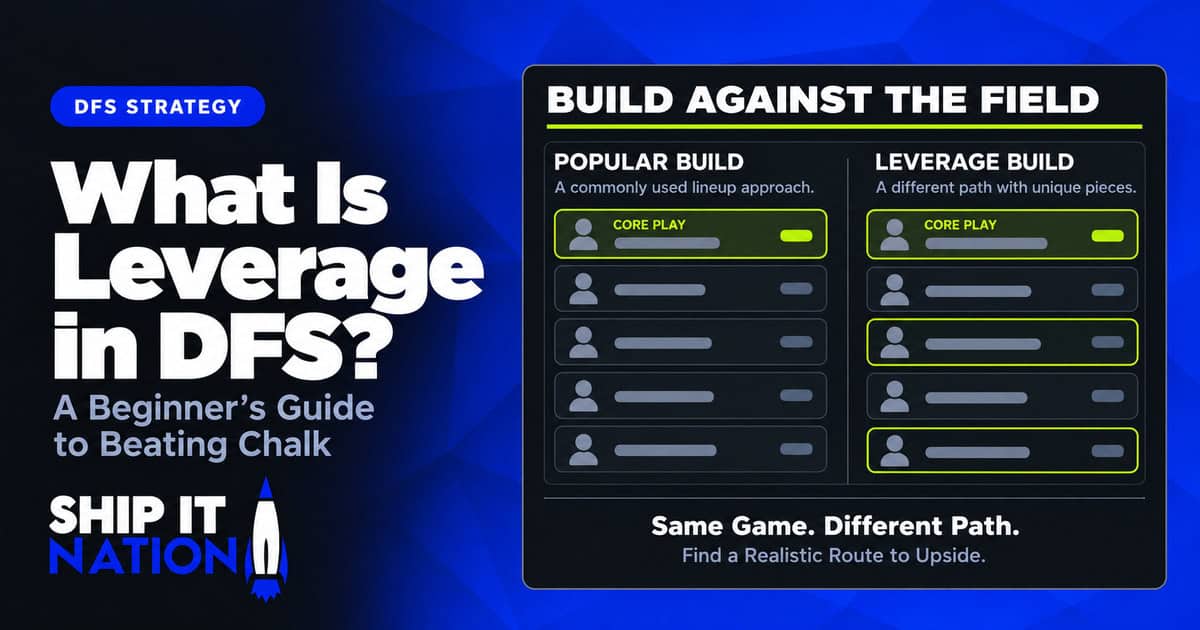 What Is Leverage in DFS? A Beginner’s Guide to Beating Chalk
Ownership & Leverage · 3 min read
What Is Leverage in DFS? A Beginner’s Guide to Beating Chalk
Ownership & Leverage · 3 min read