MMA
Weight Classes in MMA DFS: Why Fighter Style Matters More Than Division
Published by Ship It Nation Staff · 4 min read

Weight class divisions should never serve as the foundational rule for structuring your MMA DFS rosters. Relying on broad weight class assumptions ignores individual varianceVarianceVariance in DFS describes how widely fantasy scores or contest returns can swing around their expected outcomes. It explains why a sound lineup can lose and a poor decision can sometimes win.Track results by contest type and slate, and review opportunity separately from touchdowns or other rare scoring events. Entering the same lineup in ten contests does not give you ten independent performance samples. If you build with an optimizer, its randomness setting nudges projections up or down on each build, so your lineups spread across different players instead of repeating the same top projections.. A fighter’s distinct stylistic output, historical pacing, and real-time betting props provide vastly superior predictive signals than their weight division. Treat divisional tags as minor, background environmental context, and anchor your research directly to how a specific stylistic matchup is projected to unfold inside the cage.
Key takeaways
- Divisional Tags are Background Noise: A weight class is merely an average of hundreds of unique styles; long-term individual fighter pacing is a vastly superior metric to broad divisional classifications.
- Isolate Core Volume Data: Anchor your primary projection models to high-stability metrics like significant strikes landed per minute (SLpM) and takedown-per-round averages to identify safe floors.
- The Heavyweight Variance Trap: Heavyweights possess immense slate-breaking ceiling potential, but their low-volume floors require close inspection before you deploy premium capital.
The Myth of the Division Average
It is incredibly easy for casual players to fall into the trap of building rigid roster-constructionRoster ConstructionRoster construction is how you organize a DFS lineup within its salary cap and roster rules. It includes where you spend or save, which positions you prioritize, and how your players fit together.Build two versions around your biggest spending decision, then compare every player who changes. Revisit the comparison when injury news changes the available value. rules based on broad divisional stereotypes. The public consensus dictates that heavyweights are mandatory because they land heavy knockouts, while flyweights should be avoided because their fights routinely travel to low-scoring decisions. While these macro-level statistical trends are rooted in broad historical fact, they represent aggregated averages of hundreds of vastly different fighters.
In daily fantasy sports, you are never drafting a division average; you are rostering one specific athlete matching up against one explicit opponent. A durable heavyweight who pushes a relentless, high-volume wrestling pace carries a completely different projection ceilingCeilingCeiling is the high end of a player's or lineup's realistic range of fantasy scores. It describes a big performance that could happen when things go well, not the expected score or an absolute maximum.Describe what must happen for each player to have a huge game. Then check whether those conditions help or hurt the other players in your lineup. than a low-volume heavyweight slugger who completely stalls out if they fail to land a knockout inside the opening three minutes. Analyzing individual fighter style metrics is infinitely more powerful than relying on broad divisional averages.
Prioritizing Core Stylistic Metrics
To locate authentic baseline valueValueValue is the fantasy production you expect from a player relative to his salary. A value play offers more production or upside than his price suggests, whether he is cheap or expensive.Identify why the salary looks wrong: workload, matchup, scoring ability or a pricing error. Then check whether that reason still holds when you submit your lineup. on a card, shift your modeling away from weight tags and target advanced performance indicators that map directly to the MMA DFS floor and ceiling scoring metrics:
• Significant StrikesSignificant StrikesSignificant strikes in MMA include all strikes at distance, outside a close grappling hold, plus forceful strikes during that hold or on the ground. For DFS scoring, only landed strikes count, not missed attempts.Compare significant strikes landed per minute with the opponent's absorption rate, then adjust for likely fight duration and wrestling. Treat averages from very short fights or limited samples cautiously. Landed per Minute (SLpM): The ultimate diagnostic for pure striking volume. An elite volume-striker can easily rack up a slate-breaking fantasy score over a 15-minute fight, even if the bout completely eludes an early stoppage finish.
• TakedownsTakedownsTakedowns are successful wrestling moves that bring a standing opponent to the mat and establish a controlling position. In MMA DFS, you earn fantasy points for officially credited takedowns landed, not failed attempts.Watch whether your fighter actually chooses to wrestle against similar opponents. Strong takedown statistics do not help your lineup if the fighter spends this matchup trading punches. per 15 Minutes & Takedown Accuracy: Pinpoints dominant wrestlers capable of accumulating premium point drops alongside lucrative control-time points.
• Striking & Takedown Defense Percentages: Vital metrics for uncovering defensive gatekeepers who can completely neutralize an opponent’s primary path to fantasy points.
Deconstructing the Heavyweight Paradox
The Heavyweight division is the single weight class that demands highly nuanced, isolated analysis. Because heavyweights carry immense physical power, their bouts feature an incredibly high historical early-stoppage rate, giving them elite premium ceilings in large tournaments.
The dark side of the division is a widespread lack of structural cardiovascular volume. A significant portion of the heavyweight pool operates at an incredibly slow, low-output pace. If a high-priced heavyweight favorite fails to secure a clean knockout inside the first seven minutes, their output routinely drops off a cliff. If the match drags into a sluggish, low-volume decision, the winning fighter will turn in a low fantasy score that completely fails to justify an expensive salary cap price tag. Never blindly buy a fighter purely because of a heavy division tag; ensure they possess the necessary offensive volume to clear their pricing thresholds.
Style Relevancy to Matchup Dynamics
A fighter’s true fantasy outlook is deeply relative to their immediate opponent. An elite volume striker facing a defensive wizard who is notoriously difficult to hit cleanly will experience a severe reduction in their baseline output. Conversely, an aggressive wrestler paired with an opponent who exhibits a historically poor takedown defense percentage is primed to pile up dominant control ticks.
Evaluate every bout on a card as an independent tactical story. Isolate who will dictate where the fight takes place, project the fight-distance probability using betting markets, and let the weight divisions fall wherever they naturally land. If your final optimized tournament build features three fighters from the exact same weight class, that is completely fine as long as each individual selection is stylistically backed by their specific matchup parameters.
Strategic Execution: Building a Fighter Checklist
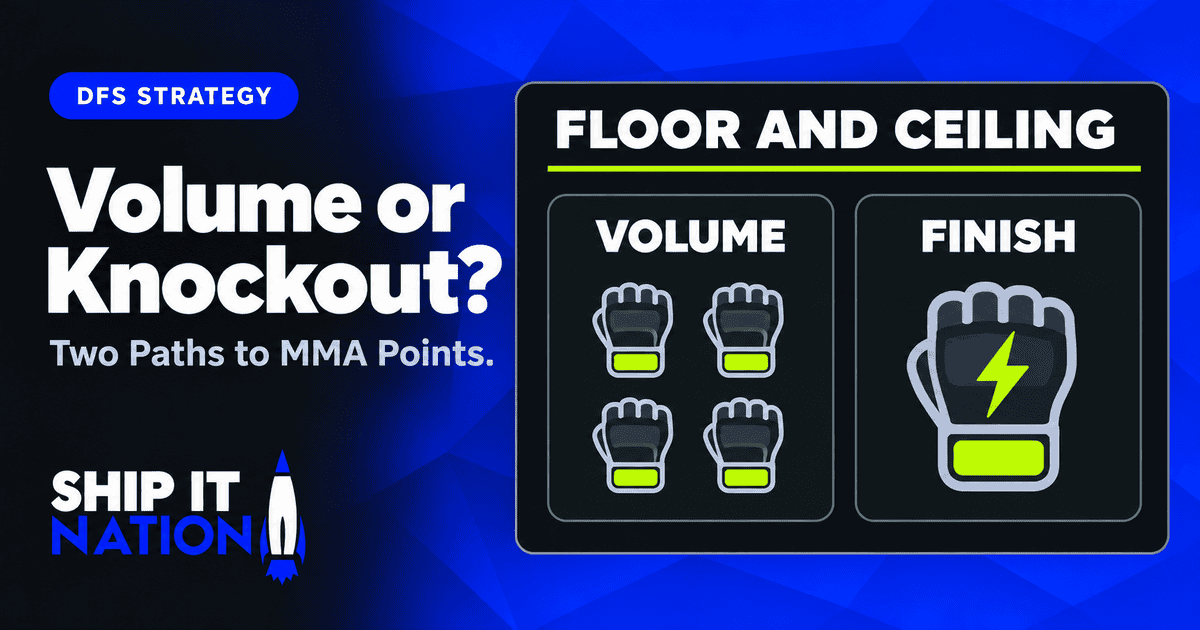
Instead of forcing divisional requirements into your roster, build a rigid fight-by-fight checklist. For every bout on the card, map out the market-implied finish rate, the fighter’s primary scoring archetype (volume vs. stoppage), and their salary cap efficiency. Use this clean checklist to systematically decide exactly where you want to deploy heavy exposure and where you want to execute high-leverage field fades. Treat weight class as nothing more than a final background sanity check to ensure your macro-read looks logical.
Check the FanDuel contest rules for the site’s scoring categories.
Full video courses on bankroll management, contest selection, roster construction and more, free for members.
Common Questions
Do weight classes matter in MMA DFS?
Only as a minor piece of background context. Betting lines and prop markets already bake broad weight class stoppage histories directly into their lines. Your primary edge comes from analyzing individual fighter styles, pacing, and specific tactical matchups rather than relying on division labels.
Should you force specific weight classes into your UFC DFS lineups?
No. Experienced high-stakes players never force specific divisions into their builds. Main events routinely command massive ownership because they feature an extra ten minutes of scoring potential across five rounds, but that advantage is driven entirely by the extended format of the bout, completely independent of the weight class.
Why are flyweights and bantamweights often overlooked in tournaments?
The general public routinely over-concentrates on heavier divisions due to a perceived lack of knockout power in smaller fighters. However, smaller weight classes push a frantic, hyper-accelerated striking pace that can easily outscore a slow heavyweight knockout, making high-volume lower-weight fighters elite contrarian targets for large fields.
Need a term explained? The Ship It Nation DFS glossary covers every DFS term we use in plain language.

About the author
Ship It Nation StaffShip It Nation was founded in 2023 by Tyler Tamboline and Mike Petta to give DFS players the tools, projections, content, and community they need to build a winning process. Today, we're a fully remote team of active DFS players, analysts, and builders.
More from Ship It Nation Staff →Keep reading