NASCAR · Ceiling
What Is Ceiling in DFS?
Last updated October 17, 2026 by Ship It Nation
Ceiling is the high end of a player's or lineup's realistic range of fantasy scores. It describes a big performance that could happen when things go well, not the expected score or an absolute maximum.
Why It Matters
A driver's ceiling can come from a strong finish, positions gained from the starting grid and laps led, plus fastest laps where the site awards them. Race length changes how much lap-based scoring is available. Judge the driver's route to a big score against the starting position and the specific scoring system.
Go Deeper
Articles that put Ceiling to work.
 What Are DFS Contest Sims and How Do They Work?
Lineup Building · 3 min read
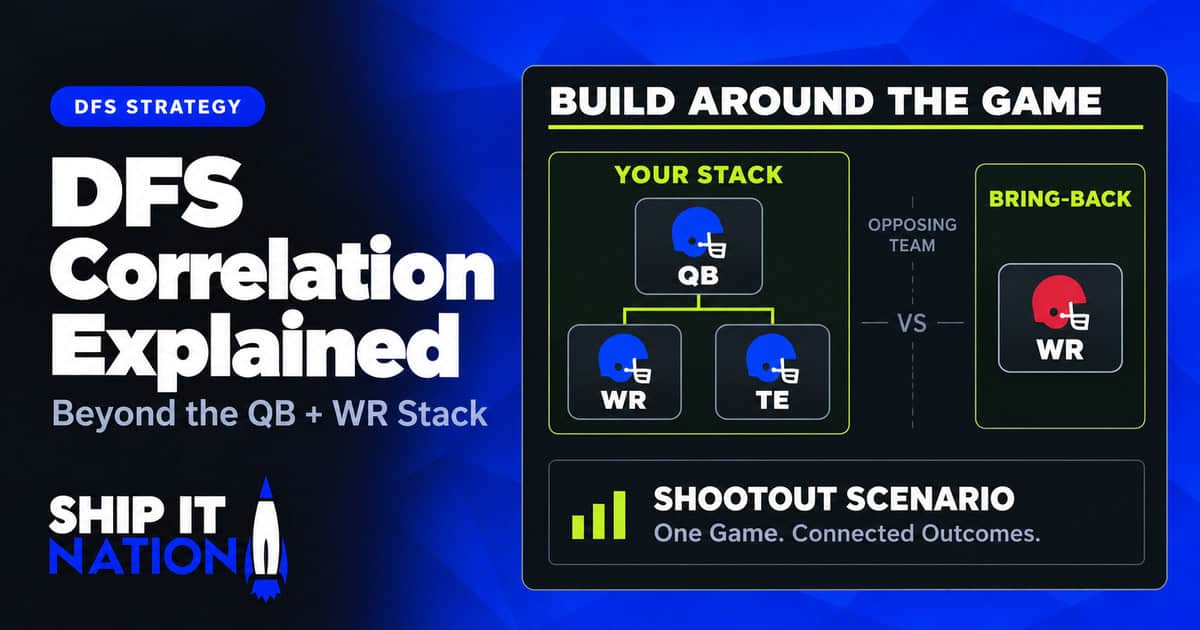 DFS Correlation Explained: Why Stacking Isn’t Just About QB and WR
Lineup Building · 3 min read
Example
Say a driver starts 28th after a qualifying problem but has the speed to finish near the front. A top-five result could combine a strong finish with substantial position gains. Another driver starting first needs a different path, such as leading much of the race. Which ceiling is higher depends partly on race length and scoring.
Describe what must happen for each player to have a huge game. Then check whether those conditions help or hurt the other players in your lineup.
Hear Us Break It Down
Hand-picked moments from our free live streams where our hosts break down this term.
More mentions 12
Common Questions
How is a player's ceiling projection calculated?
There is no universal calculation. A ceiling projection may represent a high percentile of simulated scores or an estimate based on role, matchup and historical performance. Check the method before comparing numbers: different providers can use different thresholds, and a player can exceed a published ceiling.
Should I always choose the player with the higher ceiling?
No. A bigger possible score is only part of the decision; its probability, salary cost and fit with your lineup matter too. Tournaments reward high-end outcomes, while cash games usually place more emphasis on expected production and reliability. Neither format rewards chasing an implausible best case.
Can a cheap player have a high ceiling?
Yes. A low salary can lag behind a change in minutes, workload or scoring opportunities. That can give you substantial upside without using much salary. Separate a cheap player with a realistic path to a big score from one who needs an unlikely chain of events.