
NFL · Slate Size
What Is Slate Size in DFS?
Last updated October 11, 2026 by Ship It Nation
Slate size is the number of games or matchups included in a DFS contest's schedule. In sports built around one event, it can instead describe the number of eligible competitors; it does not mean the number of contest entries.
Why It Matters
On a short NFL slate, you have fewer quarterback and receiver combinations, so popular passing offenses can appear in many similar lineups. Compare which pass catchers you pair with your quarterback and which opposing players you include, rather than assuming that choosing the popular quarterback makes your entire lineup too common.
Go Deeper
Articles that put Slate Size to work.
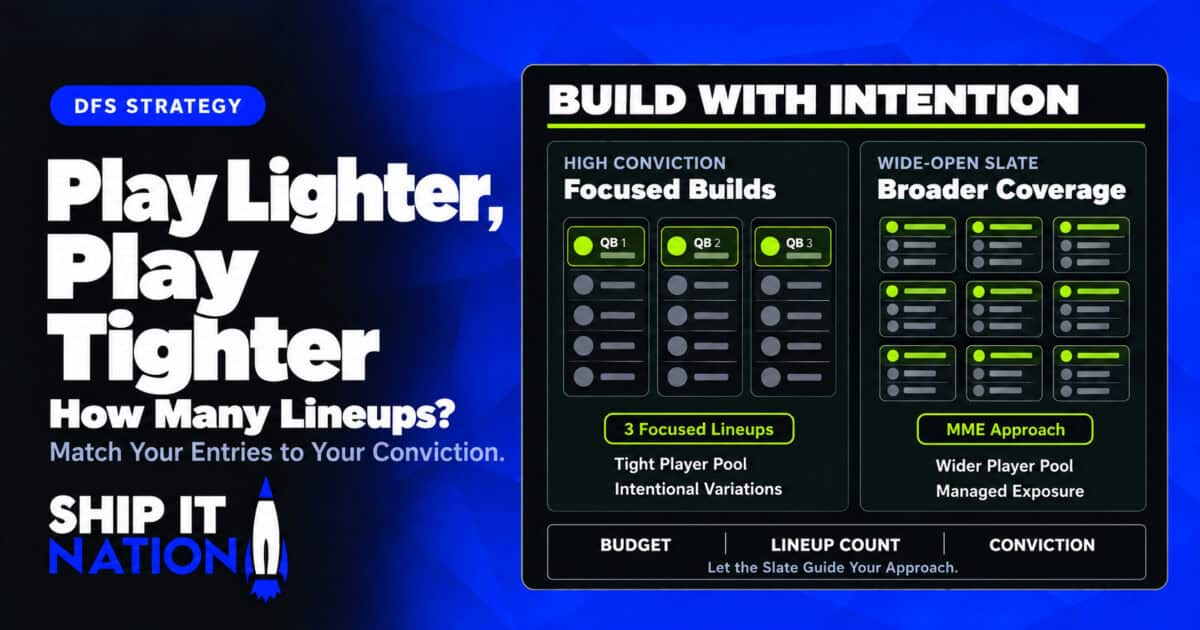 Play Lighter, Play Tighter: How Many Lineups Should You Actually Enter?
Lineup Building · 3 min read
Play Lighter, Play Tighter: How Many Lineups Should You Actually Enter?
Lineup Building · 3 min read
Example
Say a three-game NFL slate has one clearly attractive passing matchup. You expect many opponents to pair its quarterback with his leading receiver. You can still use that quarterback while comparing a tight end or another receiver as a teammate, but you need a credible scoring path rather than a different name for its own sake.
Before building, count the credible alternatives at each position. A slate with plenty of games can still leave you with very few appealing choices at one position.
Hear Us Break It Down
Hand-picked moments from our free live streams where our hosts break down this term.
More mentions 12
Common Questions
How many games make a DFS slate small?
There is no universal cutoff. Two or three games would generally be considered a small slate in a team sport, but the useful distinction is how many realistic choices you have at each position. Injuries, salaries and roster requirements can make equally sized slates play differently.
Are small DFS slates easier to win?
No. Fewer games can reduce your research workload, but they also give opponents fewer decisions and make similar lineups more likely. Difficulty also depends on the number and skill of your opponents, the contest format and its payouts, not just the number of games.
Should I leave salary unused on a small slate?
Sometimes, if it produces a competitive lineup that fewer opponents are likely to share. A smaller player pool can make obvious combinations repeat, but unused salary is not an advantage by itself. Compare the potential benefit of fewer duplicates with the scoring strength you give up.