
Bring-Back
What Is a Bring-Back in DFS?
Last updated September 22, 2026 by Ship It Nation
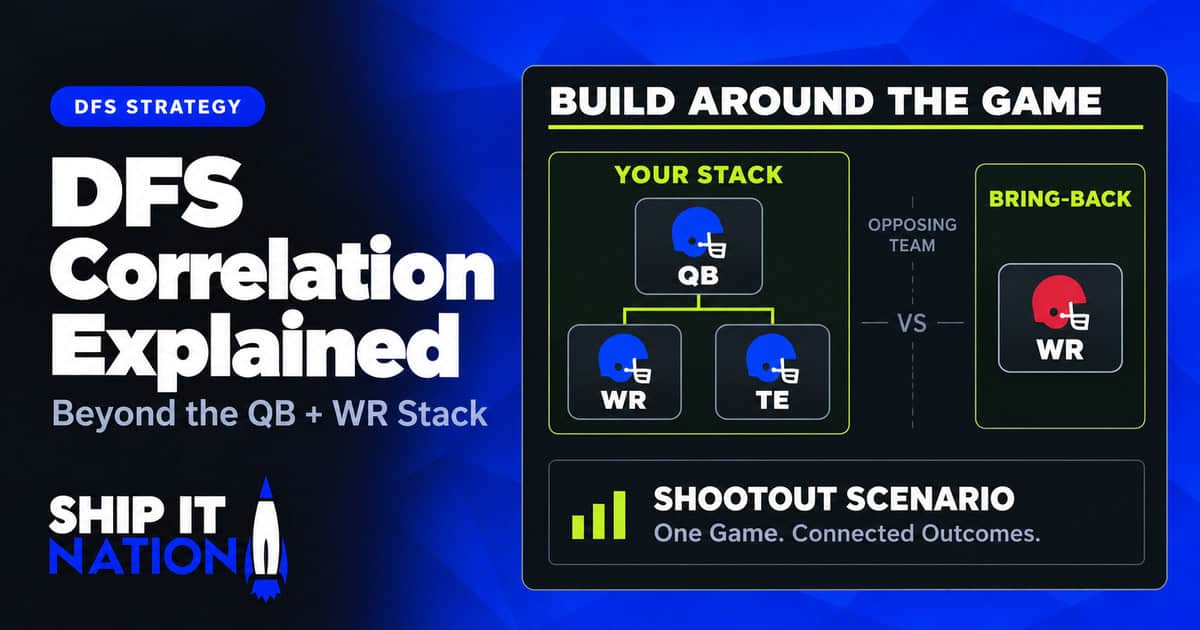
A bring-back is a player from the opposing team added to a stack, so your lineup benefits if the other side answers with scoring of its own.
Why It Matters
A bring-back turns a team stack into a game stack. It adds points when your stacked team's scoring forces the opponent to keep up, and it helps when a projected shootout actually happens.
Go Deeper
Articles that put Bring-Back to work.
Example
Say you roster two starters from one NBA team in a game with a 236-point total. Adding the opposing team's starting shooting guard as a bring-back means you benefit if that side keeps pace. If the game stays close, all three players stay on the floor late, and your lineup captures scoring from both teams instead of just one.
Pick the bring-back who gains the most when his team falls behind. In football that's usually the opponent's top pass catcher, not a running back who loses carries in a comeback.
Heard on the Shows
This term has come up on 24 shows. Each line jumps to that moment of the video.
Common Questions
Do you need a bring-back in every stack?
No. A bring-back makes sense when you expect a close, high-scoring game. If you think your stacked team will win easily and control the clock, a bring-back from the losing side can hurt, since that offense may not produce much.
What position makes the best bring-back?
In the NFL, usually a wide receiver or tight end, because the trailing team throws more to catch up. A running back can work in a close game, but backs tend to lose carries when their team falls behind. In MLB and hockey, top-of-the-order hitters and top-line skaters are common choices.
Is a bring-back the same as a game stack?
Not quite. A bring-back is the piece from the opposing team. Once you add it to a team stack, the combined group becomes a game stack, so the bring-back is what turns one into the other.