On this page
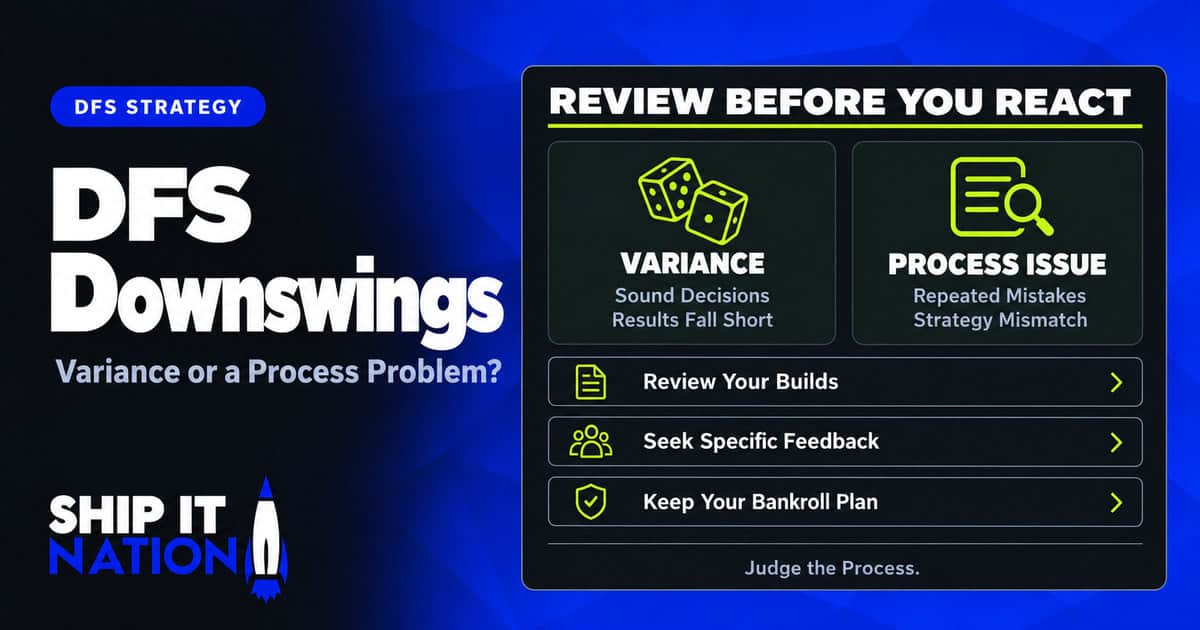
A losing stretch of two to three weeks is normal varianceVarianceVariance in DFS describes how widely fantasy scores or contest returns can swing around their expected outcomes. It explains why a sound lineup can lose and a poor decision can sometimes win.Track results by contest type and slate, and review opportunity separately from touchdowns or other rare scoring events. Entering the same lineup in ten contests does not give you ten independent performance samples. If you build with an optimizer, its randomness setting nudges projections up or down on each build, so your lineups spread across different players instead of repeating the same top projections. in DFS. A longer cold stretch, around six to eight weeks or more, can still happen with a sound process. Before changing anything, review whether your decisions held up, change one thing at a time, and make sure your bankroll plan expected it.
Key takeaways
- Judge your decisions using the information available at the time, rather than results alone.
- Changing everything at once makes it harder to identify which adjustment helped.
- Build your bankroll plan with the expectation that losing stretches will happen.
Two to Three Weeks Isn’t a Downswing, It’s Just DFS
One of the most important mental adjustments a player can make is recognizing that a two to three week losing stretch isn’t actually a downswing at all. It’s simply a normal, expected part of playing a game with this much inherent variance. DFS doesn’t reward good process every single slateSlateA slate in DFS is the set of games, races, fights or tournament rounds covered by a contest. It determines which events your player selections can come from and which performances count toward your score.Before building, open the contest details and check the included events, scoring period and lock rules. Do not assume two sites offer identical slates just because both call them the main slate., and expecting it to is a setup for unnecessary frustration.
What an Actual Downswing Looks Like
A real downswing tends to run considerably longer, often somewhere in the range of six to eight weeks or more without a meaningful return. That’s a genuinely difficult stretch to sit through, and it’s important to know going in that even a sound, well tested process can produce a cold streak of this length purely due to variance.
How to Handle It Without Losing Your Process
The instinct during a real downswing is often to start questioning everything at once, tweaking your bankroll strategy, your player pool sizing, and your entire approach to contest selection all in the same week out of frustration. That’s usually a mistake. Making too many changes at once makes it impossible to know which adjustment, if any, actually helped once results eventually turn around.
Instead, stay connected to the goals you set for yourself before the downswing started. Lean on a community of other players who understand what a genuine cold stretch feels like, since isolating yourself during a rough patch tends to make the mental side of it considerably harder. Ask for feedback on your actual process rather than just venting about results, since specific feedback on decisions is far more useful than general sympathy about bad luck.
Focus on Process, Not Just the Scoreboard
During a downswing, it’s tempting to judge everything purely by whether you won or lost money that week. A more useful lens is asking whether your decisions still made sense given the information available at the time, independent of how the actual results played out. A well reasoned lineup that simply didn’t hit isn’t the same failure as a lineup built on a weak or careless thought process, even if both technically lost.
When a Downswing Might Signal a Real Problem
There’s a difference between a downswing that’s purely variance and a stretch of poor results that reflects an actual issue with your approach. If you review your builds honestly and find you’re consistently far off optimal for reasons that have nothing to do with bad luck, or if you’ve changed tools or your approach without adjusting your overall strategy to match, that’s worth examining more seriously than a typical cold stretch.
The key difference is whether your review process turns up a legitimate explanation tied to your own decisions, versus a downswing where your decisions still check out and the results simply haven’t broken your way yet.
Riding It Out Without Abandoning Your Bankroll Plan
Perhaps the most practical piece of advice for surviving a real downswing is making sure your bankroll plan already accounted for the possibility of one before it happened. If your bankroll strategy assumed you’d never hit a rough six to eight week stretch, that’s a flaw in the plan itself, not just bad luck showing up at an inconvenient time. A sound bankroll approach should be built with the expectation that downswings are a normal and recurring part of the game, not an unexpected disaster each time one occurs.
Downswings are uncomfortable no matter how prepared you are for them, but knowing the difference between normal variance and an actual signal to adjust your approach is one of the clearest markers separating players who last long term in this game from players who make a series of panicked decisions during their first real cold stretch.
Go further: DFS PROcess 101 Members
Full video courses on bankroll management, contest selection, roster construction and more, free for members.
Common Questions
How long can a DFS downswing last?
A losing stretch of two to three weeks is normal variance. A real downswing can run six to eight weeks or more without a meaningful return, and a sound process can still produce one. Plan your bankroll for it before it happens.
When should I worry about a DFS downswing?
Look more closely when reviewing your builds reveals recurring decision problems beyond bad luck. Changes to your tools or approach that your overall strategy no longer accounts for also deserve attention.
How should I handle a DFS downswing?
Stay connected to your original goals, seek specific feedback on your decisions, and avoid changing everything at once. Your bankroll plan should already account for losing stretches.
Related articles
How Much Bankroll Do You Need for DFS? A Realistic Guide by Stakes LevelPGA DFS Slate Types Explained: Full Tournament, Weekend, and Single Round ContestsStars and Scrubs vs. Balanced Builds in NFL DFSRelated terms
Need a term explained? The Ship It Nation DFS glossary covers every DFS term we use in plain language. All articles

About the author
Tyler Tamboline
Tyler Tamboline co-founded Ship It Nation and is the face of the brand across our shows and community. He is also the Founder of DFS Mastermind, helping hundreds of DFS players find their own process. He has played DFS since 2012, focusing primarily on PGA and NFL, and has created DFS content full-time since 2018 at different sites across the industry. He is known for strategy, game theory and leverage in large-field tournaments. He has been a regular on many Fantasy Sports podcasts, including weekly PGA and NFL shows with Pat Mayo.
More from Tyler Tamboline